


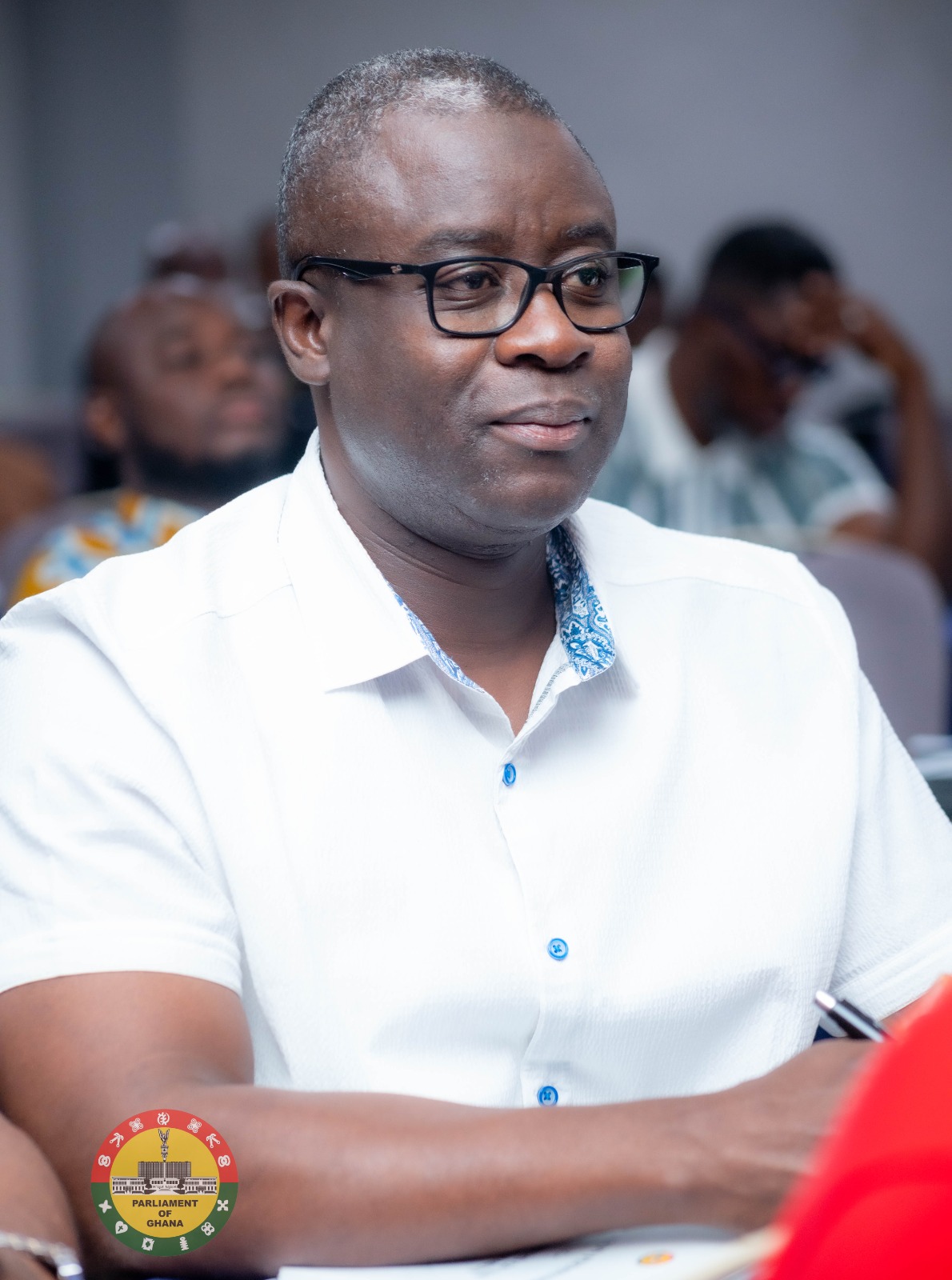
The Chairman of Parliament’s Food, Agriculture and Cocoa Affairs Committee, Dr Godfred Seidu Jasaw, says the proposed investment of about GH¢8 billion in agriculture under the 2027 Budget could mark a major turning point in Ghana’s efforts to reduce its dependence on imported food and strengthen domestic production.
He has also described the proposed US$1 billion financing commitment for the Pwalugu Irrigation Project as a potentially transformative intervention that could expand irrigated agriculture, create jobs and provide a reliable supply of raw materials for agro-processing industries.
Dr Jasaw, who is also the Member of Parliament for Wa East, made the assertions on the floor of Parliament during debate on the 2027 Budget Statement, arguing that the government’s New Economy agenda offered an opportunity to address longstanding structural weaknesses in the economy through increased investment in productive sectors.
He said Ghana had waited decades for a deliberate economic policy direction that prioritised domestic production, industrialisation and a more favourable balance between imports and exports.
According to him, the proposed agricultural investments could help address the country’s estimated US$2 billion annual food import bill, which continues to exert pressure on foreign exchange resources and undermine efforts to build a self-sufficient economy.
Rice alone, he said, accounted for approximately US$800 million in annual imports, while poultry imports cost the country about US$400 million.
Dr Jasaw attributed the high dependence on imported food partly to the relatively high cost of domestic production, which makes locally produced alternatives less competitive in the market.
He said the government’s commercial agriculture programme had identified rice, poultry, sugarcane, maize, soybean, oil palm and aquaculture as priority commodities for investment under the New Economy initiative.
For rice production, he said the focus would be on supporting commercially viable farmers to cultivate larger acreages while expanding processing capacity through investments in rice mills and related infrastructure.
The objective, he explained, was to reduce production costs, improve the competitiveness of locally produced rice and gradually displace imported alternatives.
He was particularly optimistic about the poultry farm-to-table initiative, disclosing that 40 per cent of EXIM Bank flows would be dedicated to supporting investments across the poultry value chain.
The financing, he said, would support poultry production, processing facilities, storage equipment, cold-chain infrastructure and distribution logistics.
He noted that the intervention would complement existing efforts by the Ministry of Food and Agriculture to establish poultry industries and support livestock producers to expand domestic production.
Dr Jasaw, however, stressed that irrigation development would be critical to sustaining the proposed agricultural transformation, arguing that Ghana could no longer afford to depend excessively on rainfall when water resources were available to support year-round farming.
He therefore welcomed the proposed US$1 billion financing commitment for the Pwalugu Irrigation Project, which he said was expected to develop approximately 25,000 hectares of irrigable land.
He described the project as a major opportunity to unlock agricultural potential, create employment and provide the raw materials required by agro-processing industries.
Recalling previous expenditure of approximately US$11.5 million on the project without substantial infrastructure being delivered, he said the new financing commitment offered an opportunity to revive the long-delayed initiative.
He indicated that the first phase was expected to be completed within two years, with the final phase targeted for completion by 2030.
Dr Jasaw argued that irrigation infrastructure, combined with processing facilities and reliable markets for agricultural produce, would give farmers the confidence to expand production and invest in commercial farming.
“When a farmer cultivates fields, he is aware that there will be an industry ready to take up the raw material and add value to it,” he said, explaining that such an integrated production chain would stimulate investment and create jobs.
The Wa East MP also commended Finance Minister Dr Cassiel Ato Forson for what he described as a shift from economic stabilisation in the previous two budgets towards a more aggressive productive-sector investment agenda.
He said the 2025 and 2026 budgets had focused on debt management, domestic resource mobilisation and macroeconomic stabilisation, creating the foundation for the proposed expansion in productive investments.
However, he cautioned that the success of the 2027 Budget would depend not merely on the announcements but also on the timely release of funds and effective implementation.
“Let’s follow the money. The money has been pronounced. Let’s follow where the allocations are,” he urged, calling on Ghanaians to hold the Finance Ministry and the Ministry of Food and Agriculture accountable for delivering on the proposed interventions.
He said the commitments must translate into actual investments, improved agricultural productivity, expanded industrial capacity and sustainable employment, rather than remain budgetary promises.
Dr Jasaw maintained that achieving greater self-sufficiency in food production would be a critical indicator of whether the government’s New Economy agenda was succeeding in changing the structure of Ghana’s economy.
By: Christian Kpesese