


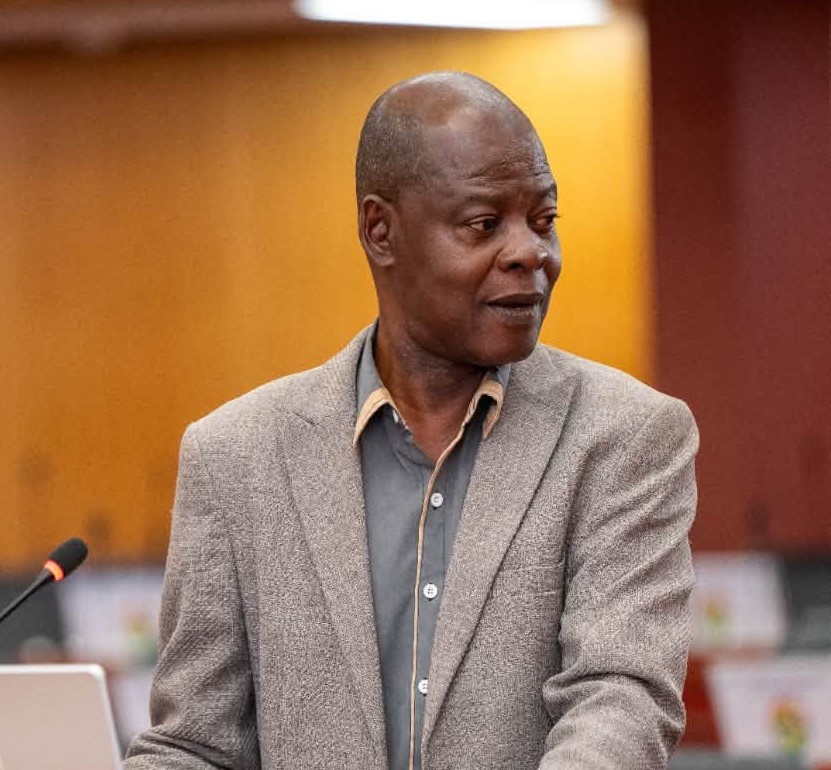
Dr Steve Manteaw, a natural resources governance expert and Co-chair of the Ghana Extractive Industries Transparency Initiative (GHEITI), has questioned Ghana’s capacity to meet its 2030 target for processing key industrial minerals, cautioning that the cost and reliability of electricity could undermine the country’s mineral beneficiation ambitions.
He said the planned processing of manganese, iron ore and bauxite into higher-value products would require substantial volumes of affordable and uninterrupted electricity, a critical input that Ghana was yet to guarantee.
Speaking on JoyNews PM Express on Wednesday night monitored by NR News, Dr Manteaw argued that the country’s persistent power supply challenges, alongside uncertainty over when additional generation capacity would become available, raised serious questions about the readiness of the energy infrastructure needed to support large-scale mineral processing by 2030.
“I don’t see how we’ll be able to achieve that objective in the absence of cheap, affordable and reliable power. We need to deal with that first,” he said in an interview.
He explained that processing minerals, particularly in the iron and aluminium industries, was energy-intensive, making both the availability and cost of electricity central to the commercial viability of the proposed investments.
Hydroelectricity and natural gas had historically offered some of Ghana’s more affordable sources of power, he said, while reliance on liquid fuels could drive up production costs.
Dr Manteaw said the country was already struggling to meet domestic and industrial electricity requirements and must resolve the power supply challenge before committing to ambitious mineral processing timelines.
He also questioned Ghana’s slow progress towards establishing an integrated steel industry, despite its considerable iron ore and manganese resources.
He said the continued export of manganese in its raw form illustrated the disconnect between the country’s resource endowment and its ambition to develop domestic mineral processing capacity. Manganese is an important input in steel production, and failure to build local capacity could leave Ghana importing products it has the resources to produce.
“We have abundant iron reserves. And the mineral that we need, the coking coal to convert our iron into steel, is in abundance. And yet we continue to export our manganese in its raw form,” he said.
On bauxite, he emphasised that the energy requirements for processing the mineral were equally substantial, reinforcing the need for a coordinated national strategy to secure competitive and reliable electricity for industrial development.
Dr Manteaw called on government and industry to jointly assess the infrastructure, financing and energy requirements of the proposed processing projects, noting that the needs differed across minerals and would require tailored investment plans.
“Different metals come with different configurations and needs that are required. The first thing that has to be said is that we need to sit together — industry, government — and look into how this will be done,” he said.
His concerns come as the government plans to construct a state-funded and state-owned thermal power plant with an estimated generation capacity of 1,500 megawatts to strengthen electricity supply.
While acknowledging that the proposed facility could help meet the energy needs of mineral processing, Dr Manteaw questioned whether it would be completed early enough to support the 2030 target.
He noted that the plant’s planned completion date of December 2030 appeared to coincide with the deadline for achieving the mineral beneficiation objectives, raising doubts about whether the additional power would be available in time to support the investments.
“If the power will be available before 2030, then of course, yes,” he said, pointing to the apparent overlap between the timelines for the proposed thermal generation capacity and the government’s mineral processing target.
He also identified nuclear energy as a possible longer-term option but expressed uncertainty about the availability of affordable electricity in the immediate term.
Beyond generation capacity and tariffs, Dr Manteaw said the consistency of electricity supply was critical to the viability of mineral processing operations.
He explained that industrial furnaces used in metal processing operated at high temperatures and required sustained power supply. Even brief interruptions could disrupt production, as operators would have to restore furnaces to the required temperatures before operations could resume.
“The thing about all of these mining requirements is that they use high temperatures. And so when you have power go down for one minute and come back, it sets you back severally because you would need to bring the furnace back to a particular temperature,” he said.
He said recent power interruptions underscored the risks facing industries that depended on continuous electricity, adding that additional installed capacity alone would not be sufficient to secure the success of Ghana’s mineral beneficiation agenda.
Dr Manteaw said the country needed a deliberate energy and industrial investment framework that would guarantee processing facilities access to electricity at competitive prices and with the reliability required for continuous operations.
Without such measures, he warned, Ghana’s 2030 target for processing manganese, iron ore and bauxite risked remaining an ambition rather than a viable industrial development outcome.
By: Christian Kpesese