


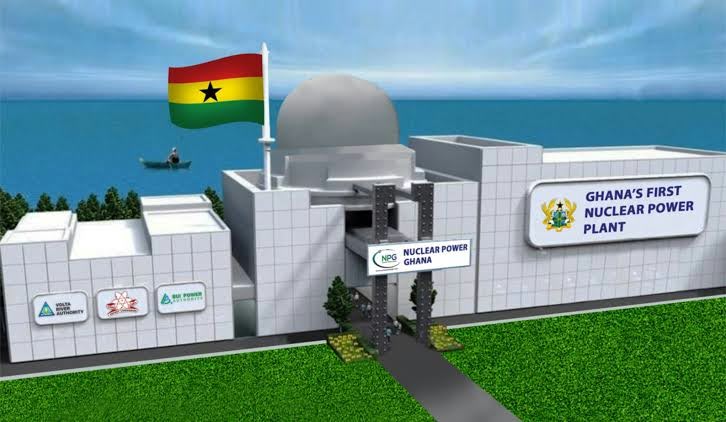
The Government of Ghana has committed US$200 million to a 24-month nuclear power readiness programme, setting December 2028 as the target for completing preparations and signing an engineering, procurement, construction and financing (EPCF) contract for a fully state-owned nuclear baseload power plant.
The announcement, made by Finance Minister Dr Cassiel Ato Forson during the presentation of the 2027 Budget Statement to Parliament on Thursday, November 12, 2026, marks a significant step in Ghana’s long-standing ambition to introduce nuclear energy into its electricity generation mix.
The programme, which will run from January 2027 to December 2028, is intended to establish the technical, regulatory, financial and institutional foundations required for the development of the proposed nuclear facility.
Dr Forson was, however, quick to clarify that achieving nuclear readiness by December 2028 would not mean that Ghana would begin generating nuclear electricity that year.
Rather, the readiness programme will cover comprehensive site studies, technology selection, environmental assessments, financing arrangements, licensing preparations, safeguards, emergency planning and the development of the required nuclear safety case.
These processes are intended to ensure that the proposed project meets the standards required for investment and eventual implementation.
A significant feature of the Government’s proposed arrangement is that the nuclear power plant will remain a strategic national asset and will not be developed under the independent power producer (IPP) model.
International partners will be engaged to provide technology, financing, engineering expertise and specialist services, while ownership of the facility will remain with the Ghanaian State.
To strengthen domestic capacity, Government also intends to train more than 2,000 scientists to develop the technical expertise required to support Ghana’s transition to nuclear energy.
The initiative forms part of the broader US$2.2 billion energy infrastructure programme, which also includes a 1,450-megawatt state-owned thermal power plant, a 600-megawatt solar facility and investments in battery storage and electricity transmission.
The Finance Minister argued that a reliable baseload electricity source would be essential to Ghana’s long-term industrialisation ambitions, particularly as the country seeks to expand mineral processing, manufacturing and other energy-intensive industries.
He drew parallels with the construction of the Akosombo Dam more than six decades ago under Ghana’s first President, Dr Kwame Nkrumah, describing the country’s nuclear ambition as an investment in future generations.
Dr Forson said Ghana must demonstrate similar long-term vision and commitment in securing its future electricity needs.
The announcement nevertheless places considerable responsibility on Government and relevant regulatory institutions to ensure that nuclear development proceeds with the highest standards of safety, environmental protection and transparency.
Key considerations will include the long-term financing burden, nuclear waste management, emergency preparedness, independent regulatory oversight, site suitability and the development of specialised human resources.
The proposed US$200 million readiness investment therefore represents the preparatory phase of a much longer undertaking, rather than the immediate construction or operation of a nuclear power station.
For Ghana, the December 2028 target will be an important test of whether decades of nuclear power ambition can be translated into a technically sound, financially viable and safely regulated national energy project.
By: Christian Kpesese