


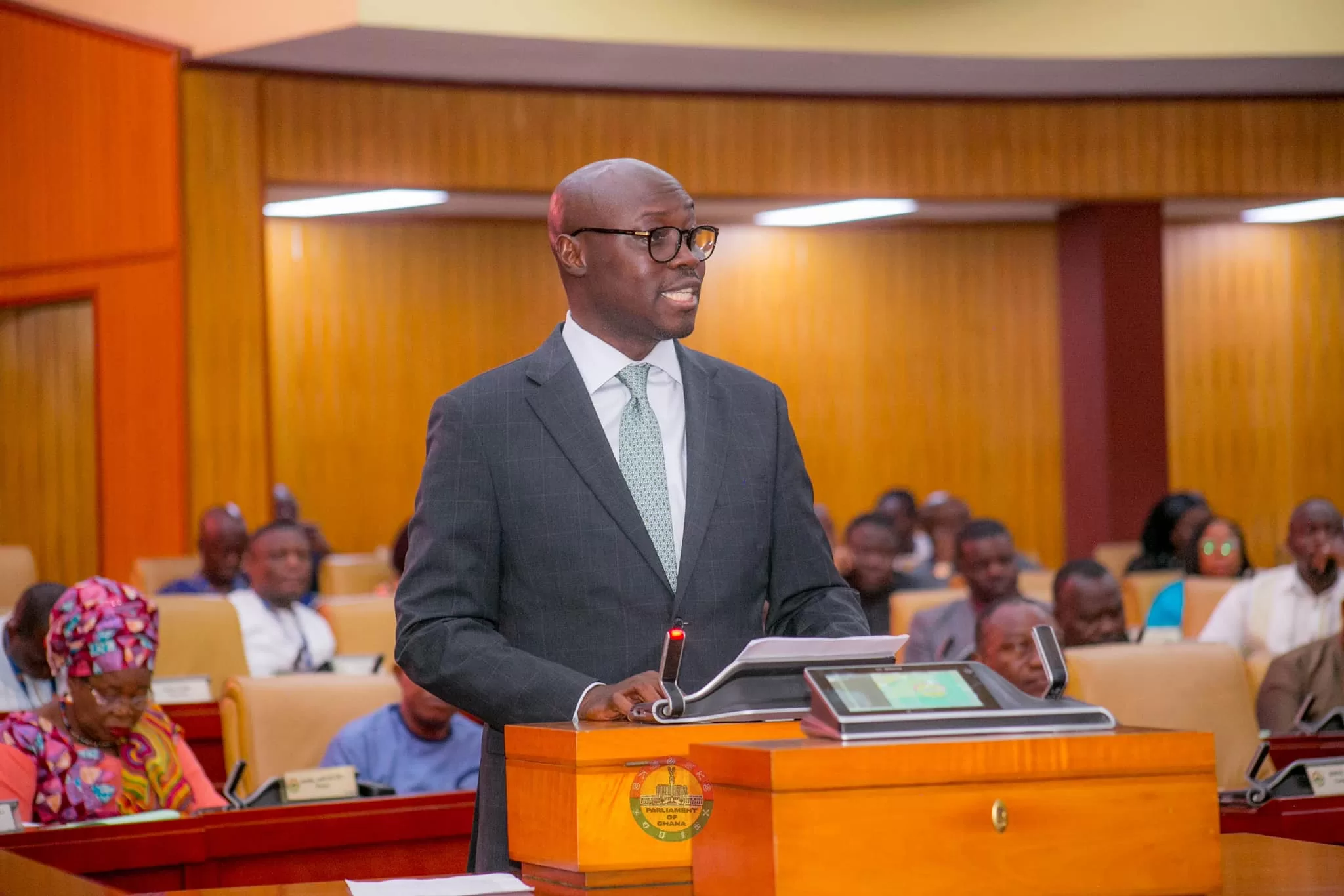
Ghana’s average real GDP growth of 5.2 per cent over nearly three decades has concealed deep structural weaknesses in the economy, with excessive dependence on raw commodities and limited industrial contribution leaving the country vulnerable to recurring economic shocks, Finance Minister Ato Forson has acknowledged.
Presenting the 2027 Budget Statement to Parliament on Thursday, November 12, 2026, the Finance Minister said the country’s economic expansion between 1998 and 2025 had not translated into sufficient resilience, employment opportunities and improved living conditions for many Ghanaians.
He identified Ghana’s dependence on gold, cocoa and oil as a major source of economic volatility, explaining that fluctuations in commodity markets had historically influenced government revenue, national confidence and the stability of the economy.
According to him, when economic crises struck, weaknesses in fiscal discipline placed pressure on the cedi, triggered inflationary pressures, pushed up interest rates and discouraged investment.
Dr Forson further observed that manufacturing and structured industries accounted for only about 16 per cent of GDP growth over the past 30 years, highlighting the limited contribution of industrial transformation to the country’s economic development.
He said the resulting growth pattern had left too many citizens outside the benefits of economic expansion, despite more than three decades of positive economic performance.
The Finance Minister cited an unemployment rate of approximately 4.8 per cent in 2025, arguing that headline economic growth figures should not be the sole measure of national economic progress.
“Mr Speaker, the best measure of an economy is an improvement in the quality of life,” he said.
He maintained that Ghana must move beyond an economic model that relies heavily on commodity windfalls to finance permanent government commitments, warning that the country’s experience had demonstrated the consequences of failing to build adequate resilience.
Dr Forson recalled that the 2022 economic crisis exposed significant weaknesses in public financial management, with inflation reaching 54.1 per cent by the end of that year, the primary balance recording a deficit of 4.3 per cent of GDP and public debt exceeding 100 per cent of GDP.
Gross international reserves, he said, had also fallen to less than three months of import cover.
The Finance Minister said the experience underscored the need to strengthen fiscal discipline, diversify the productive base and build an economy capable of withstanding external shocks.
He pointed to improvements recorded in 2025 as evidence of efforts to restore economic stability and credibility.
By the end of 2025, inflation had declined from 23.8 per cent to approximately 5.5 per cent, while the primary balance had improved from a deficit of 4.1 per cent to a surplus of 2.5 per cent of GDP.
Public debt, according to the Minister, had fallen to 24.7 per cent of GDP, while gross international reserves had increased to 5.7 months of import cover.
Dr Forson said the gains had created greater certainty for households and businesses, allowing companies to plan and providing an opportunity to pursue economic transformation beyond electoral cycles.
He emphasised that Ghana’s next phase of development must be anchored in building resilience and ensuring that economic expansion translates into improved livelihoods.
By: Christian Kpesese