


Ghana has opened the door to direct negotiations with Brazilian state-owned oil giant Petrobras over potential exploration activities in the Keta Basin, in a renewed push to attract major international investment into the country’s upstream petroleum sector.
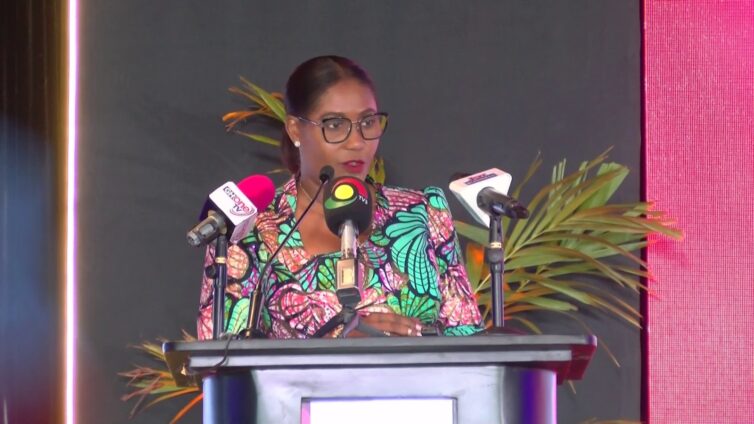
The Chief Executive of the Petroleum Commission, Emeafa Hardcastle, disclosed the development at the launch of the Commission’s 2025 Annual Investment Report, where she revealed that several major exploration and production companies were showing interest in securing petroleum agreements in Ghana.
According to Ms Hardcastle, the Commission had formally invited Petrobras to engage Ghana in direct discussions on the Keta Basin, although she indicated that some ongoing negotiations with other prospective investors remained confidential.
“We already have a few major exploration and production companies knocking at our doors for petroleum agreements. While some of these discussions remain confidential, I can confirm today that we have extended a formal invitation to Petrobras to engage in direct negotiations with Ghana over the Keta Basin,” she said.
The move signals Ghana’s renewed efforts to position its upstream petroleum industry as an attractive destination for long-term capital at a time when the country is seeking to sustain exploration activity and unlock new hydrocarbon prospects.
Ms Hardcastle said the Petroleum Commission would continue working with relevant government institutions to strengthen the regulatory environment, improve efficiency and facilitate responsible development of the country’s petroleum resources.
She, however, cautioned against measuring the success of petroleum investments solely by the amount of capital injected into the economy, arguing that the sector’s wider contribution to Ghana’s industrial and economic development must also be taken into account.
“The value of petroleum investment should not be measured solely by the capital that enters the country. We must also consider the jobs created, technology transferred, businesses developed, infrastructure established, and industrial capabilities built,” she said.
The Petroleum Commission CEO pointed to the extensive linkages between the upstream petroleum industry and sectors including engineering, fabrication, logistics, finance, insurance, information technology, manufacturing and professional services.
Harnessing these linkages, she said, could transform petroleum investment from a source of government revenue into a broader engine of industrialisation and economic diversification.
“If properly harnessed, investments in petroleum can become an important catalyst for broader industrialisation,” she said.
Ms Hardcastle further emphasised the importance of strengthening local participation in the petroleum industry, stressing that local content must be commercially sustainable and deliver tangible economic benefits to Ghana.
She said the Commission remained optimistic about the prospects of Ghana’s upstream petroleum industry and would continue collaborating with state institutions to create a regulatory framework capable of attracting and retaining long-term investors.
“We remain optimistic about the prospects for Ghana’s upstream industry,” she said.
She assured prospective investors that the Commission would continue working to improve regulatory efficiency and create a predictable investment environment that supports responsible and sustainable petroleum development in Ghana.
By: NR NEWS