


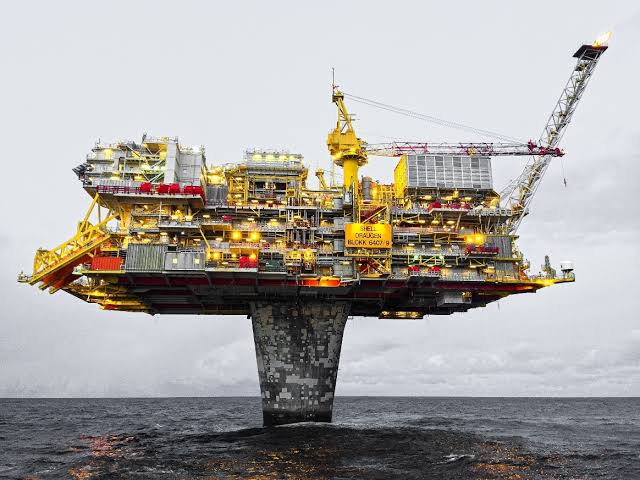
Government says its ongoing reforms in Ghana’s upstream petroleum sector are beginning to yield significant results, with new investments secured, oil and gas production exceeding projections, and substantial savings recorded through its gas-to-power strategy.
Presenting the 2026 Mid-Year Fiscal Policy Review in Parliament on Thursday, Finance Minister, Dr. Cassiel Ato Baah Forson, announced that investor confidence in the sector had rebounded following a series of investor-friendly reforms, resulting in more than US$3.5 billion in new investment commitments from partners in the Offshore Cape Three Points (OCTP) project.
According to the Minister, the reforms were introduced to reverse the sharp decline in upstream investments witnessed in recent years, adding that the renewed commitments signal growing confidence in Ghana’s petroleum industry.
Dr. Forson told Parliament that the renewed investment climate has translated into stronger production performance, with national oil output rising well above projections.
He said oil production increased from an expected 68,000 barrels per day to approximately 85,000 barrels per day, while the Jubilee Field is now producing about 88,000 barrels per day.
The Finance Minister also reported significant improvements in the country’s gas sector, describing natural gas as central to government’s strategy to lower energy costs and improve power generation efficiency.
He disclosed that gas production has increased from 245 million standard cubic feet per day (mmscfd) to about 282 mmscfd, with a newly negotiated agreement with OCTP partners expected to further raise production to 350 mmscfd.
Dr. Forson said government remains committed to its gas-to-power policy, which is replacing expensive light fuel oil with cleaner and cheaper natural gas for electricity generation.
He noted that by the end of June 2026, government had increased gas supply for power generation by an additional 35 mmscfd, bringing total daily gas supply to approximately 419 mmscfd. The increase comprises 10 mmscfd from OCTP partners and 25 mmscfd from the TEN gas project.
The strategy, he said, is already delivering major financial benefits.
“By replacing light fuel oil with natural gas, government saved about GH¢3 billion, equivalent to US$268.8 million, in fuel costs during the first half of 2026,” the Minister told lawmakers.
Beyond increasing gas supply, government is advancing plans to strengthen domestic gas infrastructure through a 100 mmscfd modular gas processing system being developed in partnership with the private sector.
Dr. Forson said land acquisition for the project has been completed, while environmental permitting, engineering design, financial structuring and project development are at advanced stages. Financial close is expected before the end of 2026, after parliamentary approval.
The project is projected to create nearly 1,000 jobs and generate approximately US$2 billion in economic benefits to the state over the next five years through fuel savings, foreign exchange savings and tax revenues.
Government is also progressing with plans to construct a 1,200-megawatt state-owned combined-cycle gas-fired power plant, with the first 600MW phase expected to be commissioned in 2028.
The Finance Minister said technical studies have confirmed the project’s viability, while environmental, engineering and permitting processes are underway.
He added that government had secured the project’s gas turbines directly from GE Vernova, reducing procurement costs by between 35 and 45 percent.
According to Dr. Forson, the power project is expected to lower electricity generation costs, reduce electricity tariffs by 10 to 20 percent, and create more than 2,000 direct and indirect jobs during its first phase.
Additionally, the Minister announced that government is preparing amendments to Ghana’s upstream petroleum laws aimed at making the sector more competitive and attractive to investors. The proposed legislation is expected to be laid before Parliament before the end of the year.
The announcements formed part of government’s broader strategy to strengthen energy security, attract fresh petroleum investment, expand gas utilisation, lower electricity costs and support long-term economic growth through a more resilient energy sector.
By: Christian Kpesese