


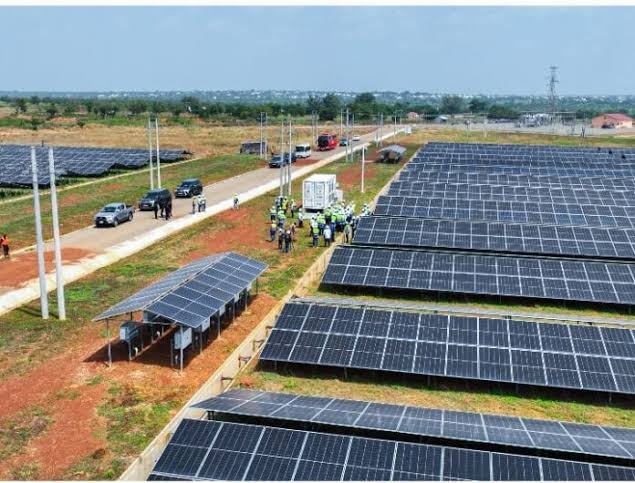
The Government of Ghana is seeking to accelerate the country’s transition towards renewable energy by removing import duties and Value Added Tax (VAT) on solar panels and batteries, in a policy intervention intended to make clean energy more affordable for households, farmers and businesses.
The incentive, announced by Finance Minister Dr Cassiel Ato Forson in the 2027 Budget Statement presented to Parliament on Thursday, November 12, 2026, forms part of Government’s broader strategy to strengthen energy security, reduce production costs and support the 24-Hour Economy programme.
Under the proposed measure, solar panels and batteries will be exempted from import duties and VAT, lowering the cost of acquiring and installing solar systems for domestic and commercial use.
Dr Forson said advances in solar technology and declining battery storage costs had created an opportunity for Ghana to harness its abundant sunshine as an alternative source of reliable electricity.
He explained that the intervention was intended to extend the benefits of renewable energy beyond large-scale power generation to everyday economic activities.
For small-scale traders, solar systems could provide dependable electricity to keep shops and businesses operating, while farmers could use solar power to operate irrigation facilities and improve agricultural productivity.
Schools, health facilities and factories are also expected to benefit from more reliable electricity to sustain essential services and productive operations.
The Finance Minister further highlighted the potential of solar energy to support Ghana’s emerging electric vehicle market, encouraging vehicle owners, transport operators and charging businesses to invest in solar-powered charging infrastructure.
The exemptions are expected to complement Government’s planned construction of a fully state-owned 600-megawatt solar power plant, supported by 2,000 megawatt-hours of battery storage.
The battery component will enable electricity generated during daylight hours to be stored and supplied during peak demand periods, while supporting grid stability.
The renewable energy intervention comes against the background of persistent challenges in Ghana’s electricity sector, including high generation costs, distribution losses, weak revenue collection and significant financial obligations.
Government has disclosed that the energy sector recorded a shortfall of approximately US$1.4 billion in 2025, alongside arrears of about US$1.7 billion owed to independent power producers and fuel suppliers.
The solar incentives are therefore expected to complement broader investments in electricity generation, transmission and distribution, while diversifying the country’s energy mix.
Beyond improving electricity access, the measure could create opportunities for local solar installation businesses, technicians, maintenance providers and other enterprises across the renewable energy value chain.
However, the effectiveness of the policy will depend on the extent to which the tax exemptions translate into actual reductions in market prices and increased adoption among households and businesses.
Access to affordable financing, quality assurance, technical expertise, battery disposal and maintenance will also be important in ensuring that the initiative delivers lasting benefits.
The policy represents a significant attempt to make renewable energy a practical component of Ghana’s economic transformation rather than an alternative reserved mainly for large commercial installations.
By: Christian Kpesese