


The National Democratic Congress (NDC) Majority caucus in Parliament has accused the previous New Patriotic Party (NPP) administration of mismanaging affairs at the Bank of Ghana (BoG), leading to cumulative losses exceeding GH¢80 billion between 2022 and 2024.
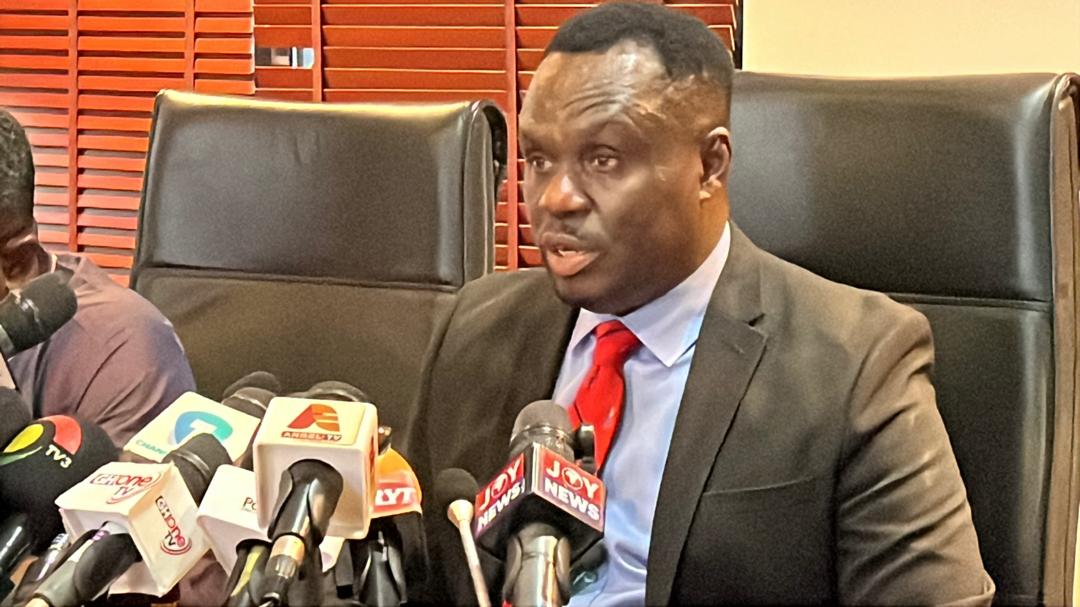
Addressing a press conference in Parliament on Tuesday, March 4, 2026, Chairman of the Economy and Development Committee, Eric Aful, said the financial deterioration of the central bank during the period reflected the depth of Ghana’s recent macroeconomic crisis and policy missteps under the erstwhile government.
He cited official figures showing that the BoG recorded losses of GH¢60.81 billion in 2022, GH¢10.55 billion in 2023, and GH¢9.49 billion in 2024, bringing the cumulative total to approximately GH¢80.85 billion.
Mr. Aful noted that the situation coincided with severe economic instability, including soaring inflation, sharp currency depreciation, and declining investor confidence. Inflation peaked at 54.1 percent in 2022 before easing to 23.8 percent by the end of 2024, while the Ghana cedi depreciated significantly to about GH¢17 to the US dollar within the same period.
Despite the concerning figures, the NDC Majority urged the public to interpret the central bank’s 2025 financial results within a broader policy context rather than through the lens of commercial profitability.
The Bank of Ghana posted a net loss of GH¢15.6 billion in 2025, alongside an Other Comprehensive Income (OCI) charge of GH¢19.32 billion and a negative equity position of GH¢96.3 billion. However, Mr Aful emphasized that such outcomes were largely the result of deliberate policy interventions aimed at stabilising the economy.
“These figures must not be misunderstood. Central banking is a public policy function, and its financial outcomes often reflect the cost of stabilising the economy,” Mr. Aful explained.
He pointed to key stability restoration interventions such as the Domestic Debt Exchange Programme (DDEP), which reduced interest obligations but resulted in an estimated GH¢13 billion shortfall in income for the Bank in 2025 even though it imposed hardship on bondholders, particularly retirees.
Additionally, the BoG undertook aggressive open market operations to curb inflation, incurring interest costs of about GH¢16.7 billion. Exchange rate gains, while beneficial to the broader economy, also led to accounting valuation losses on foreign assets.
The Majority further highlighted that the central bank’s gold accumulation programme, though beneficial in strengthening reserves and reducing foreign exchange dependence, contributed to accounting charges of approximately GH¢9 billion.
Mr. Aful who is also the Member of Parliament for Amenfi West emphasised that despite the negative equity position, the Bank of Ghana remains operationally sound and capable of delivering on its mandate of maintaining price and financial stability.
“Negative equity in central banking is an accounting condition and does not imply insolvency,” he stated, adding that similar trends have been observed globally among major central banks during periods of tight monetary policy.
The Committee chair also underscored significant improvements in Ghana’s macroeconomic indicators in 2025. Inflation declined sharply to 5.4 percent by the end of the year and further to 3.2 percent by March 2026. The cedi appreciated by about 40.7 percent against the US dollar, while Gross International Reserves increased to approximately US$13 billion, providing 5.7 months of import cover.
Economic growth also rebounded, with GDP expanding by about 6.0 percent in 2025 and non-oil GDP growth reaching 7.8 percent. The economy was estimated at US$113 billion, with per capita income rising to about US$3,193.
The Majority expressed optimism that the central bank’s financial position would improve as policy costs decline, liquidity conditions normalise, and the impact of earlier interventions moderates and welcomed government’s commitment to recapitalising the Bank under the appropriate legal framework.
Mr Aful said the Bank of Ghana’s recent financial performance should not be viewed as a failure, but rather as the cost of restoring economic stability and rebuilding confidence in the Ghanaian economy.
By: Christian Kpesese