


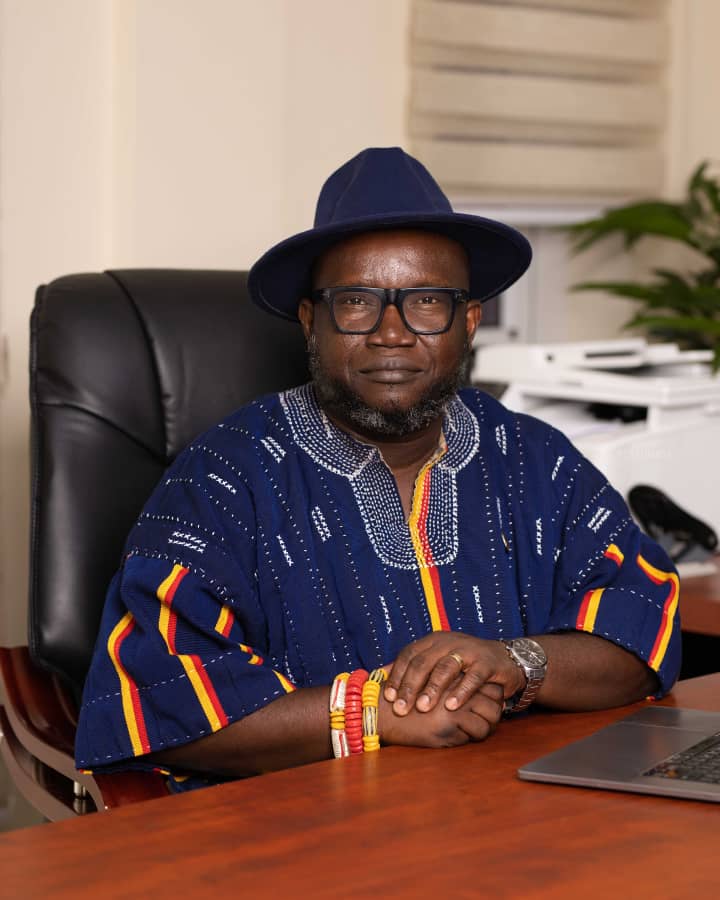
The Chief Executive Officer of the Ghana Chamber of Mines, Ing Dr Kenneth Ashigbey, has called for a stronger push towards local manufacturing and value addition within Ghana’s mining sector, insisting that the country must use mining as a catalyst for long-term industrialisation rather than depending heavily on imports.
Speaking during a press conference in Accra on Thursday in response to calls by the Institute of Economic Affairs for government not to renew the mining lease agreement with Gold Fields for the Tarkwa Mine, Dr Ashigbey argued that the debate on mining should move beyond ownership and focus on how Ghana can maximise value retention across the entire mining chain.
According to him, Ghana could create thousands of jobs and reduce pressure on foreign exchange reserves if mining inputs such as grinding media balls, cables and other industrial supplies are manufactured locally instead of imported.
He explained that the Chamber had been collaborating with the Ghana Standards Authority to establish internationally accepted standards for locally manufactured mining products to enable Ghanaian companies compete both locally and abroad.
Dr Ashigbey noted that the initiative was already yielding results, with local manufacturers now producing industrial cables for mining companies under approved standards.
He urged industries and consumers to prioritise Ghana-made products, emphasizing that locally manufactured goods are often better suited to the country’s environmental and operational conditions.
“What we want is that by the time the last ounce of gold or the last ton of manganese is extracted, we would have replaced that with strong industries capable of employing people and generating sustainable income,” he stated.
The Chamber CEO further argued that mining should not only be viewed through the lens of royalties and ownership structures but rather as a broader economic ecosystem capable of supporting local enterprises, contractors and industrial expansion.
He suggested that portions of royalties paid to mining communities could be transformed into investment capital to support local contractors and businesses, enabling them to scale up and compete for opportunities within the mining value chain.
Dr Ashigbey said Ghana’s local content framework had already enabled indigenous participation in areas such as underground mining services, explosives production and engineering support services.
The Chamber indicated that while foreign investment remained critical to the growth of the mining industry, Ghanaian businesses must also be strategically positioned to benefit from technology transfer, skills development and supply chain participation.
According to Dr Ashigbey, the country’s long-term success in mining would depend not only on extracting minerals but on building sustainable industries around the sector capable of surviving beyond the life span of the mines.
By: Christian Kpesese