


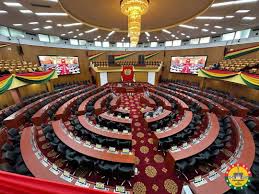
Ghana’s Parliament has adopted the National Ethics and Anti-Corruption Action Plan (NEACAP 2026–2030), which is projected to contribute between GH¢45.6 billion and GH¢87.6 billion to the country’s economy over its five-year implementation period, as President John Dramani Mahama prepares to officially launch the policy in the coming days.
The adoption of the policy framework on Friday, November 20, 2026, marks a significant step in Ghana’s efforts to strengthen accountability, transparency and the fight against corruption through a comprehensive package of institutional, financial, technological and legislative reforms.
The five-year plan seeks to move Ghana’s anti-corruption efforts beyond fragmented and largely reactive interventions towards a coordinated, preventive and enforcement-driven system that strengthens institutional integrity and promotes ethical conduct across public and private institutions.
One of its major proposals is the establishment of a National Ethics and Anti-Corruption Fund to provide dedicated, predictable and sustainable financing for anti-corruption institutions and the implementation of the action plan.
The proposed fund is expected to address longstanding funding challenges that have constrained the operations of anti-corruption agencies, enabling them to effectively undertake their preventive, investigative, educational and enforcement responsibilities.
National Ethics and Anti-Corruption Fund
A report of Parliament’s Committee on Constitutional and Legal Affairs, chaired by Mahama Shaibu, indicates that less than one per cent of Ghana’s total national revenue has been allocated to anti-corruption institutions over the years.
In 2024, GH¢497.29 million, representing 0.32 per cent of total national revenue, was allocated to anti-corruption agencies. The allocation increased marginally to GH¢507.86 million in 2025, representing only 0.28 per cent of total revenue.
To address the funding gap, the High-Level Implementation Committee proposed allocating approximately 2.5 per cent of the import levy to finance anti-corruption institutions through the proposed National Ethics and Anti-Corruption Fund.
The dedicated financing arrangement is expected to reduce the institutions’ dependence on annual government budgetary allocations, which have often been inadequate and unpredictable, affecting their operational planning and effectiveness.
The Committee observed that a sustainable funding mechanism would enhance the independence, effectiveness and operational efficiency of anti-corruption institutions while providing the resources required to strengthen Ghana’s overall anti-graft efforts.
Independent oversight and countervailing mechanisms
NEACAP also introduces countervailing mechanisms to strengthen the independence of anti-corruption institutions and address weaknesses identified under the previous National Anti-Corruption Action Plan (NACAP 2015–2024).
The High-Level Implementation Committee informed Parliament that the previous framework had failed to achieve its intended results partly because accountability mechanisms were predominantly internal, inadequately coordinated and lacked effective enforcement powers.
Under the new framework, non-state actors are expected to serve as an independent, bottom-up countervailing force to strengthen public oversight and reduce the risk of state institutions effectively policing themselves.
The plan further proposes systemic and technology-enabled oversight mechanisms to reduce human discretion and bias, improve transparency and minimise opportunities for collusion and corrupt conduct.
These include Open Procurement Tracking and e-Governance Interoperability to strengthen oversight of public procurement and government transactions.
The mechanisms are expected to facilitate real-time identification of procurement irregularities, improve access to relevant information and make unauthorised alteration or manipulation of official records more difficult.
Tackling illicit financial flows and strengthening international cooperation
Another significant component of NEACAP is the proposed strengthening of measures to address illicit financial flows (IFFs), which continue to deprive Ghana and other African countries of resources needed for national development.
Africa loses approximately US$125 billion annually through illicit financial flows, with Ghana estimated to lose about US$3 billion every year.
Recognising the transnational nature of these activities, the action plan seeks to strengthen collaboration among Ghanaian anti-corruption institutions, financial intelligence and law enforcement agencies, as well as their counterparts in other jurisdictions and relevant regional and international bodies.
The proposed measures include enhanced cooperation to identify, trace, freeze, recover and repatriate assets illicitly transferred across national borders.
The framework also seeks to strengthen multilateral partnerships to tackle complex financial transactions, the use of international tax havens and cross-border illicit trade networks.
Effective implementation of these measures is expected to reduce the loss of public resources, strengthen asset recovery efforts and improve economic governance.
Monitoring, evaluation and institutional accountability
To address weaknesses in previous anti-corruption interventions, NEACAP provides for a strengthened monitoring and evaluation framework to independently track implementation, assess performance and measure the achievement of its objectives.
The Committee observed that previous frameworks were undermined by arrangements in which state institutions were largely responsible for assessing their own performance, resulting in inadequate independent scrutiny and weak accountability.
Under the new framework, independent monitoring and evaluation arrangements are expected to strengthen oversight, measure compliance and ensure accountability for results.
However, the Committee emphasized the need for a clear and credible baseline against which progress, outcomes and impact could be measured.
It therefore urged the High-Level Implementation Committee to urgently develop the necessary baseline models and indicators to facilitate effective monitoring and evaluation of the implementation of NEACAP.
Professional Ethics Officers and institutional certification
The action plan also proposes the establishment of an Ethics Certification Institution responsible for training professionals in ethics and integrity and certifying qualified graduates as professional Ethics Officers.
The certified professionals are expected to promote ethical standards, provide guidance and monitor compliance with applicable codes of ethics within public and other relevant institutions.
In addition, NEACAP provides for the certification and licensing of institutions following assessments of their ethics and integrity frameworks.
Designated officers will assess public institutions to identify weaknesses in administrative processes, internal controls and other institutional vulnerabilities that could create opportunities for corruption.
Institutions that satisfy prescribed assessment and compliance standards will receive Certificates of Compliance, while those that fail to meet the requirements will have to address identified deficiencies before qualifying for certification.
Digital transformation and public education
Other interventions include the activation and mainstreaming of Ghana Card-enabled digital signatures across governance and public service delivery to strengthen identity verification, authenticate transactions and documents, improve data integrity and reduce opportunities for fraud.
The plan also places emphasis on ethics education, civic responsibility and community engagement, with collaboration involving the National Commission for Civic Education (NCCE) to promote public awareness and a national reorientation towards ethical conduct.
The Committee stressed that the fight against corruption should not be confined to government institutions but should involve citizens, civil society organisations, the media, the private sector and communities.
Projected economic and governance benefits
The High-Level Implementation Committee estimates that effective implementation of NEACAP could contribute between US$3.8 billion and US$7.3 billion, equivalent to approximately GH¢45.6 billion to GH¢87.6 billion, to the Ghanaian economy over the five-year implementation period.
Other anticipated benefits include reducing illicit financial flows and the loss of public resources, improving productivity and efficiency through better compliance and certification, strengthening the justice system and enhancing public confidence in the administration of justice.
The plan is also expected to improve integrity in the public service through digital transformation, ethical standards and stronger accountability mechanisms, while increasing investor confidence and potentially attracting higher levels of Foreign Direct Investment (FDI).
Parliament’s adoption of the policy framework provides the basis for its implementation, with the Committee emphasising that its success will depend on adequate and predictable financing, effective institutional coordination, independent monitoring and evaluation, and sustained commitment from all relevant stakeholders.
By: Christian Kpesese