


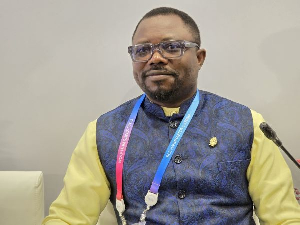
African governments must take greater ownership of their energy policies and deepen regional cooperation to develop nuclear power as a reliable pathway to industrialisation, Deputy Director for Nuclear and Alternative Energy at Ghana’s Ministry of Energy and Green Transition, Dr Robert B.M. Sogbadji, has urged.
He said African countries must be able to determine their own energy mix based on their development needs and should not allow external interests to constrain the options available to them, particularly where nuclear power could provide the reliable, large-scale electricity required to support industrial growth.
Dr Sogbadji made the call during a side-event discussion on “Women Powering Africa’s Industrial Transformation” at the just ended Future of Energy Conference (FEC) 2026 hosted by the Africa Centre for Energy Policy (ACEP) in Accra.
He argued that the high upfront cost of nuclear power made regional cooperation essential, proposing for instance that, Ghana and Nigeria could consider pooling resources to develop a nuclear power plant—or a fleet of plants—and share the electricity generated across their interconnected power systems.
“I’m looking for that cooperation that Nigeria and Ghana can bring money together to build one nuclear or a fleet of nuclear power plants and share the power into the grid,” he said.
According to Dr Sogbadji, nuclear projects require significant capital investment, making it challenging for individual West African countries to finance such projects independently. He cited Egypt’s nuclear programme as an indication of the scale of investment required to develop nuclear infrastructure.
He said regional collaboration could help countries overcome the financial barriers associated with nuclear development while creating the scale necessary to make such projects more economically viable.
Defend Africa’s energy choices
Dr Sogbadji also recounted his experience during the review of the ECOWAS energy policy, saying nuclear power was at one point at risk of being removed from the regional policy framework.
He said the experience demonstrated the importance of African officials defending energy options they consider necessary for the continent’s development.
“When you represent your country and you see that something is being taken out and you believe it will work, please defend it to the last point where you cannot defend it,” he said.
He urged African governments to take greater responsibility for financing and shaping their energy policies rather than allowing external interests to determine national and regional priorities.
“That is your national policy. And if it doesn’t go to their interest, certain things will be taken out which will affect your development,” he said.
Dr Sogbadji maintained that nuclear energy remains part of the West African energy policy and expressed hope that Ghana, Nigeria and other countries would translate the regional policy commitment into concrete cooperation.
He said Africa’s energy strategy should ultimately be shaped by the continent’s own development priorities and should combine different technologies, including nuclear power, to provide the reliable, affordable and sufficient electricity needed to drive industrialisation.
Dr Sogbadji believed that closer regional cooperation on nuclear energy could therefore provide not only a means of overcoming the financing challenges associated with nuclear projects, but also an opportunity for African countries to exercise greater ownership over the continent’s long-term energy future.
By: Christian Kpesese/NR NEWS