


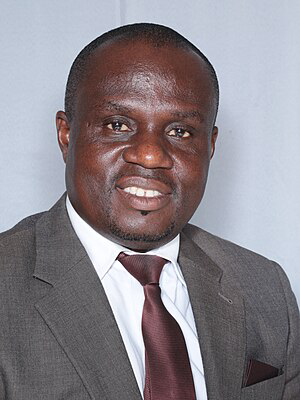
The Mahama-led government is banking on a GH¢420.9 billion expenditure programme in 2027 to accelerate economic growth, stimulate investment and address outstanding contractor arrears, Chairman of Parliament’s Economy and Development Committee, Eric Afful, has stated.
Contributing to the debate on the 2027 Budget Statement and Economic Policy, the Amenfi West MP identified the GH¢100.4 billion capital expenditure allocation as a major driver of the government’s economic expansion agenda.
He said the provision would support infrastructure development, settle outstanding obligations to contractors and restore confidence in the construction sector.
According to Mr Afful, the previous New Patriotic Party (NPP) administration left behind contractor obligations estimated at GH¢121 billion between 2017 and 2024, comprising GH¢21 billion in cash obligations and GH¢100 billion in commitments.
He argued that the 2027 capital expenditure allocation would help address these inherited liabilities while providing resources for new infrastructure projects.
Spending priorities and job creation
Mr Afful said the budget also allocated GH¢92.6 billion for wages and salaries, describing the provision as important for addressing public-sector labour concerns and supporting additional recruitment.
He cited the planned recruitment of 10,000 teachers in the first half of 2027, alongside employment opportunities in other public institutions.
The budget further provides GH¢13.7 billion for goods and services to support public service delivery.
He maintained that the overall expenditure programme, alongside private consumption and investment, would stimulate economic activity and sustain growth.
Defends economic resilience
Defending the government’s economic management, Mr Afful said Ghana had demonstrated resilience despite four major shocks in 2026: the Middle East conflict and rising global oil prices, declining cocoa prices, the loss of approximately 1,002 megawatts of electricity generation capacity following damage to the Akosombo switchyard control room, and the June floods.
He cited inflation of 5.5 per cent as of October 2026, economic growth of 6.2 per cent and a reduction in the monetary policy rate to 11 per cent as evidence of improved macroeconomic conditions.
He also pointed to a turnaround in the primary balance from a deficit of 4.5 per cent to a surplus of 1.5 per cent of GDP, with public debt estimated at 47.5 per cent of GDP.
Mr Afful said the government had completed the final review of Ghana’s US$3 billion IMF-supported Extended Credit Facility programme in July 2026 and transitioned to a 36-month non-financing Policy Coordination Instrument.
Challenges NPP over debt
The Amenfi West MP also challenged the Minority’s criticism of the government’s debt management, arguing that the current administration was dealing with substantial obligations inherited from its predecessor.
He said the NPP inherited public debt of approximately GH¢122 billion in 2017 but left office in 2024 with a debt stock of GH¢726.8 billion.
Referencing the 2027 Budget, he put the current debt stock at approximately GH¢759 billion, representing 47.5 per cent of GDP.
He urged the Minority to assess the country’s debt position in the context of inherited obligations and the government’s efforts to meet outstanding commitments.
New Economy and 24-hour Economy
Mr Afful also defended the government’s New Economy agenda, explaining that it was distinct from, but complementary to, the 24-hour Economy policy.
He said the New Economy represented the broader government-led economic transformation agenda, while the 24-hour Economy was designed to encourage private-sector participation.
He urged MPs to focus on the substance of the budget, expressing confidence that its spending priorities would support economic recovery, infrastructure delivery, job creation and sustainable growth.
By: Christian Kpesese