


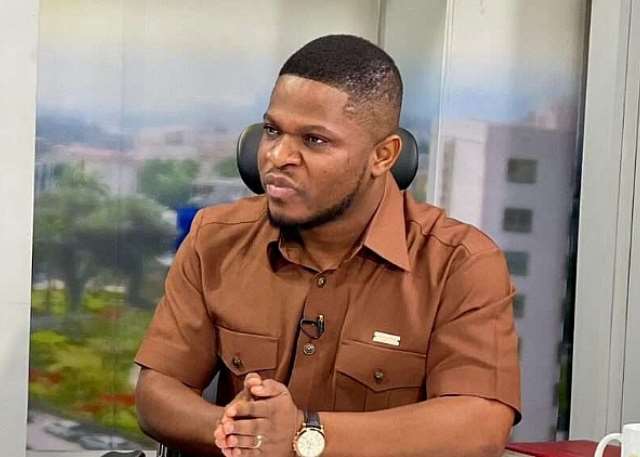
Chief Executive Officer of the Ghana Gold Board (GoldBod), Sammy Gyamfi, Esq., will headline a high-level gathering of mining stakeholders in Accra on Tuesday, August 18, as the National Mining Dialogue 2026 seeks to rethink Ghana’s approach to securing a sustainable social licence to operate.
The dialogue, scheduled at the Kempinski Hotel in Accra, is being organised by Semmis DS Group Limited in collaboration with Ekosii Sen on Asempa FM. It will bring together government officials, mining companies, regulators, traditional authorities, small-scale miners, civil society organisations and the media to examine the relationship between mineral extraction and the communities in which mining takes place.
Themed “Rethinking the Social License to Operate,” the forum comes at a significant time for Ghana’s mining industry, with debates over local participation, responsible mining, formalisation of artisanal and small-scale mining, gold traceability, local value retention and the contribution of mineral wealth to national development gaining renewed attention.
Sammy Gyamfi to speak on Ghana’s evolving gold sector
Mr Gyamfi, who is the Chief Executive Officer of GoldBod, is expected to provide insight into Ghana’s evolving gold-sector reforms, particularly the formalisation and regulation of the artisanal and small-scale mining sector, gold traceability and efforts to retain greater value from Ghana’s mineral resources.
His participation comes as GoldBod continues to position itself at the centre of Ghana’s gold value chain. In recent engagements, Mr Gyamfi has highlighted the institution’s contribution to foreign-exchange generation, international reserves and economic stability, while GoldBod has also been working to map the movement of gold from extraction sites through local buying points and refineries to export markets.
The GoldBod CEO is also expected to engage stakeholders on how reforms in the gold sector can translate into more sustainable economic opportunities for mining communities.
The organisers say the dialogue is intended to move the conversation beyond the traditional focus on mining production and revenue towards the broader question of whether communities hosting mining operations are receiving tangible and lasting benefits from the resources extracted from their lands.
Key mining stakeholders to participate
Other featured speakers include Adjoa Obuobia Darko-Opoku, Administrator of the Ghana Medical Trust Fund; Isaac Andrews Tandoh, Chief Executive Officer of the Minerals Commission; and Philip Osei Bonsu, Esq., who will serve as host.
The wider programme is also expected to draw senior government and industry figures, including Chief of Staff Dr Julius Debrah, Minister for Lands and Natural Resources Emmanuel Armah-Kofi Buah, Chief Executive Officer of the Minerals Income Investment Fund (MIIF) Justina Nelson, Ga Mantse His Royal Majesty Nii Tackie Teiko Tsuru II, and President of the Ghana Journalists Association Albert Kwabena Dwumfour. Former Deputy Minister for Lands and Natural Resources George Mireku Duker is also listed among the expected participants.
The participation of Minerals Commission CEO Isaac Andrews Tandoh is expected to bring a regulatory perspective to discussions on licensing, compliance, local content and local participation in the mining sector.
Meanwhile, the presence of traditional leadership and representatives of community interests is expected to reinforce the central question of the dialogue: how Ghana can build a mining industry in which communities see themselves as meaningful beneficiaries rather than simply hosts of mineral extraction.
From corporate social responsibility to measurable community benefits
A major focus of the dialogue will be the concept of the social licence to operate — the degree of acceptance and trust mining companies earn from communities and other stakeholders affected by their activities.
The organisers are expected to challenge stakeholders to rethink corporate social responsibility and consider more measurable approaches to community development.
Issues such as employment, local procurement, skills development, healthcare, education, environmental protection, infrastructure and opportunities for indigenous businesses are expected to feature prominently.
The dialogue will also examine how mining companies can make clearer and more verifiable commitments to the communities in which they operate, with organisers proposing mechanisms for tracking commitments beyond the conference itself.
Gold, national reserves and local value retention
Another important strand of the discussion will be the extent to which Ghana retains economic value from its mineral resources.
The conference is expected to consider local refining, national reserve accumulation, Ghanaian participation in the mining value chain, employment and skills development, local procurement and downstream value addition.
These issues have become increasingly important as GoldBod seeks to strengthen Ghana’s position in the gold value chain. GoldBod recently disclosed that 7.1 metric tonnes of gold purchased by the institution in 2026 had been refined locally, a development Mr Gyamfi said was helping Ghana retain refining fees while supporting jobs and economic activity.
A platform for accountability
Organisers say the National Mining Dialogue is designed not merely as a platform for speeches but as an opportunity for stakeholders to identify practical areas of cooperation and accountability.
Large-scale mining companies, small-scale miners, regulators, traditional authorities, civil society, policymakers and the media are expected to bring different perspectives to the discussion.
The event is also expected to explore mechanisms through which commitments made by mining companies and other stakeholders can be followed up after the dialogue, including a proposed framework for stronger engagement between mining companies and host communities.
For the organisers, the ultimate test of Ghana’s mining sector is not only how much gold and other minerals the country produces, but how effectively that wealth contributes to national development and improves the lives of people living in mining communities.
The National Mining Dialogue 2026 is poised to provide a timely platform for a broader national conversation on the future of mining and the trust required to sustain it.
By: Christian Kpesese/NR NEWS