


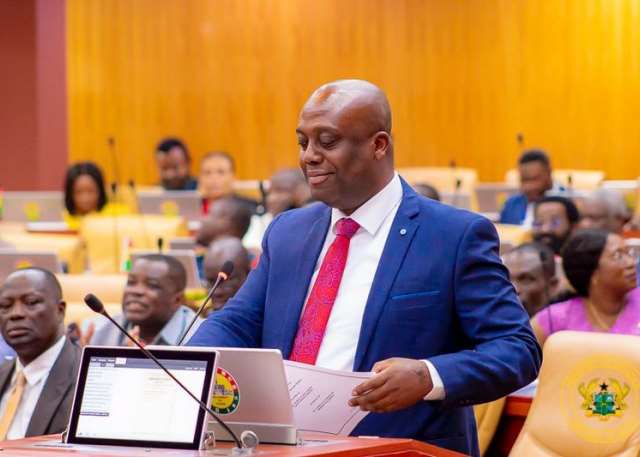
The Government has moved to seal long-standing revenue leakages at Ghana’s ports and the Free Zones enclave following the passage of the Customs Bill, 2026 by Parliament on July 28, 2026.
This paves the way for a modern customs regime aimed at strengthening revenue mobilisation, improving trade facilitation and combating smuggling.
Concluding concluding comments on the motion for the second reading of the Bill on Tuesday, Deputy Minister for Finance, Thomas Nyarko Ampem, said the legislation introduces sweeping reforms to address persistent abuses within the customs system, particularly transit trade, free zones operations and transshipment arrangements.
He explained that under the new framework, goods declared as destined for neighbouring countries would have their customs duties settled before leaving Ghana’s ports.
“If you say the goods are meant for Burkina Faso, you pay the duty to Burkina Faso customs at the Tema Port or Takoradi Port,” he told Parliament.
According to him, the measure is intended to eliminate the widespread practice where importers falsely declare goods as transit cargo only for the consignments to be diverted onto the Ghanaian market without payment of the appropriate duties.
“Because of the abuse and the pretense that goods are meant for our neighbouring countries and they find their way back into the country,” he noted.
The Deputy Finance Minister also announced the new legislation introduces tighter customs controls within the country’s Free Zones enclave, describing the sector as another area where significant loopholes have undermined revenue collection.
“We are tightening the customs provisions in the free zones to be able to minimize their abuse,” he said.
Another major reform contained in the Bill is the prohibition of road transshipment.
Mr. Ampem explained that genuine transshipment involves the transfer of cargo directly from one vessel to another and should not involve transporting goods by road, a practice authorities believe has facilitated diversion of cargo into the domestic market.
“The amendment will outlaw transshipment by road. If you say you are doing transshipment, moving cargo from one ship to the other, do so on the waters. Don’t bring them on the road… only for them to end up in the country,” he emphasised.
The Customs Bill, 2026 consolidates several amendments made to Ghana’s customs laws over the years into a single comprehensive legal framework to improve consistency, enhance customs administration and facilitate legitimate trade. It also seeks to provide a clearer legal basis for the imposition, collection and accounting of customs duties and related taxes while strengthening enforcement against customs offences.
Parliament unanimously passed by the bill after the consideration stage.
By: Christian Kpesese