


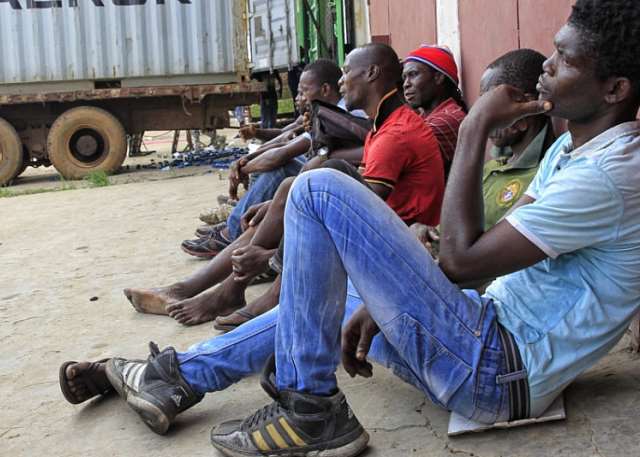
Nearly two million young Ghanaians aged 15 to 35 were not in education, employment or training (NEET) as of the third quarter of 2025, exposing a major challenge to Ghana’s efforts to turn its youthful population into an engine of economic growth.
The alarming figure, representing about 19.5 per cent of the country’s youth population, was disclosed by the Ghana Statistical Service (GSS) in a statement on July 28 marking the 2026 World Population Day.
The GSS said the affected young people were neither acquiring skills through education nor participating in productive employment, leaving a significant portion of the country’s youthful population disconnected from opportunities that could improve their livelihoods and contribution to the economy.
Youth unemployment nearly doubles national rate
The development comes amid a wider youth unemployment crisis.
Data from the Quarterly Labour Force Survey for the first three quarters of 2025 showed that Ghana’s national unemployment rate averaged 12.8 per cent, while unemployment among young people aged 15 to 35 averaged 21.9 per cent—almost twice the national rate.
The problem was particularly severe in some regions.
Greater Accra recorded a youth unemployment rate of 31.9 per cent, followed by the Central Region at 27.4 per cent and Ashanti Region at 27.2 per cent, with the three regions consistently recording rates above the national youth average during the period.
Ghana’s youth population expanding
The statistics assume greater significance against the backdrop of Ghana’s rapidly growing population.
Ghana’s population increased from 18.9 million in 2000 to 30.8 million in the 2021 Population and Housing Census, and was estimated at 33.7 million in 2025.
Young people aged 15 to 35 now constitute 36.9 per cent of the projected population, meaning more than one in every three people in Ghana falls within the youth bracket.
The GSS said the demographic structure presents Ghana with an opportunity to realise a demographic dividend, but warned that this will require strategic investments in education, skills development and health.
Call for skills, decent jobs
The Service said Ghana must urgently bridge the gap between its youthful population and labour-market opportunities by strengthening technical and vocational education, improving school-to-work transition pathways and expanding entrepreneurship opportunities.
It also called for the expansion of productive sectors capable of creating decent and sustainable jobs for the country’s growing youth population.
The GSS stressed that when young people are equipped with relevant skills and given opportunities to apply them, they become active contributors to inclusive economic growth rather than passive beneficiaries of development.
Early pregnancy another concern
The Service also drew attention to factors that could undermine young people’s ability to acquire education and skills, particularly among adolescent girls.
It cited the 2022 Ghana Demographic and Health Survey, which found that 15 per cent of girls aged 15 to 19 had ever been pregnant, while 11 per cent had given birth.
According to the GSS, early pregnancy can interrupt education, constrain skills development and reduce long-term economic participation, particularly for young women.
Demographic dividend or development challenge?
As Ghana marks World Population Day under the theme “Investing in Ghana’s Future through Healthy, Skilled and Empowered Young People,” the GSS has put the country’s demographic future firmly on the national development agenda.
The Service warned that whether Ghana’s young population becomes the country’s greatest economic asset or its most pressing development challenge will depend on the investments made today to keep young people healthy, equip them with relevant skills and empower them to participate meaningfully in national development.
With nearly two million young people already outside education, employment and training, the statistics provide a powerful warning: Ghana’s demographic dividend will not materialise automatically—it must be deliberately built through skills, jobs, health and sustained investment in its young population.
This version gives the story a stronger human-development, employment and economic-governance angle, while retaining the key GSS statistics and facts.
By: Christian Kpesese