


The FIFA World Cup has always been celebrated as the ultimate festival of global unity, a competition where borders, politics, race, language and ideology temporarily give way to the universal language of football.
That is why the bizarre circumstances emerging from the 2026 FIFA World Cup should concern not only Ghanaians but every football-loving nation.
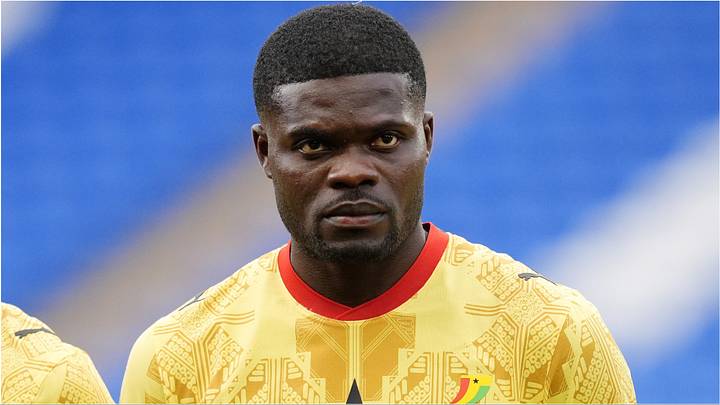
The latest controversy involves Ghana midfielder and vice-captain Thomas Partey, who has been ruled out of the Black Stars’ opening Group L match against Panama in Toronto after Canadian authorities reportedly refused his visa application. FIFA confirmed that the player would be unable to travel from Ghana’s team base camp in the United States to Canada for the fixture.
Whatever the legal and administrative considerations behind the decision, the development exposes a troubling contradiction at the heart of a tournament jointly hosted by the United States, Canada and Mexico.
The World Cup is one tournament, not three separate competitions.
FIFA regulations permit each participating nation to register a 26-man squad for the tournament. Once a player has been duly selected, accredited and cleared by FIFA to participate in the competition, it raises legitimate questions when one host country effectively prevents that player from taking part in a match while the other host nations permit his entry.
The issue extends beyond Thomas Partey.
In recent days, reports have emerged of visa and entry complications affecting officials, referees and supporters travelling to the World Cup. Somali referee Omar Artan, selected by FIFA for the tournament, was reportedly denied entry into the United States despite holding a valid visa, while concerns have also been raised about broader immigration restrictions affecting participants and fans.
Such developments strike at the very essence of what the World Cup is supposed to represent.
Football’s governing body has repeatedly promoted the game as a force for inclusion, equality and global participation. Yet when players, officials or supporters encounter differing immigration barriers across host nations during a single tournament, the integrity of that vision inevitably comes under scrutiny.
To be clear, sovereign nations retain the right to enforce their immigration laws. FIFA itself has emphasized that visa decisions remain the responsibility of host governments and not the governing body.
However, when countries bid to host the world’s largest sporting event, there is a reasonable expectation that mechanisms will be established to ensure that accredited players, officials and participating delegations can move seamlessly across all tournament venues.
A World Cup should never be decided, influenced or disrupted by administrative obstacles by single nation which accepted to co-host the event with others.
No football supporter buys a ticket hoping to witness immigration controversies. Fans travel across continents to watch the world’s best players compete on the grandest stage. They deserve a tournament where sporting merit, not visa complications, determines who takes the field.
For Ghana, the timing could hardly be worse. The Black Stars are preparing for a difficult group campaign against Panama, England and Croatia. Losing an experienced midfielder before a ball has even been kicked creates an avoidable distraction and raises concerns about competitive fairness.
The 2026 World Cup was intended to showcase unprecedented cooperation among three host nations. Instead, before the tournament has fully found its rhythm, questions are already being asked about whether the competition’s logistical and immigration framework matches FIFA’s vision of a truly global event.
The World Cup belongs to the world.
Its success depends not only on magnificent stadia, record attendances and television audiences, but also on ensuring that every qualified player, every accredited official and every legitimate supporter can participate in the celebration.
Football has spent decades breaking down barriers.
It would be unfortunate if the 2026 FIFA World Cup became remembered, even in part, for erecting new ones.
By: Christian Kpesese
When Football Unites but Borders Divide: The Three-Host World Cup Paradox


RELATED ARTICLES
- Advertisment -