


The Ghana Gold Board (GoldBod) has set its sights on ending Ghana’s export of raw minerals by 2030, with a growing proportion of the country’s artisanal and small-scale gold output being processed locally as part of efforts to retain more mineral wealth within the economy.
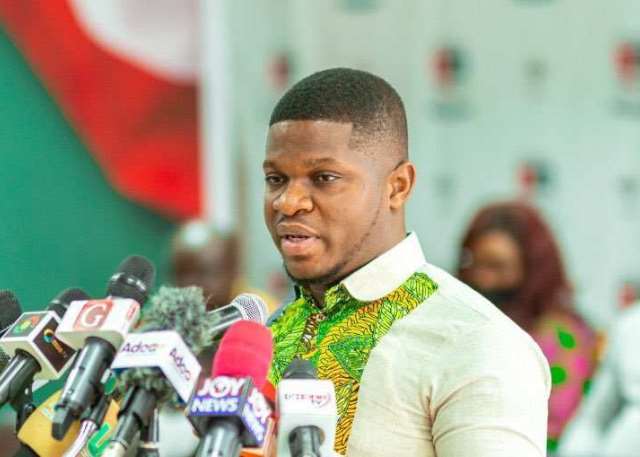
Chief Executive Officer of GoldBod, Sammy Gyamfi, said the strategy was aimed at transforming Ghana’s gold industry from one largely dependent on exporting unprocessed gold into a value-adding sector capable of supporting domestic industry, creating jobs and expanding opportunities for Ghanaian businesses.
Delivering the keynote address at the 2026 African Minerals Policy Forum, Mining in Motion, Mr Gyamfi said GoldBod was working towards a transition from Ghana’s complete reliance on raw mineral exports at the end of 2024 to zero raw mineral exports by the end of 2030.
He said the objective was to ensure that gold production translated into greater economic benefits for Ghanaians rather than allowing much of the value generated along the supply chain to accrue outside the country.
Mr Gyamfi disclosed that GoldBod had entered into gold refining services agreements with two locally owned refineries, Gold Coast Refinery and Royal Ghana Gold Refinery, which had cumulatively refined 25 tonnes of artisanal and small-scale gold purchased and exported by the Board in 2026.
He said the volume represented about 30 per cent of the 85.4 tonnes of artisanal and small-scale gold exported by GoldBod from January 1 to October 20 this year.
The pace of local processing had also increased in recent months, with 18.7 tonnes refined locally since August 1, representing 76 per cent of the 25 tonnes exported over the period.
In October alone, GoldBod refined 5.4 tonnes locally out of the 5.7 tonnes of artisanal and small-scale gold it had purchased, representing 94.6 per cent of the volume.
Mr Gyamfi said the government was also ensuring that a portion of large-scale gold acquired under the Ghana Accelerated National Reserve Accumulation Programme (GANRAP) was refined locally.
He disclosed that 30 per cent of the output of large-scale mining companies purchased by the government under the programme was being refined in Ghana.
The two refineries, he added, were pursuing strategies to secure accreditation from the London Bullion Market Association (LBMA) within the next three to five years, with regulatory guidance from GoldBod.
Mr Gyamfi said developing local refining capacity was central to building a mining economy in which Ghanaian businesses could participate beyond extraction and the initial sale of minerals.
He argued that mineral sovereignty would remain incomplete if financing, equipment, technology, processing and the most lucrative opportunities in the mining value chain continued to be controlled elsewhere.
The GoldBod CEO said deliberate government policies were needed to enable local enterprises and young professionals to become mine owners, engineers, equipment providers, financiers, processors, refiners and traders.
He said GoldBod was also undertaking geological investigations at Funsi in the Upper West Region and Bensere in the Ashanti Region in partnership with the Ghana Geological Survey Authority to reduce investment risks, attract credible investors and strengthen Ghana’s position in negotiating equity interests in future mines.
Mr Gyamfi said the broader objective was to move beyond dependence on royalties and free-carried interests towards greater Ghanaian ownership of sustainable mining operations.
He called for African countries to prioritise local processing, indigenous enterprise and value retention to ensure that the continent’s mineral resources generated lasting economic opportunities for its people.
By: Christian Kpesese