


The Minority in Parliament has intensified its call for a full-scale parliamentary inquiry into Ghana’s Domestic Gold Purchase Programme and the operations of the Ghana Gold Board (GoldBod), arguing that recent findings by the World Bank have reinforced concerns over the management and oversight of the programme.
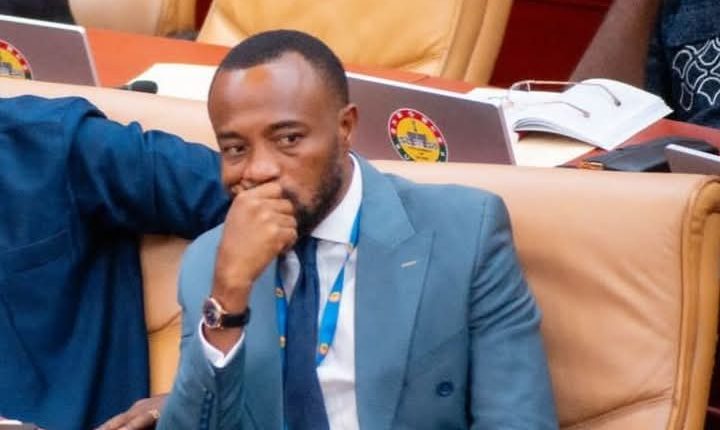
Second Deputy Minority Whip and MP for Weija-Gbawe, Jerry Ahmed Shaib, says the World Bank’s description of GoldBod-related operations as a “significant and insufficiently monitored risk” to the economy provides fresh justification for Parliament to investigate the programme and establish how losses running into billions of dollars occurred.
In a statement posted on his social media handles, Mr Shaib said the Minority’s concerns were no longer based solely on political claims, pointing to findings contained in recent reports by both the International Monetary Fund (IMF) and the World Bank.
He said the original concept behind the Domestic Gold Purchase Programme was sound, arguing that the initiative, introduced under the previous New Patriotic Party (NPP) administration, was designed to use Ghana’s gold resources to strengthen the country’s reserves and support the stability of the cedi.
According to him, the challenge was not the policy itself but what he described as the current government’s handling and supervision of the programme.
“The Domestic Gold Purchase Programme was a smart idea birthed by the Nana Addo Dankwa Akufo-Addo administration, with Dr Mahamudu Bawumia as the brain behind its design,” Mr Shaib said.
He argued that the IMF’s assessment had already raised serious questions about the financial consequences of the programme, citing the Fund’s Ghana: Selected Issues report, which he said estimated losses of more than $1.7 billion in 2025, equivalent to about 1.5 per cent of GDP.
Mr Shaib said the World Bank’s latest assessment had now raised an additional concern—oversight.
He cited the World Bank’s 10th Ghana Economic Update: Reset for Growth, Sustaining Macroeconomic Recovery and Unlocking Transport for Transformation, published in August 2026, which identifies GoldBod-related operations among significant risks that are insufficiently monitored.
For the Minority, he said, the assessment strengthens the case for Parliament to establish exactly how the programme is being operated, monitored and accounted for.
Questions over off-takers, discounts
Mr Shaib said the World Bank’s observations should compel the government to answer questions the Minority had raised over the programme, particularly concerning the identities of off-takers, discounts applied to gold purchases and the fees associated with transactions.
“Where are the off-takers? What discounts were applied to our gold, and who approved them? What fees changed hands, and who ultimately bore the losses?” he asked.
He also raised concerns about the treatment and reporting of gold reserves acquired under the programme, arguing that such reserves should be subject to transparent and standard reserve reporting.
According to him, the World Bank’s report also highlights contingent liabilities associated with the programme and identifies GoldBod, alongside reform delays, as an ongoing risk to Ghana’s economy.
Renewed demand for parliamentary inquiry
The Second Deputy Minority Whip said the Minority was therefore renewing its demand for a comprehensive parliamentary inquiry into GoldBod and the Bank of Ghana’s gold operations.
He said such an inquiry should have the authority to summon relevant officials and obtain documents necessary to establish the facts surrounding the programme.
The Minority is also demanding:
- Full disclosure of the identities of gold off-takers;
- Disclosure of discounts granted and the officials who approved them;
- Details of fees charged and the parties that ultimately bore losses;
- Systematic public disclosure of contingent liabilities associated with the programme;
- Transparent accounting for gold reserves acquired through the programme; and
- A clear government plan to address weaknesses identified by both the IMF and World Bank.
Mr Shaib welcomed what he described as the Speaker of Parliament’s admission of the Minority’s motion on the matter, saying that the development provides Parliament an opportunity to pursue the issue through a formal inquiry.
He argued that the latest World Bank findings make such scrutiny even more urgent.
“This is not a case against Dr Bawumia’s original vision for gold-backed reserves. It is a case against this government’s incompetent management of a good policy it inherited,” he said.
He maintained that Parliament must go beyond political statements and establish the facts surrounding the programme, insisting that Ghanaians deserved transparency on the management of the country’s gold resources and reserves.
The Minority, he added, would continue pressing for answers until the financial and operational questions surrounding GoldBod and the Domestic Gold Purchase Programme were fully addressed.
By: Christian Kpesese/NR NEWS