


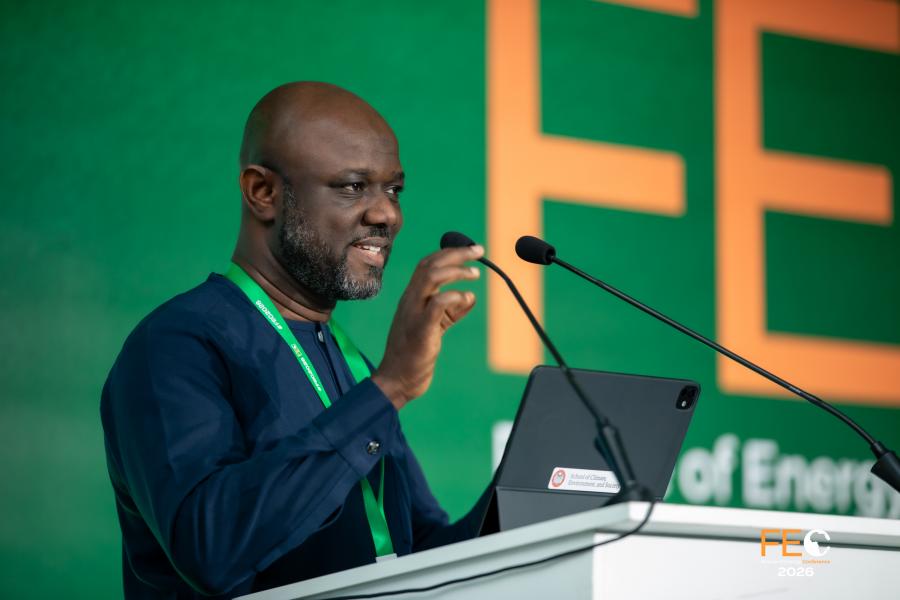
The Executive Director of the Africa Centre for Energy Policy (ACEP), Benjamin Boakye, has called for a fundamental rethink of how Africa finances, develops and integrates its energy systems, warning that the continent’s transformation will depend heavily on access to affordable and reliable energy.
Speaking at the opening of the Future of Energy Conference 2026 in Accra on Tuesday, August 25, Mr Boakye said energy must be developed not merely to expand infrastructure, but to lower the cost of electricity for consumers and support industrialisation, economic growth and the continent’s energy transition.
He identified the high cost of capital as one of the major constraints to affordable electricity in Africa, arguing that perceived investment risks often translate into expensive financing, with the resulting costs ultimately borne by governments and consumers.
According to him, governments and investors must adopt better risk-allocation mechanisms, supported by stronger institutions, reliable data and more rigorous assessments of actual market risks. Where governments assume significant market and payment risks through sovereign guarantees, he said, such risks should be properly reflected in financing arrangements to help reduce the cost of capital.
Mr Boakye also challenged the conventional understanding of energy innovation, saying Africa’s response should go beyond deploying technologies such as solar panels, batteries and smart grids.
He said innovation was equally necessary in the way energy projects are financed, contracted and structured, stressing that concessional and commercial financing should be combined strategically to improve project economics and make electricity more affordable.
The ACEP Executive Director further placed African innovation and young people at the centre of the continent’s energy future.
He cited ideas emerging from the Future of Energy Conference Innovation Challenge, including applications of energy in agriculture, waste-to-energy and hydrogen production, as evidence that African researchers and entrepreneurs can develop solutions suited to the continent’s circumstances.
He said the expanded involvement of the African Union Development Agency-NEPAD (AUDA-NEPAD), the African Minerals Development Centre (AMDC), Africa Change Lab, the United Nations Development Programme (UNDP) and Timbuktoo should help move promising ideas from research and innovation into viable businesses and investments.
“Our young people should not only be beneficiaries of Africa’s future energy system. They should help design it,” Mr Boakye said.
He also called for deeper regional electricity integration, pointing to the progress made by the West, Southern, Eastern and Central Africa Power Pools in facilitating electricity trade and allowing countries to optimise differences in their energy systems.
However, he cautioned that differences in grid architecture, system voltages, protection systems and supervisory control and data acquisition (SCADA) systems across sub-regions could make future interconnection more complex and costly.
He therefore urged African countries to ensure that new energy infrastructure is designed with interoperability in mind, arguing that decisions taken today should not create unnecessary barriers to continental power integration in the future.
Beyond financing and infrastructure, Mr Boakye called for stronger continental engagement on international trade and energy-transition policies. He expressed concern that emerging uncertainties around global trade policies could undermine recent reductions in the cost of solar panels and battery storage and increase the difficulty of accelerating Africa’s transition to cleaner energy.
He said Africa needed a coordinated continental response rather than relying solely on bilateral engagements, particularly where global policy decisions could affect the cost and availability of technologies critical to the energy transition.
Mr Boakye said ACEP would seek to engage the African Union more actively after the conference to strengthen global collaboration and place energy affordability more firmly within the continental agenda on industrialisation, climate action and the energy transition.
He summed up the challenge facing Africa in simple terms: “Africa needs energy that is affordable enough to power our transformation.”
For him, achieving that goal will require better policies, smarter financing, appropriate technologies, African innovation, stronger regional cooperation and resilient partnerships.
“The cost of energy is not a secondary consideration in our development. It is one of the central determinants of what Africa can become,” he said.
By: Christian Kpesese/NR NEWS