


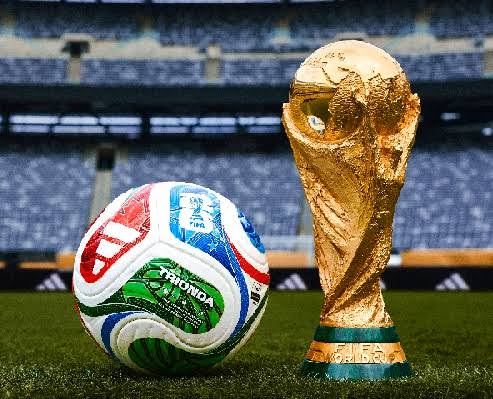
For nearly a century of FIFA World Cup history, one remarkable trend has remained untouched: no foreign head coach has ever led a national team to World Cup glory. Since the inaugural tournament in 1930, every nation that has lifted football’s most coveted trophy has done so under the guidance of a coach who shared the same nationality as the players.
The enduring record lives on as the 2026 FIFA World Cup progresses, where several football powerhouses, including Ghana, England, Belgium and Senegal, are under the leadership of foreign managers.
The World Cup has been won 22 times by just eight countries—Argentina, Brazil, Uruguay, Italy, Germany, France, England and Spain. In every instance, the victorious coach has been a citizen of the winning nation.
Argentina’s triumph in Qatar in 2022 came under Lionel Scaloni, an Argentine. France’s 2018 success was masterminded by Didier Deschamps, also French. Germany won in 2014 under Joachim Löw, Spain’s historic 2010 victory came under Vicente del Bosque, while Italy’s 2006 title was secured under Marcello Lippi.
Earlier champions followed the same pattern. Brazil’s five World Cup victories were achieved under Brazilian coaches, including Mário Zagallo and Carlos Alberto Parreira. England’s lone title in 1966 came under Sir Alf Ramsey, while Uruguay’s victories in 1930 and 1950 were guided by Alberto Suppici and Juan López Fontana respectively.
Football historians attribute the trend to several factors, including a deeper understanding of a nation’s football philosophy, culture, language and player mentality. National coaches often possess long-standing relationships with youth development structures and are better positioned to unite players around a shared national identity during the high-pressure environment of the World Cup.
Despite the impressive achievements of several foreign coaches at continental championships and club level, the World Cup has remained an elusive prize. Managers such as Sven-Göran Eriksson (England), Luiz Felipe Scolari (Portugal), Bora Milutinović (multiple nations), Guus Hiddink (South Korea and Australia), José Pékerman (Colombia), Hervé Renard (Saudi Arabia), and Roberto Martínez (Belgium and Portugal) all enjoyed varying degrees of success but ultimately fell short of breaking the World Cup barrier.
The statistic is particularly striking given the growing globalization of football. Today, many national teams employ foreign technical experts in pursuit of tactical innovation and international experience. Nevertheless, the ultimate prize has continued to favour coaches who understand the unique football identity of their homeland.
As the 2026 FIFA World Cup unfolds across the United States, Canada and Mexico, attention will once again focus on whether history can finally be rewritten. If a foreign coach succeeds in lifting the trophy with another nation, it would mark the end of one of football’s longest-standing records.
Until then, the numbers remain unequivocal: 22 World Cup tournaments, eight champion nations, and every single winning team led by a coach from its own country—a tradition that has defined the game’s greatest stage since 1930.
By: Christian Kpesese/www.naturalresourcesnews.com