


The Ghana Gold Board (GoldBod) has begun procurement processes to establish a nationwide gold traceability and tracking system aimed at ensuring every ounce of gold purchased from artisanal and small-scale miners can be traced to responsible and legal sources.
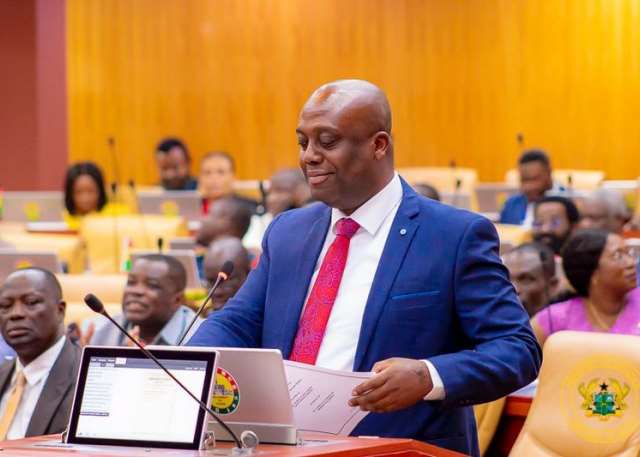
Deputy Minister for Finance, Thomas Ampem Nyarko, disclosed this on the floor of Parliament on Wednesday, June 24, 2026, while responding to questions from the Member of Parliament for Oforikrom, Michael Kwasi Aidoo, on the quantity of gold purchased by GoldBod, its sources of supply and the amount being spent on the purchases.
The Deputy Minister described GoldBod as a critical pillar of government’s economic recovery strategy.
“Let me state from the outset that the Ghana Gold Board is a strategic arm of our nation’s macroeconomic recovery, anchored on foreign exchange mobilisation and anti-smuggling architecture,” he told Parliament.
According to him, the establishment of GoldBod under the Ghana Gold Board Act, 2025 (Act 1140), is intended to formalise Ghana’s gold trade, plug leakages and ensure the country captures value that was previously lost through smuggling and fragmented trading channels.
He cited reports, including a Reuters publication, indicating that Ghana lost an estimated US$11.4 billion between 2019 and 2023 through gold smuggling, adding that GoldBod was gradually reversing the trend.
Mr Ampem Nyarko announced that GoldBod is currently undertaking a national competitive tendering process to procure a nationwide gold traceability and tracking system that will be deployed across the country.
The system, he explained, would ensure that all gold purchased by the state agency is traceable and mined responsibly.
“GoldBoard is going through a national competitive tendering process to procure a nationwide gold traceability and tracking system that will be deployed across the entire country to ensure that the gold GoldBod purchases is traceable and mined responsibly,” he said.
He added that government was simultaneously implementing interventions to protect the environment while promoting responsible mining practices.
Providing details of GoldBod’s operations, the Deputy Minister said the institution sources gold from two principal channels — the artisanal and small-scale mining (ASM) sector and large-scale mining companies.
However, he noted that purchases are overwhelmingly dominated by the ASM sector.
Between January 2025 and May 2026, GoldBod purchased a total of 135.843 metric tonnes of gold (gross weight), of which 135.221 metric tonnes, representing about 99.5 per cent, came from artisanal and small-scale miners.
He further disclosed that in 2025 alone, GoldBod cumulatively purchased, aggregated and exported 104 metric tonnes of ASM gold, generating more than US$10 billion in revenue for the country.
Responding to a supplementary questions, Mr Ampem Nyarko also revealed that government had spent US$16.1 billion on gold purchases between January 2025 and May 2026.
“The figure is sixteen point one billion United States dollars,” he stated.
He stressed that government’s broader objective was to transform Ghana’s gold trade from an opaque and fragmented system into a transparent and value-driven enterprise.
“The bigger policy point is that government is deliberately shifting Ghana from a regime where gold wealth was dispersed and smuggled. Through the Gold Board, we have a regime where gold is transparently aggregated, assayed, refined, exported and turned into foreign exchange and reserves for the Republic with visible and tangible benefits for the entire country,” he explained.
The Deputy Minister also disclosed that GoldBod has established an extensive licensing network to regulate gold purchases nationwide.
As of May 31, 2026, the institution had licensed 1,184 buyers, comprising two aggregators, 67 self-financing aggregators, 736 Tier Two buyers and 379 Tier One buyers.
Under the terms and conditions of their licences, the buyers are required to purchase gold exclusively from licensed miners before selling to GoldBod, a measure government believes will curb illegal trading and strengthen accountability throughout the gold value chain.
During the proceedings, lawmakers also sought assurances that the dominance of artisanal miners in GoldBod’s supply chain would not inadvertently encourage illegal mining, popularly known as galamsey.
In response, Mr Ampem Nyarko said GoldBod operates strict compliance mechanisms to safeguard the integrity of the system.
“GoldBoard goes through a strict process to license buyers and they have conditions they need to meet,” he said.
He also dismissed suggestions that the institution was incurring losses.
“There are no losses at the GoldBoard,” he stated.
The parliamentary exchanges underscore government’s increasing reliance on the gold sector to stabilise the economy, strengthen foreign exchange reserves and dismantle long-standing smuggling networks that have deprived the country of billions of dollars over the years.
With the nationwide traceability system expected to be rolled out after the procurement process is completed, Government is optimistic that Ghana will significantly enhance transparency, environmental compliance and investor confidence across the country’s gold trade.
By: Christian Kpesese