


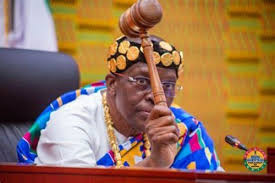
A new assessment of Ghana’s Parliament has revealed that the Ninth Parliament recorded the weakest level of citizen participation in law-making since the inception of the Fourth Republic in 1993, raising concerns about transparency, legislative scrutiny and democratic accountability.
The findings contained in the Parliamentary Performance Assessment Report (2025) released by Parliamentary Network Africa (PNAfrica), reviewed the activities of the 9th Parliament during its first session from January to December 2025.
According to the report, opportunities for public involvement in the legislative process were extremely limited, with broader stakeholder engagement taking place in less than 10 percent of all laws passed during the year.
The report attributes the trend largely to Parliament’s heavy reliance on Certificates of Urgency. Of the 39 government-sponsored bills passed in 2025, 34 were processed under urgency procedures, representing 87 per cent of all legislation approved during the period.
PNAfrica noted that the accelerated process significantly reduced the time available for public scrutiny, stakeholder consultations and expert input before laws were enacted. Important legislation, including the Ghana Gold Board Bill, the Virtual Assets Service Providers Bill and the Social Protection Bill, were among those passed under urgency procedures.
The assessment found that of the five bills that did not go through the urgency route, only three were opened to public memoranda and consultations, while the remaining two were considered largely through engagements with government institutions.
“The heavy reliance on urgency procedures raises concerns about the depth of legislative scrutiny and deliberation,” the report observed.
Beyond the issue of public participation, the report identified several institutional challenges affecting Parliament’s effectiveness.
It found that MPs asked 398 parliamentary questions during the year, including 81 urgent questions on matters of public importance. However, the report noted that these oversight mechanisms remain largely dependent on the voluntary initiative of legislators and are often underutilised.
The report also highlighted disparities in committee activity. While committees such as Appointments and Public Accounts were highly active, several sector-specific committees recorded minimal engagements despite their oversight responsibilities.
On representation, women occupied 41 of the 276 seats in Parliament, representing 14.86 per cent of the House, a modest improvement over previous legislatures but still below international benchmarks. Women also remained underrepresented in key leadership positions.
The assessment further questioned the reliability of parliamentary attendance records, citing apparent inconsistencies between officially reported attendance figures and repeated concerns raised by the Speaker over low attendance and quorum challenges in the Chamber.
To strengthen Parliament’s legitimacy and public trust, PNAfrica recommended reforms to guarantee citizen participation in the legislative process, including amending the Constitution to make public consultation on legislation mandatory except in clearly defined exceptional circumstances. The organisation also called for stricter rules governing the use of Certificates of Urgency and the introduction of regular constituency town hall meetings to improve engagement between MPs and citizens.
PNAfrica said the report is intended to provide a credible baseline for assessing parliamentary performance and supporting reforms aimed at building a more transparent, accountable and citizen-centred legislature.
By: Christian Kpesese