


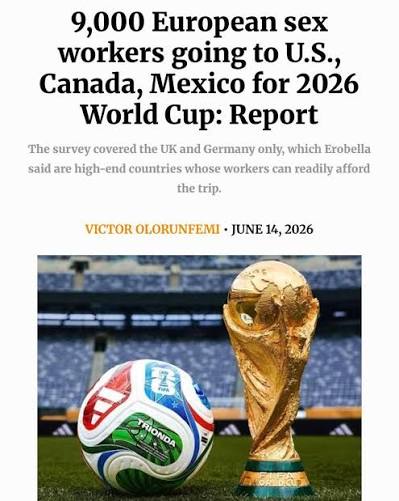
As the FIFA World Cup 2026 draws millions of fans to stadia across Canada, the United States and Mexico, a new survey is highlighting a less-discussed aspect of the global sporting spectacle, the anticipated movement of thousands of sex workers seeking economic opportunities during the month-long tournament.
According to a survey conducted by European adult-services platform Erobella, an estimated 9,000 sex workers are expected to travel to North America for the World Cup, while a further 22,000 are reportedly considering making the journey as host cities welcome influx of supporters from around the globe.
Toronto, one of the tournament’s host cities, is expected to be among the key destinations due to its match schedule and projected surge in international visitors. The survey suggests that major sporting events often create increased demand across tourism, hospitality, entertainment and nightlife sectors, encouraging workers in the adult-services industry to relocate temporarily to host cities.
The projections have once again brought attention to the broader social and economic impact of mega sporting events. Authorities and advocacy groups in Canada, the United States and Mexico have stepped up public awareness campaigns aimed at preventing human trafficking, exploitation and other forms of abuse that can emerge during periods of heightened visitor activity.
Experts, however, caution against automatically equating an increase in sex workers with a rise in human trafficking. Several studies examining previous World Cups and other major international sporting events have found limited evidence to support claims of large-scale trafficking spikes directly linked to such tournaments.
Advocacy organisations instead argue that the focus should remain on safeguarding vulnerable individuals and ensuring access to support services.
The 2026 FIFA World Cup is the largest in history, featuring 48 nations and an unprecedented number of matches spread across three host countries. Organisers expect millions of travelling supporters, generating billions of dollars in economic activity and placing significant demands on transportation, accommodation, security and public services.
While the world’s attention remains fixed on the action inside the stadia, the tournament is also expected to reshape local economies in ways that extend far beyond football. From hotels and restaurants to entertainment venues and nightlife districts, businesses are preparing for a wave of visitors that could leave a lasting impact long after the final whistle.
As North America hosts the most expansive World Cup ever staged, the spotlight is not only on the race for football’s greatest prize but also on the complex social and economic forces that accompany the world’s biggest sporting event.
By: Christian Kpesese