


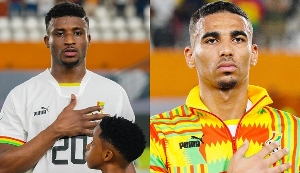
As the 2026 FIFA World Cup kicks off across the United States, Mexico and Canada on Friday, June 12, Ghana’s Black Stars will return to football’s biggest stage carrying perhaps the lowest level of public excitement and expectation seen in decades.
The tournament, the largest in FIFA history, will feature 48 nations and 104 matches across North America, marking a significant expansion of the global showpiece.
Yet despite Ghana’s qualification, the usual nationwide anticipation that accompanied previous World Cup campaigns appears noticeably subdued.
The mood reflects a combination of factors, including the Black Stars’ failure to qualify for the most recent Africa Cup of Nations (AFCON), inconsistent performances in recent years, frequent coaching changes and the absence of a dominant generation of players capable of inspiring widespread confidence among supporters.
Unlike previous World Cup squads that featured household names capable of influencing games at the highest level, the current team enters the competition amid lingering questions over form, consistency and cohesion.
Many players who have excelled for their clubs have struggled to reproduce those performances in national colours, contributing to a prolonged period of underachievement that has tested the patience of supporters.
The Black Stars have also experienced instability on the technical bench in recent years. Since the departure of former coach Kwesi Appiah, the team has passed through the hands of C.K. Akonnor and Otto Addo before the appointment of veteran Portuguese coach Carlos Queiroz, who has been tasked with rebuilding confidence and competitiveness within the national team setup.
Queiroz’s final squad blends experienced internationals with emerging talents. Among the team’s most seasoned campaigners are captain Jordan Ayew, Thomas Partey, Baba Rahman, Gideon Mensah, Fatawu Issahaku and goalkeeper Lawrence Ati-Zigi, all of whom are expected to play pivotal roles during Ghana’s campaign.
However, preparations have been disrupted by injuries to key players.
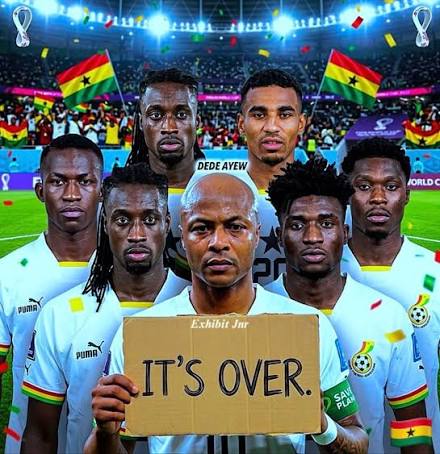
The biggest setback has been the loss of Mohammed Kudus, widely regarded as Ghana’s brightest attacking talent and most influential player in recent years. His injury deprives the Black Stars of creativity, flair and a proven match-winner capable of unlocking stubborn defences.
Defensive concerns have also mounted following the absence of Alexander Djiku and Mohammed Salisu, two players who featured prominently during the qualification campaign and in matches leading up to the tournament. Their experience and leadership will be missed at a time when Ghana faces some of the world’s strongest attacking sides.
Despite these challenges, some observers believe Ghana may benefit from entering the tournament with reduced pressure and fewer expectations than in previous World Cup appearances.
The Black Stars famously reached the quarter-finals in South Africa in 2010, coming within a penalty kick of becoming the first African nation to reach the semi-finals of a FIFA World Cup. Their performances in Germany in 2006 and South Africa in 2010 were built on resilience, discipline and a determination that often defied pre-tournament predictions.
Football, however, has consistently shown that reputations and rankings do not always determine success.
Every World Cup has produced surprise packages—teams that arrived with little expectation but emerged as the stories of the tournament.
Many Ghanaians are hoping the Black Stars can embrace that role.
While confidence may not be as high as in previous years, supporters remain hopeful that the blend of experience and youthful energy within the squad can produce unexpected results.
Players such as Inaki Williams, Antoine Semenyo, Kamaldeen Sulemana, Ernest Nuamah and Fatawu Issahaku possess the talent to trouble any opponent on their day, while the leadership of Jordan Ayew and Thomas Partey could prove invaluable in crucial moments.
Queiroz’s squad includes goalkeepers Lawrence Ati-Zigi, Benjamin Asare and Joseph Anang; defenders Gideon Mensah, Derrick Luckassen, Alidu Seidu, Marvin Senaya, Jonas Adjetey, Abdul Mumin, Baba Rahman, Jerome Opoku and Kojo Peprah Oppong; midfielders Caleb Yirenkyi, Thomas Partey, Kwasi Sibo, Elisha Owusu and Augustine Boakye; and forwards Fatawu Issahaku, Brandon Thomas-Asante, Prince Kwabena Adu, Christopher Bonsu Baah, Inaki Williams, Kamaldeen Sulemana, Antoine Semenyo, Jordan Ayew and Ernest Nuamah.
As the world’s attention turns to North America for the biggest World Cup ever staged, Ghana’s challenge extends beyond qualification from the group stage.
The Black Stars must also rekindle the passion and belief that once made every World Cup appearance a national occasion.
Ghana will open its Group L campaign at the 2026 FIFA World Cup against Panama on June 17 at BMO Field in Toronto, Canada. The Black Stars will then face England on June 23 at Gillette Stadium in Foxborough, Massachusetts, before concluding their group-stage matches against Croatia on June 27 at Lincoln Financial Field in Philadelphia. Ghana is drawn in Group L alongside England, Croatia and Panama.
For now, expectations may be tempered, but hope remains alive. And in a competition renowned for producing unforgettable surprises, many Ghanaians will be hoping that the Black Stars can once again defy the odds and remind the football world that they are capable of shining when least expected.
By: Christian Kpesese