


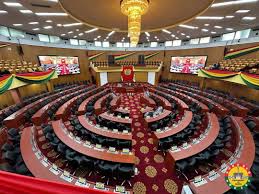
Ghana’s Parliament resumes sitting today for the Second Meeting of the Second Session of the Ninth Parliament, with the introduction of several new Bills expected to dominate proceedings as lawmakers return from recess.
Speaker of Parliament, Rt Hon Alban Sumana Kingsford Bagbin, earlier this months in an official communication summon Members of Parliament to reconvene for parliamentary business.
Top among the issues expected before the House is renewed legislative attention to the Human Sexual Rights and Family Values Bill, 2025, following the conclusion of stakeholder consultations by the Constitutional and Legal Affairs Committee during the recess.
However, the Meeting is also expected to be heavily defined by an ambitious legislative agenda, with Ministries preparing to lay a wide range of Bills and Legislative Instruments within the first and second weeks of resumption.
Among the key Bills expected before the House in the opening days are the National Defence University Bill, 2026 and the Community Service Bill, 2025, both earmarked for early consideration.
The Ministry of the Interior is also expected to introduce the National Identity Register (Amendment) Bill, 2026, National Identification (Amendment) Bill, 2026, Birthright Diaspora Certificate Bill, 2026, Independent Internal Security Conduct Authority Bill, 2026 and the Private Security Organisation Bill, 2026.
Parliament is additionally expected to consider the Prison Service (Parole) Regulations, 2026 during the first days of the Meeting.
The Office of the Attorney-General and Ministry of Justice is expected to push major governance and accountability legislation, including the Conduct of Public Officers Bill, 2026, Economic and Organised Crime Office Bill, 2026 and the Tribunals Bill, 2026, all expected to receive expedited attention.
In the natural resources sector, the Minerals and Mining Bill, 2026 and the Surveying Council Bill, 2026 are expected to be introduced alongside new regulations on land, wildlife resources and geological survey operations.
The Ministry of Energy and Green Transition is also prioritising the National Petroleum Authority Bill, 2026 and the Ghana Energy Commission Regulations, 2026 for early presentation to the House.
Lawmakers are equally expected to receive several education-related regulations, including the National Council for Curriculum and Assessment Regulations, 2026 and the Ghana Tertiary Education Commission Regulations, 2026.
On the technology front, Parliament is expected to take up a number of digital governance Bills, including the Data Harmonisation Bill, 2026, Information Integrity and Digital Communications Bill, 2026, Emerging Technologies Bill, 2026 and the Ghana Innovation and Startup Bill, 2026.
The proposed SIM Registration Legislative Instrument is also expected to be laid during the first week of June.
Other notable Bills expected during the Meeting include the Rent Bill, 2026, Domestic Abuse Bill, 2026, Persons with Disability Bill, 2026, Children’s Bill, 2026 and the Blue Economy Bill, 2026.
According to sources, the House may also receive a Constitutional Instrument on the constitutional review process as government prepares for the next phase of work by the committee chaired by Kwesi Prempeh.
Standing and Select Committees of Parliament are also expected to present several reports for debate and adoption after continuing oversight activities during the recess.
Parliament is further expected to congratulate the Member of Parliament for Korle Klottey, Dr Zanetor Agyeman-Rawlings, following her election as Second Vice President of the Pan-African Parliament in South Africa.
Finance minister, Dr Casiel Ato Baah Forson is expected to present mid-year review of the 2026 budget to the House later during the meeting in July this year.
Meanwhile, the New Patriotic Party Minority caucus is expected to intensify scrutiny of government activities during the Meeting, particularly on issues relating to governance, accountability and the economy.
Parliamentary observers expect the new parliamentary session to witness heightened debate as both the Majority and Minority pursue competing legislative and political priorities.
By: Christian Kpesese