


The Minority New Patriotic Party (NPP) in Parliament has raised fresh concerns about Ghana’s energy situation, disputing government assurances that the country is not experiencing a resurgence of power outages, popularly known as dumsor.
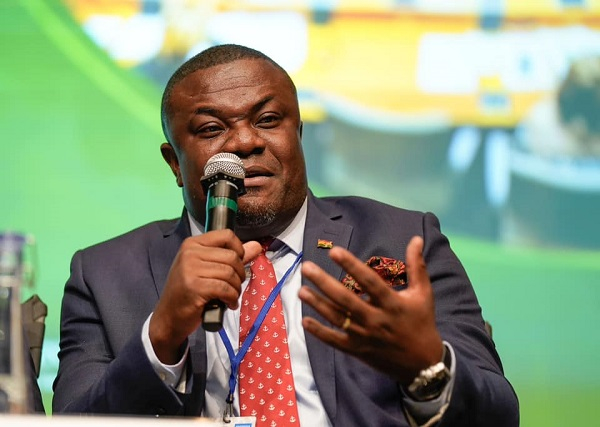
Speaking in an interview with Channel One TV Sunday evening monitored by NR News, the Deputy Ranking Member on Parliament’s Energy Committee and Member of Parliament for Afigya Kwabre, Collins Adomako Mensah, said frequent outages remain a reality for many Ghanaians despite official claims to the contrary.
“Whether I would describe it or not, the situation is that the lights go off very frequently… it’s quite frequent at the moment,” he noted, adding that differing interpretations of what constitutes dumsor do not change the lived experience of consumers.
He acknowledged government’s announcement of procuring over 2,500 transformers to improve electricity distribution, but argued that such interventions are routine within the sector and not necessarily a breakthrough.
According to him, agencies such as the Electricity Company of Ghana (ECG), Ghana Grid Company (GRIDCo), and the Volta River Authority (VRA) have historically undertaken similar upgrades as part of standard operations.
“In Kumasi, for instance, some transformers have become overloaded beyond expectation and must be replaced with higher-capacity ones,” he explained. “I’m happy government is acting, but this is routine activity in the industry.”
Tariff Disputes and Lack of Parliamentary Briefing
Mr. Adomako Mensah also criticised the Public Utilities Regulatory Commission (PURC) over what he described as a lack of transparency in the introduction of a proposed tariff regime to support the government’s 24-hour economy policy.
He stated that Parliament had not been briefed on the initiative, raising concerns about its basis and timing.
“We are not aware… What we should be concerned about are the anomalies in tariff calculations,” he said.
The lawmaker argued that discrepancies between projected and actual macroeconomic indicators—such as inflation and exchange rates—have led to consumers being overcharged.
“Last year, about 17.5% of bills were based on projections. If inflation is projected at 15% but ends at 6%, consumers are clearly overcharged,” he stated, insisting that tariff reductions should have been deeper than the recently announced 4%.
The Minority, he said, believes a reduction closer to 10% would better reflect the gap between projections and actual figures.
Concerns Over Prepaid Billing Investigations
On prepaid electricity billing issues, the MP expressed frustration over delays in releasing findings from an investigative committee set up to probe complaints of overcharging.
He noted that more than two months after the probe was announced, the report remains unpublished.
“PURC assured that if ECG had overcharged consumers, refunds would be made. But as we speak, nothing has been communicated,” he said, urging the regulator to prioritise consumer protection.
Mixed Reaction to Fuel Price Reductions
Touching on recent fuel price reductions, Mr. Adomako Mensah welcomed the move but maintained that the Minority had advocated a different approach—specifically targeting taxes and levies in the price build-up.
“If government has taken steps to reduce the burden on Ghanaians, that is welcome,” he said, while noting that current measures involving regulators and oil marketing companies may only offer temporary relief.
Global Uncertainty and Policy Outlook
He further cautioned that global geopolitical tensions, particularly in the Middle East, could affect fuel price stability, making it difficult to predict future trends.
“It’s extremely difficult to predict… The situation is very volatile,” he said, adding that government may need to extend current relief measures if global uncertainties persist.
The Minority maintains that while some interventions are commendable, more attention must be paid to structural inefficiencies in the energy sector to ensure lasting stability and fairness for consumers.
By: Christian Kpesese