


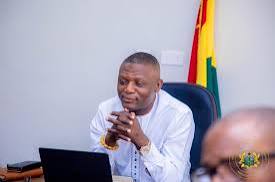
Minister for Sports and Recreation and Member of Parliament for Buem, Kofi Iddie Adams, has reaffirmed his unwavering commitment to the development of his constituency, despite the demanding responsibilities of serving as a Minister of State.
Speaking on The Upside Down Show on Channel One TV, Mr. Adams emphasised that while his national assignment requires significant time and attention, he remains focused on delivering tangible progress to the people of Buem.
He acknowledged the difficulty of balancing both roles but credited his constituents and constituency party executives for their understanding and support.
“My people understand that, yes, they elected me as their Member of Parliament, but the country has also given me another assignment, which means it will take my time away. All they yearn for is that development also comes to them,” he noted.
Highlighting progress made so far, Mr. Adams indicated that key road projects in the constituency—once a major concern—are now receiving attention. He also disclosed that Buem is set to benefit from government’s policy to expand access to tertiary education, with a university earmarked for the area.
The Minister further pointed to ongoing efforts in healthcare delivery, including plans to construct additional facilities to bring services closer to residents. In education, the Buem Legislator said initiatives are underway to eliminate schools under trees and rehabilitate dilapidated structures.
On water access, he cited the development of water systems, drilling of boreholes, and collaboration with relevant agencies to improve supply across communities.
Mr. Adams also underscored employment creation as a priority, noting continuous efforts to secure opportunities for constituents.
“It’s been tough, but I think gradually we will get there. We haven’t reached there yet, but I can clearly see that we are on track to getting there,” he said.
His remarks reinforce his pledge to ensure that Buem’s development remains on course, even as he discharges his broader responsibilities in government.
By: Christian Kpesese