


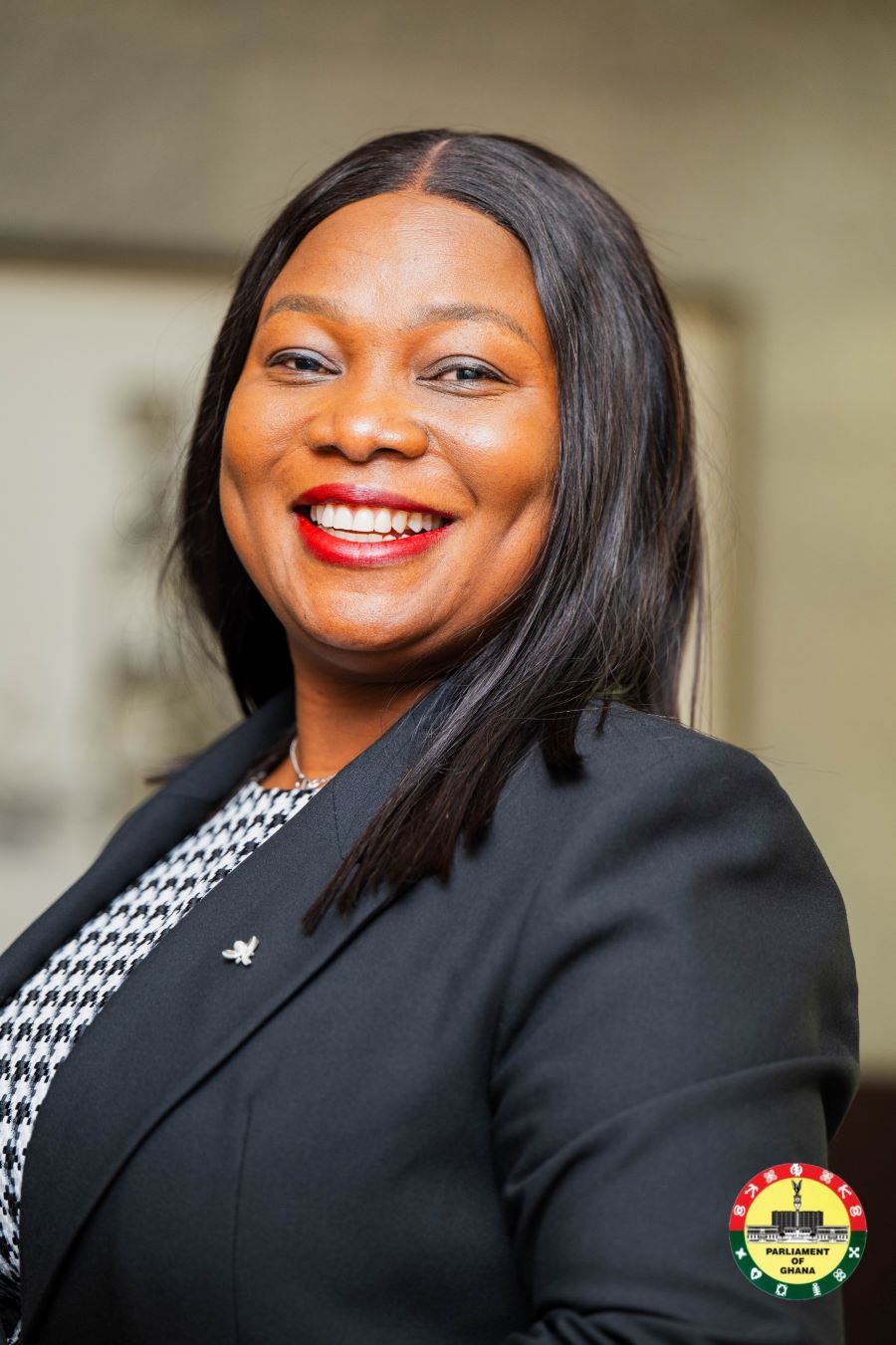
The Member of Parliament for Upper Denkyira East, Emelia Ankomah, has urged renewed national commitment to eliminate Female Genital Mutilation (FGM), emphasizing that laws alone will not end the harmful practice unless they are matched with decisive enforcement and community action.
Addressing parliament in a statement marking the International Day of Zero Tolerance for Female Genital Mutilation, which is observed globally on February 6, the lawmaker said the day should serve not merely as a symbolic observance but as a moment for honest reflection on Ghana’s efforts to eradicate the practice.
According to her, FGM the partial or total removal of female genitalia for non-medical reasons remains a serious violation of the rights and dignity of women and girls.
“This practice has no health benefit, no scientific basis and no moral justification,” she said, adding that it continues to expose victims to severe bleeding, infections, complications during childbirth and deep psychological trauma.
She further noted that beyond the immediate health risks, FGM strips girls of their dignity, bodily autonomy and the right to make choices about their own lives.
The MP acknowledged that Ghana has taken a firm legal stance against the practice through provisions in the Criminal Offences Act, 1960 (Act 29), which criminalises FGM and prescribes sanctions for perpetrators and accomplices.
However, she cautioned that legislation alone cannot eradicate the practice if enforcement remains weak or communities continue to shield it through silence and social pressure.
“The persistence of FGM in some communities raises critical questions about enforcement, accountability and our collective resolve to protect the most vulnerable girls,” she told the House.
The lawmaker questioned whether institutions responsible for enforcing the law are adequately resourced to address the issue, particularly in remote and marginalised communities where the practice is more likely to occur.
She emphasized that cultural or traditional arguments cannot justify practices that endanger the lives of girls and women, noting that culture must evolve to protect human dignity.
“Any practice that dehumanises women and threatens their lives must be confronted and abandoned,” she said.
The MP also called on traditional and religious leaders to play a more active role in reshaping community attitudes and helping to end the practice.
She further emphasised the need to support survivors of FGM, urging government and relevant institutions to ensure access to healthcare, psychosocial support, legal protection and economic empowerment for victims.
According to her, the experiences of survivors should inform national policies and interventions aimed at eliminating the practice urging lawmakers to move beyond symbolic condemnation and intensify efforts to strengthen oversight, expand public education and ensure effective enforcement of laws against FGM.
Ghana she said must strive to build a society where no girl is subjected to harmful traditional practices and where her future is determined by choice rather than violence disguised as culture.
The Upper Denkyira East MP called on Parliament to reaffirm its zero-tolerance stance and actively support the national campaign to eradicate Female Genital Mutilation completely.
By: Christian Kpesese