


The Ghana Chamber of Mines has strongly defended the renewal of mining leases for foreign mining firms, cautioning that attempts to revoke or deny legitimate lease extensions could undermine investor confidence and threaten the long-term stability of Ghana’s mining industry.
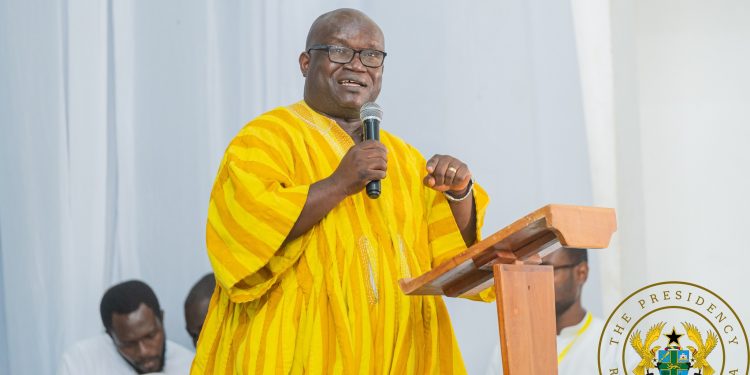
Addressing a press conference in Accra on Thursday, May 14, 2026, Chief Executive Officer of the Chamber, Ing Dr Kenneth Ashigbey, pushed back against calls by the Institute of Economic Affairs for government to reject the application by Gold Fields to renew the lease of the Tarkwa Mine.
The Chamber argued that proposals seeking to deny lease renewals to mining companies that have complied with Ghana’s mining laws risk creating uncertainty in the sector and could reverse decades of gains made through public-private collaboration.
According to Ing. Ashigbey, Ghana’s emergence as Africa’s leading gold producer was built on sustained investments, policy continuity and investor confidence, warning that abrupt policy shifts could negatively affect the country’s competitiveness as a mining destination.
“The predictable, transparent and consistent application of the established legal and regulatory regime is essential to the development and sustenance of the mining industry,” he stated.
The Chamber maintained that Ghana’s mining laws already guarantee state ownership of mineral resources while allowing private firms to operate under regulated lease agreements.
Citing provisions of the Minerals and Mining Act, 2006 (Act 703), the Chamber stressed that a mining lease does not transfer ownership of mineral resources to private companies but only grants limited rights for extraction and commercialisation under strict regulatory oversight.
The Chamber also dismissed assertions that foreign participation in mining was responsible for Ghana’s recurring economic difficulties and engagements with the International Monetary Fund.
Instead, it argued that the mining sector has consistently served as one of the country’s strongest economic pillars through tax revenues, export earnings and foreign exchange generation.
According to the Chamber, the mining sector contributed approximately GHS19 billion in taxes in 2025, representing nearly 23 per cent of direct domestic tax collections.
It further noted that the three major mining companies operating in Tarkwa — Gold Fields, Ghana Manganese Company and AngloGold Ashanti Iduapriem Mine — alone paid about GHS5.1 billion in taxes in 2024.
Ing. Ashigbey said while concerns about underdevelopment in mining communities were legitimate, the situation was largely linked to weaknesses in the mineral revenue distribution framework rather than the absence of contributions from mining companies.
He revealed that producing member companies of the Chamber had collectively invested more than US$300 million in social investment projects over the past decade in areas such as education, healthcare, roads, agriculture and water systems.
The Chamber highlighted the contributions of the Gold Fields Ghana Foundation, which it said has invested nearly US$110 million in host communities since 2002, including the construction of roads, educational facilities, agricultural programmes and health infrastructure projects.
On illegal mining, the Chamber blamed galamsey activities for much of the environmental destruction associated with mining, insisting that large-scale mining firms operate under strict environmental regulations and land reclamation requirements.
The Chamber also expressed concern over the recent revocation of mining leases belonging to Adamus Resources Limited by the Ministry of Lands and Natural Resources.
While acknowledging the seriousness of allegations raised by the Minerals Commission against the company, the Chamber insisted that due process and statutory procedures must be respected in all regulatory enforcement actions.
It welcomed the establishment of a ministerial committee to review Adamus’ petition against the revocation and urged all parties to pursue constructive engagement within the framework of the law.
The Chamber further advocated increased support for Ghanaian participation in the mining industry through exploration investments, partnerships and local ownership models, but warned against policies that could discourage both local and foreign capital.
“We should not shut Ghana from being an attractive investment destination for both local and foreign capital. It is when they both coexist that we can win as a country,” Ing. Ashigbey stressed.
The press conference comes amid heightened national debate over resource governance, mining lease renewals and growing calls for greater Ghanaian ownership and control within the extractive sector.
By: Christian Kpesese