



The Tema Oil Refinery (TOR) is undergoing what management describes as a sweeping institutional and operational transformation, aimed at restoring the facility as a central pillar of Ghana’s industrial and energy landscape.
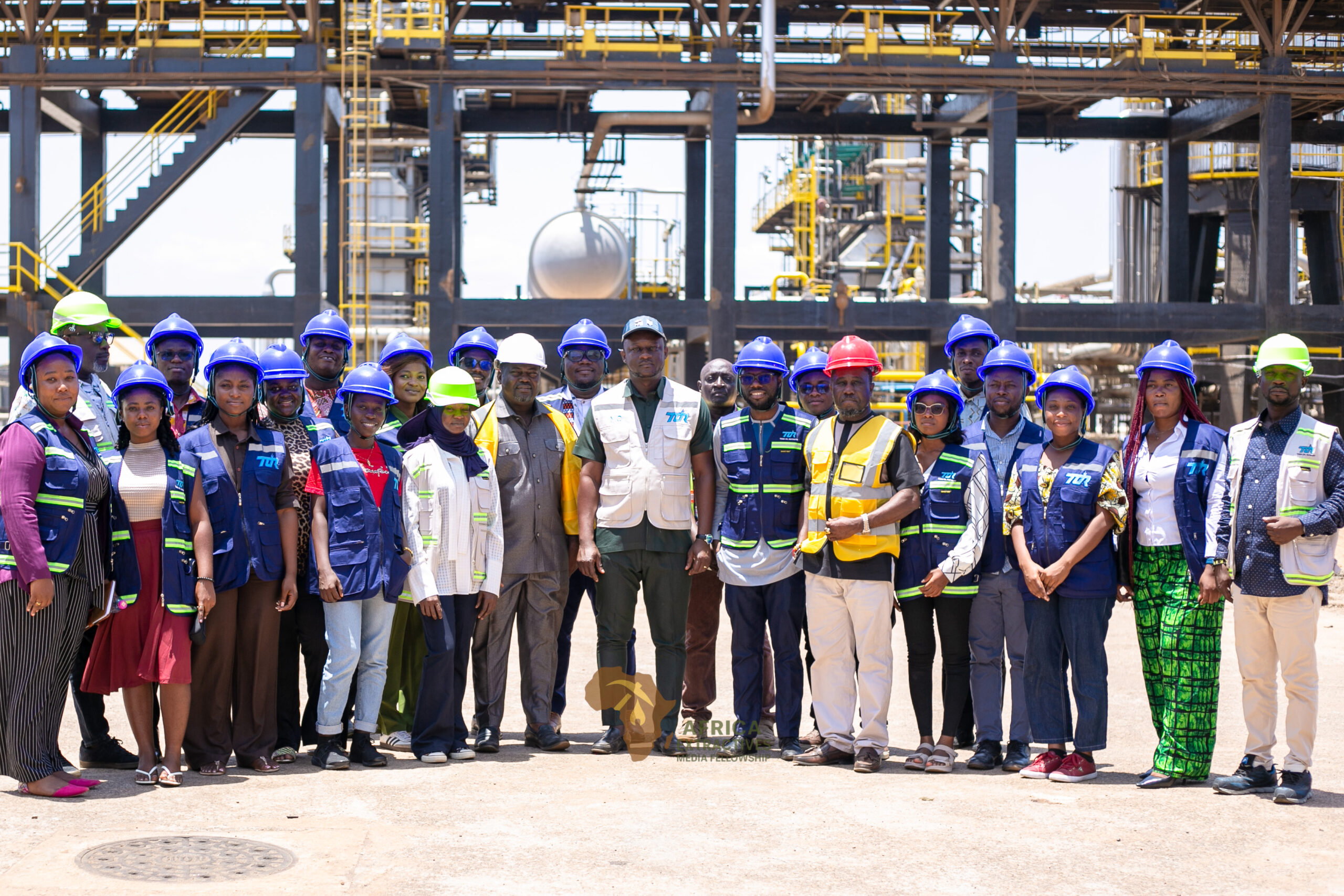
Managing Director Edmund Kombat disclosed this during a briefing with journalists from the first cohort of the Africa Extractives Media Fellowship (AEMF), who toured the refinery as part of a study visit organised by Newswire Africa with support from the Australian High Commission in Ghana.
According to Mr Kombat, the refinery’s reform programme is anchored on a three-pronged strategy — Transformation, Optimisation and Resetting targets (TOR), guiding a comprehensive overhaul of operations, infrastructure and workforce management.
He revealed that when the current management assumed office in May 2025, they inherited a distressed facility burdened with debts of about $517 million, idle processing units and low staff morale.
“The refinery was in a very difficult state, poorly maintained plants, rising debt and diminished confidence among staff. We made a deliberate decision to rebuild trust and restore operations,” he said.
Despite these challenges, management adopted a survival-driven approach, relying largely on in-house technical expertise rather than external support. Within seven months, the refinery resumed production and is currently operating at approximately 28,000 barrels per day.
Output is expected to increase to 45,000 barrels per day after ongoing maintenance works are completed and commissioned, with a medium-term target of reaching 60,000 barrels per day.
Mr Kombat noted that the revival has prioritised the rehabilitation of critical units such as the Crude Distillation Unit (CDU) and the Residue Fluid Catalytic Cracking (RFCC) unit, alongside the introduction of a 24-hour shift system to enhance efficiency.
He added that investments are also being channelled into terminal upgrades, automation and the modernisation of loading infrastructure to improve service delivery to Bulk Distribution Companies.
“Our mission is to provide quality energy products and services to power Ghana’s economic growth. This refinery is a national asset that must be preserved for both present and future generations,” he stated.
Commissioned in 1963 as part of Ghana’s industrialisation agenda, TOR has historically played a strategic role in the country’s fuel supply chain, producing key petroleum products including Liquefied Petroleum Gas (LPG), petrol, kerosene and aviation fuel.
Mr Kombat emphasised that restoring TOR’s capacity will significantly reduce Ghana’s reliance on imported refined products, ease pressure on foreign exchange and support broader economic stability.
He also highlighted the critical role of local engineers and technicians in the refinery’s recovery, noting that their expertise has been central to bringing operations back on stream.
The refinery continues to work closely with the National Petroleum Authority and other industry stakeholders to ensure that all products meet required regulatory standards.
Looking ahead, management remains focused on long-term sustainability through improved refining efficiency, expanded storage capacity and technological advancement.
Industry observers say the ongoing reforms signal a turning point for TOR, which has struggled for years with operational and financial setbacks. With momentum building behind the transformation agenda, the refinery is steadily reclaiming its role as a cornerstone of Ghana’s energy security and industrial growth.
By: Christian Kpesese