


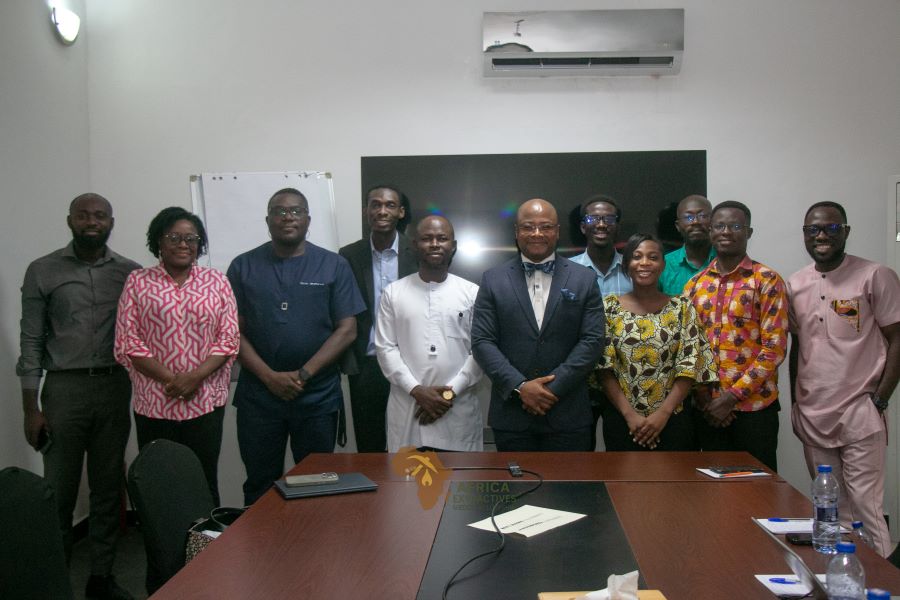
Fellows of the first cohort of the Africa Extractives Media Fellowship (AEMF) have engaged the President of the Ghana Chamber of Mines, Michael Edem Akafia, in a wide-ranging discussion on fiscal reforms, illegal mining, community impact and the future sustainability of Ghana’s extractive sector.
The interaction, organised by Newswire Africa, forms part of efforts to deepen extractives reporting and strengthen resource governance across the sub-region by connecting industry leaders with journalists.
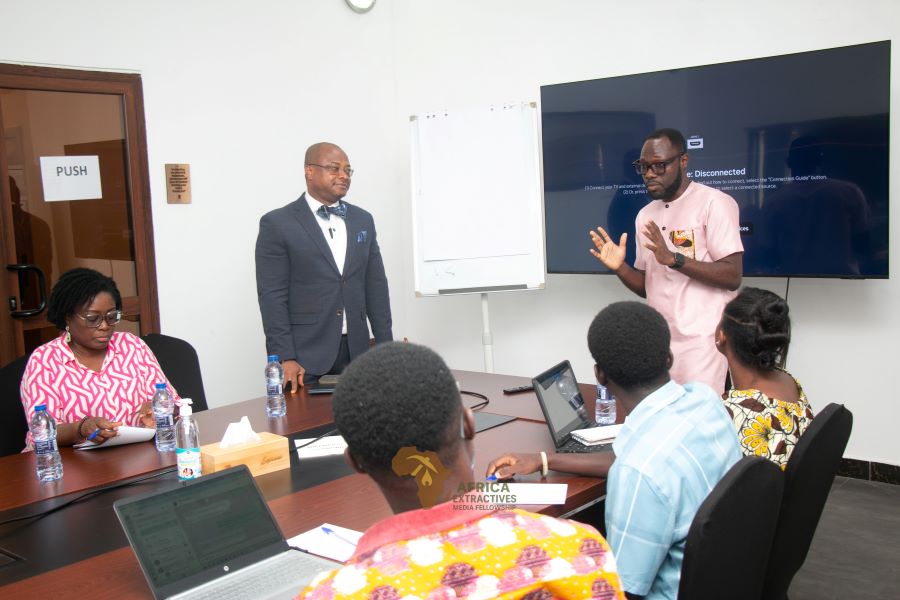
Mr. Akafia, who is also Vice President for External Affairs at Gold Fields, used the session to outline the industry’s position on proposed amendments to Ghana’s mining fiscal regime. He disclosed that the Chamber had recently met with the sector and finance ministers to discuss reforms, including a proposed sliding scale royalty tied to gold prices.
While the Chamber is not opposed to a sliding scale in principle, he cautioned that the structure and timing of implementation are critical. According to him, the proposed adjustments could significantly increase the effective royalty burden, particularly when combined with the General Sales Levy (GSL), which is not tax-deductible.
“Revenue is at the top end of the income statement. When you impose higher rates on revenue instead of profit, you shrink the entire pie before costs are even accounted for,” he explained, noting that public discourse often confuses revenue with profit.
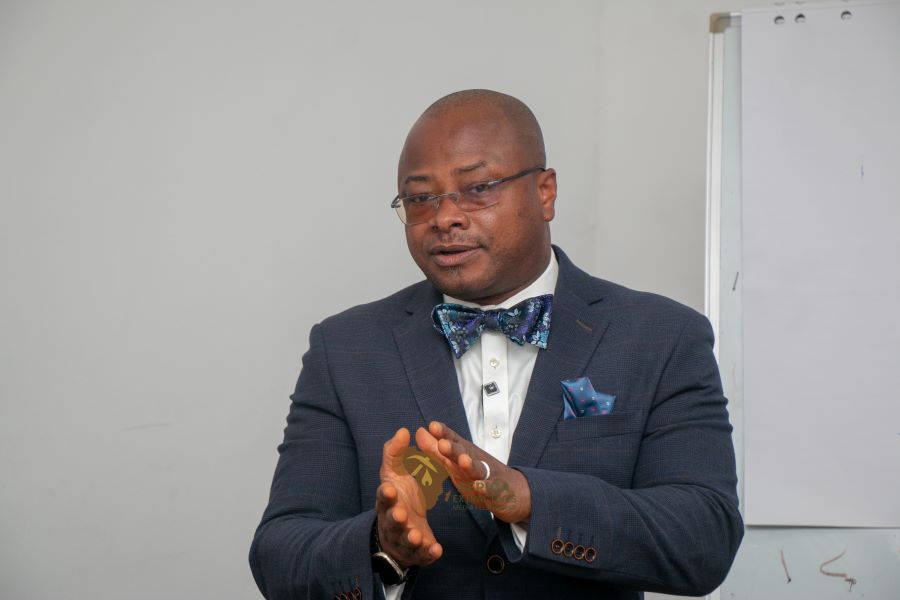
He emphasized that mining projects are long-term and capital-intensive, typically taking between 13 and 20 years from exploration to production, and rely heavily on stable fiscal assumptions to attract financing.
“If policies are not calibrated properly, the industry could shrink and revenue objectives won’t be met,” he warned. “The goal should be to grow the economic pie sustainably.”
Beyond taxation, the discussion addressed the challenge of illegal mining. Mr. Akafia described formalisation, including government’s proposed cooperative mining model, as a potential pathway to addressing the persistent threat of “galamsey” activities. He however cautioned that politicisation of small-scale mining reforms has historically undermined progress.
The Chamber president also highlighted mining’s employment footprint, noting that while member companies directly employ over 7,000 people, the multiplier effect extends much further across local supply chains and service providers.
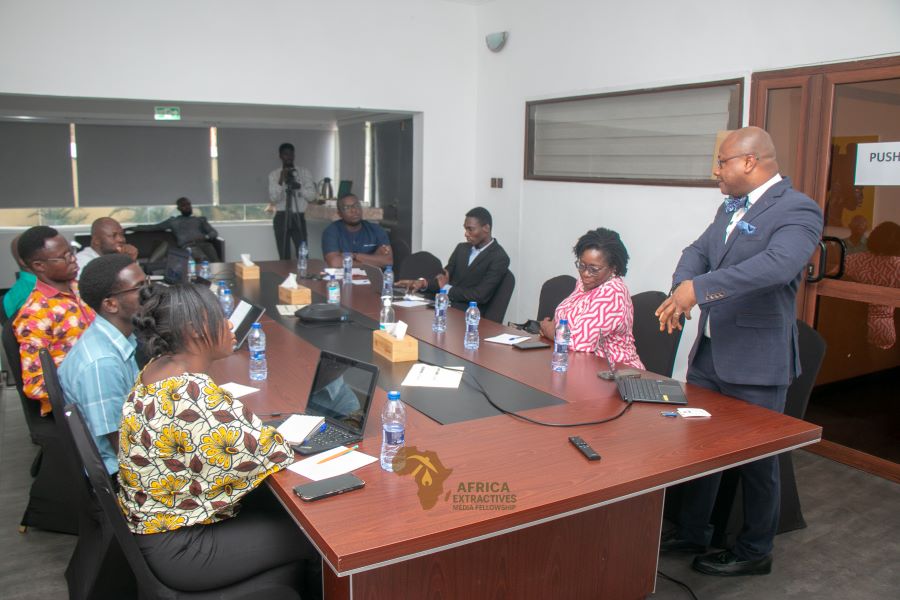
On community development, he pointed to investments in roads, healthcare facilities, enterprise development programmes and scholarship schemes in host communities, arguing that the industry’s social licence to operate is just as important as its legal mining rights.
“We are committed to environmental, social and governance standards and to demonstrating tangible impact in the communities where we operate,” he said.
Mr. Akafia further addressed concerns about transparency and under-declaration of gold production, emphasising that listed mining companies operate under strict audit, regulatory and customs controls, including independent assays and government oversight in gold rooms.
“The focus should be on improving systems and targeting non-compliant actors, not penalising companies that are already transparent and regulated,” he noted.
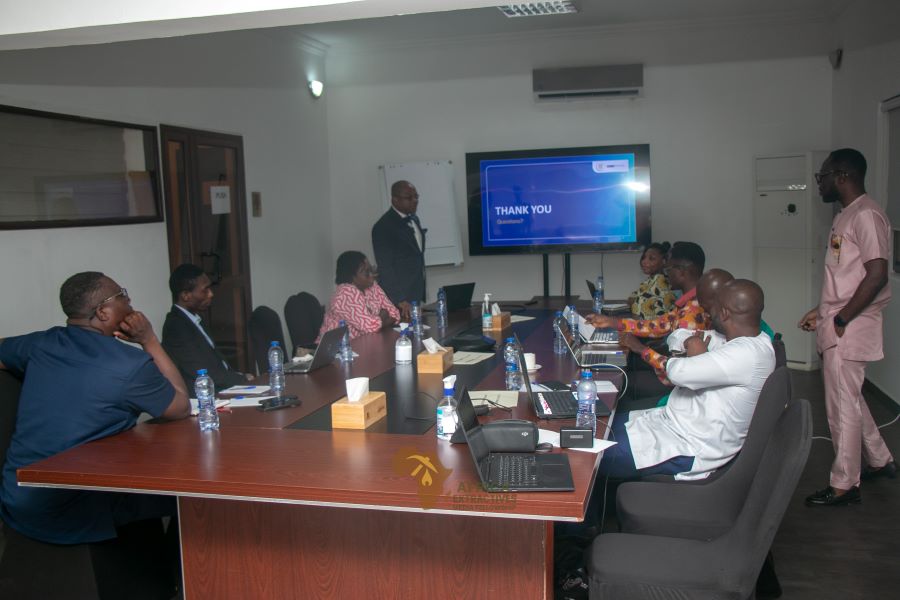
The engagement offered AEMF fellows deeper insight into the economic, fiscal and social complexities shaping Ghana’s mining sector, underscoring the delicate balance between revenue mobilisation and long-term investment sustainability.
For Newswire Africa and its fellows, the session reinforced the importance of informed, data-driven reporting in a sector that remains central to Ghana’s economic fortunes.
By: Christian Kpesese/NR News