


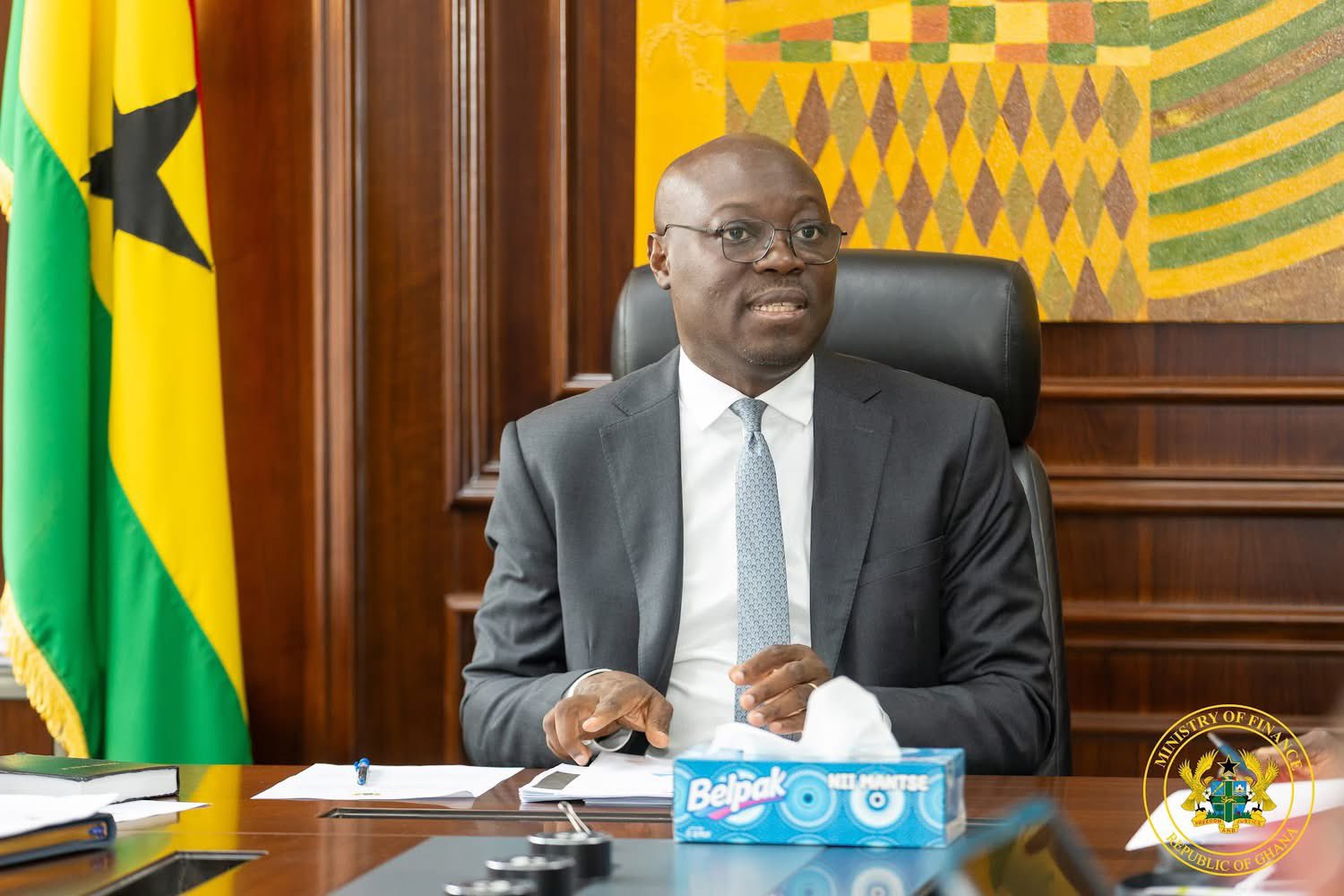
Finance Minister, Dr Cassiel Ato Baah Forson, has declared that Ghana recorded one of the most significant economic turnarounds in its history in 2025, citing sharp improvements in fiscal performance, inflation, debt levels and exchange rate stability.
In a post on his official X page titled “Government Delivers Robust 2025 Fiscal Performance and Broad-Based Macroeconomic Turnaround,” Dr. Forson outlined what he described as decisive gains achieved through fiscal discipline, structural reforms and prudent monetary policy.
According to him, the government inherited severe economic pressures at the end of 2024, including a primary balance deficit of 3.0 percent of GDP on a commitment basis, a 91-day Treasury bill rate of 27.7 percent, a 19.2 percent depreciation of the Ghana cedi against the US dollar, and inflation at 23.8 percent.
However, he stated that a combination of commitment controls, strengthened revenue mobilisation, spending restraint and coordinated macroeconomic management reversed the trend in 2025.
On fiscal performance, the Minister disclosed that the overall fiscal balance on a commitment basis recorded a deficit of 1.0 percent of GDP in 2025 — significantly outperforming the 2.8 percent target. The primary balance on commitment basis improved to a surplus of 2.6 percent of GDP, exceeding the target of 1.5 percent.
On a cash basis, the overall fiscal deficit stood at 3.1 percent of GDP, better than the programmed 3.8 percent, while the primary balance recorded a surplus of 0.5 percent of GDP.
Dr. Forson indicated that the strong fiscal outturn, supported by sound debt management strategies, led to a substantial decline in public debt.
Ghana’s public debt stock, he revealed, fell by GH¢82.1 billion — from GH¢726.7 billion (61.8 percent of GDP) in December 2024 to GH¢641.0 billion (45.3 percent of GDP) in December 2025 — describing it as one of the sharpest debt reductions in the country’s history.
Beyond fiscal consolidation, the Minister highlighted broad-based macroeconomic gains across key sectors of the economy.
Provisional data show that real GDP growth strengthened to 6.1 percent year-on-year in the first three quarters of 2025, driven mainly by services and agriculture. Non-oil growth was even stronger at 7.5 percent, compared to 5.8 percent during the same period in 2024.
Inflation, which had peaked at 23.8 percent, fell consistently for thirteen consecutive months, dropping by 19.7 percentage points from 23.5 percent in January 2025 to 3.8 percent by January 2026.
Interest rates also declined sharply. The 91-day Treasury bill rate dropped from 27.7 percent at end-2024 to 11 percent in December 2025, and further to 6.5 percent in February 2026. The average commercial bank lending rate fell from 30.25 percent in 2024 to 20.45 percent in 2025, with further reductions anticipated as inflation remains subdued.
Credit to the private sector expanded by GH¢17.1 billion in 2025, signalling improved liquidity conditions and increased support for businesses.
The Ghana cedi also staged a strong recovery, appreciating by 40.7 percent against the US dollar by end-December 2025, reversing the 19.2 percent depreciation recorded in 2024. The currency also gained 30.9 percent against the pound sterling and 24.0 percent against the euro.
Ghana’s external position strengthened considerably, with the current account posting a surplus of US$9.1 billion by end-December 2025, up from US$1.5 billion in 2024. Gross international reserves reached US$13.8 billion, covering 5.7 months of imports.
“For emphasis,” the Minister stressed, inflation has dropped from 23.8 percent in 2024 to 5.4 percent in 2025 and further to 3.8 percent currently; the cedi has appreciated significantly; Treasury bill rates have fallen dramatically; and public debt has reduced by over GH¢82 billion within a year.
Dr. Forson described the turnaround as “broad-based and comprehensive,” noting that all sectors of the Ghanaian economy have witnessed remarkable improvement, placing public finances back on a sustainable path and restoring macroeconomic stability.
By: Christian Kpesese