


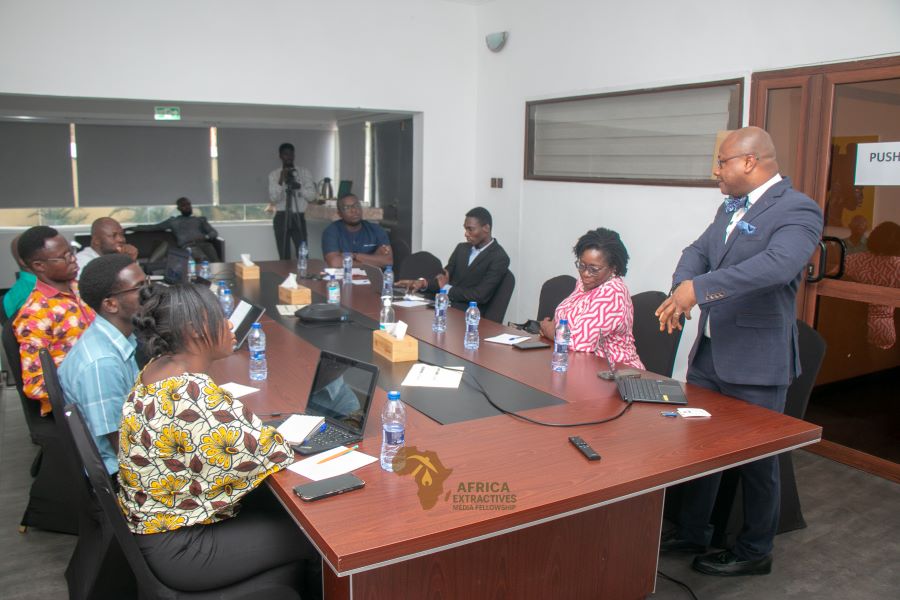
The Ghana Chamber of Mines has pushed back against narratives that reduce mining’s contribution to a single royalty percentage, arguing that the sector’s true value lies in its extensive employment and economic multiplier effects.
Addressing journalists under the Africa Extractives Media Fellowship (AEMF), the President of the Ghana Chamber of Mines and Vice President for External Affairs at Gold Fields limited, Michael Edem Akafia said the industry directly employs over 7,000 workers within Chamber member companies alone, with a far larger footprint across the broader economy.

“There’s always that statistic that for every direct employee, you have about sixty more jobs tied to that,” he explained. “When you do the calculation, you begin to appreciate the impact from an employment perspective.”
He argued that public debate often fixates on royalties, currently 5 per cent without considering the 35 per cent corporate income tax, statutory payments, PAYE, VAT and other indirect contributions made by mining companies.
“One of the most disappointing things is that even some educated people don’t recognize the difference between revenue and profit,” he said. “When someone says the government takes only five million dollars out of a hundred million, they ignore the fact that companies pay expenses here ,salaries, local suppliers, contractors.”
He emphasised that mining is both capital-intensive and risky. A single dump truck tyre, he noted, can cost around $30,000. Geological models, despite scientific rigour, can still fall short of expected yields, as illustrated by the Damang investment project, where actual gold volumes underperformed projections despite extensive technical studies.
The long development cycle often spanning two decades means companies must take a long-term view, he said. This requires policy stability to protect assumptions made during feasibility studies.
“Mining sustainability means having a long-term view. Responsiveness is key, but policy should focus on sustainability,” he emphasized.
Mr. Akafia cautioned that if fiscal measures become overly aggressive during periods of high gold prices, the industry risks contraction during downturns. He said companies themselves adopt conservative gold price assumptions in budgeting to guard against volatility.
“What goes up comes down. The longer the boom, the harder the fall. If you become complacent because of today’s price, you’ll suffer when it drops,” he cautioned.
He reiterated that sustaining operations across price cycles should be a shared objective between industry and government.
“It’s not just about mining companies. It’s about unlocking value along the value chain and maximising benefits for Ghana.”
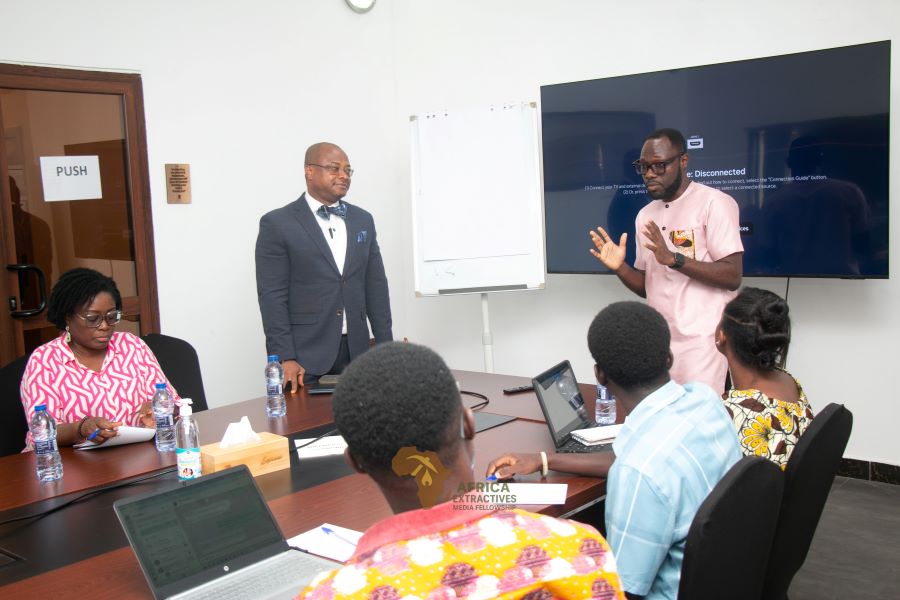
The Africa Extractives Media Fellowship (AEMF), established by NewsWire Africa in collaboration with the Australian High Commission in Ghana, aims to build a network of skilled journalists equipped to drive transparency, accountability, and informed public dialogue on the management of natural resources.
By: Christian Kpesese/www.naturalresourcesnews.com