


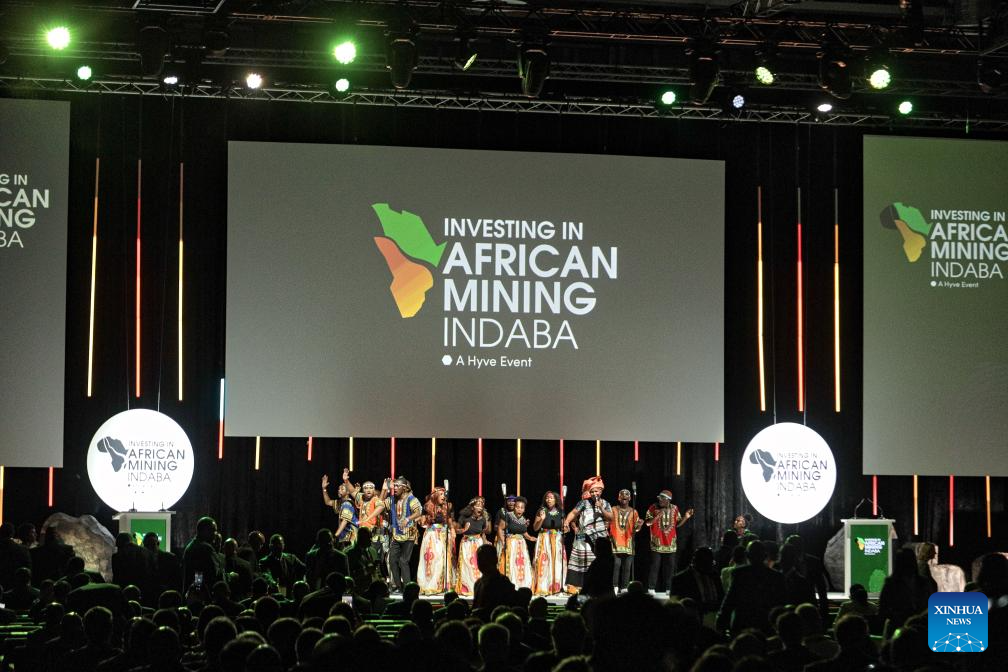
Africa’s largest gathering of mining stakeholders, the Investing in African Mining Indaba 2026, officially opened on Monday February 9, 2026 in Cape Town with record-breaking participation, marking the biggest attendance in the 32-year history of the prestigious forum.
Thousands of policymakers, mining executives, investors, development partners, civil society representatives and media from across the globe converged at the Cape Town International Convention Centre for the week-long event, reaffirming Africa’s central role in the global mining and energy transition landscape.
The 2026 edition comes at a critical moment for the continent, as demand for critical minerals continues to surge amid the global push for clean energy, digitalisation and industrial transformation. The strong turnout underscored renewed international confidence in Africa’s mineral potential, regulatory reforms and investment prospects.
President Hichilema: Mining Must Drive Africa’s Economic Renewal
Delivering the opening address, President Hakainde Hichilema of Zambia called on African governments and industry players to urgently reposition mining at the heart of the continent’s economic renewal.
He emphasized that Africa must move beyond being a mere supplier of raw materials and instead build integrated value chains that generate jobs, industrial capacity and long-term prosperity.
“Mining must no longer be about extraction alone,” President Hichilema said. “It must be about partnerships that align governments, investors, companies and communities around sustainable value creation.”
He urged stronger collaboration between the public and private sectors, noting that Africa’s mineral wealth, if strategically harnessed, could become a catalyst for infrastructure development, manufacturing and inclusive growth.
The Zambian leader also highlighted the importance of stable policy frameworks, transparency and community engagement to ensure that mining delivers tangible benefits for host countries.
Mantashe Calls for African Unity in Dealing with Global Capital
South Africa’s Minister of Mineral Resources and Energy, Gwede Mantashe, echoed similar sentiments, calling for greater unity and coordination among African nations in their engagement with global investors.
He warned that fragmented national approaches weaken Africa’s bargaining power, particularly in negotiations around critical minerals, beneficiation and investment terms.
“Africa cannot afford to negotiate from a position of division,” Mantashe said. “If we are united in our strategies, we can shape fairer outcomes and retain more value from our resources.”
He stressed that collective action was essential for building regional value chains, attracting quality investment and ensuring that African countries are not marginalised in the evolving global minerals economy.
From Resources to Value Creation
A dominant theme throughout Day One was the urgent need for Africa to shift from resource extraction to value creation. Panel discussions and keynote sessions emphasised that exporting raw materials without processing perpetuates dependency and limits economic transformation.
Speakers identified affordable energy, water security and integrated infrastructure as critical enablers of industrialisation and local beneficiation. Without these foundations, they warned, Africa would struggle to build competitive mineral processing and manufacturing industries.
Discussions on exploration, safety performance and regulatory reforms also featured prominently, with industry leaders noting steady progress in many African jurisdictions. Several panellists expressed confidence that improved governance frameworks and investment-friendly policies were strengthening Africa’s reputation as a reliable mining destination.
Market Outlooks Highlight Africa’s Global Role
Commercial and market-focused sessions provided insights into global commodity trends and Africa’s evolving position in the minerals market.
Analysts noted that precious metals are entering a more fundamentals-driven phase after a volatile 2025, shaped by inflationary pressures, geopolitical risks and shifting investor sentiment.
Meanwhile, discussions on battery metals highlighted Africa’s growing role in the global energy transition. Expanding lithium production across countries such as Zimbabwe, Namibia, Ghana and the Democratic Republic of Congo (DRC) was cited as evidence of the continent’s increasing global footprint in electric vehicle supply chains.
Experts stressed that Africa now holds a strategic advantage in key minerals such as cobalt, lithium, manganese, graphite and rare earths – resources that are indispensable for renewable energy technologies, electric mobility and digital infrastructure.
Key Topics for Mining Indaba 2026
The 2026 Mining Indaba agenda is built around several critical themes expected to dominate discussions throughout the week. These include:
- Critical Minerals and Energy Transition: How Africa can position itself as a global hub for minerals needed for clean energy and green technologies.
- Local Beneficiation and Industrialisation: Strategies for processing minerals within Africa to boost manufacturing, employment and technology transfer.
- Investment and Financing: Unlocking capital for exploration, infrastructure and downstream projects amid tightening global financial conditions.
- Sustainability and ESG: Strengthening environmental, social and governance standards to ensure responsible mining and community inclusion.
- Policy and Regulation: Harmonising regulatory frameworks and promoting transparency to attract long-term investors.
- Infrastructure and Energy Security: Addressing power, transport and water challenges that constrain mining and industrial growth.
Several sessions are also focused on artisanal and small-scale mining, gender inclusion, digitalisation and the role of African financial institutions in supporting the mining sector.
Africa at a Turning Point
As Mining Indaba 2026 unfolds, the central message from Day One is clear: Africa stands at a turning point in its mining history.
With unprecedented global demand for minerals, the continent has a unique opportunity to redefine its role – not just as a supplier of raw materials, but as a driver of industrial growth, technological innovation and sustainable development.
The record attendance and high-level participation signal growing international recognition that Africa’s mineral future is no longer peripheral, but central to the global economy.
For many delegates, the challenge now lies in translating the bold rhetoric of unity, value creation and partnership into concrete policies, investments and regional strategies that will shape Africa’s mining sector for decades to come.
By: Christian Kpesese