


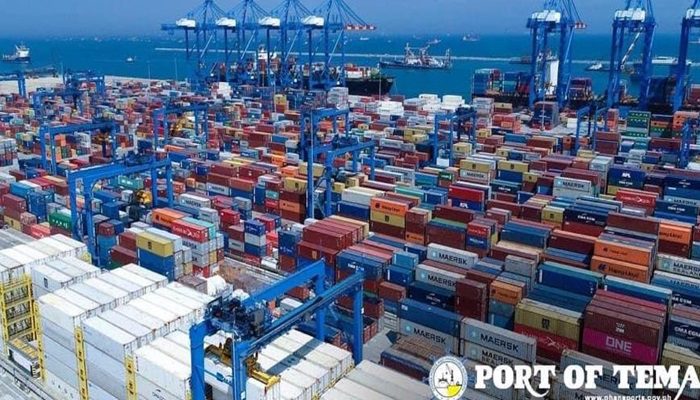
Clearing goods through Ghana’s ports takes far longer than in several comparable African economies, with exports averaging nine days and imports extending to as many as 23 days, the World Bank has revealed.
The Bretton Woods institution warned that the persistent delays are undermining trade flows and constraining private-sector growth, particularly for businesses involved in import and export activities.
Speaking at a high-level B-READY working session in Accra on Tuesday, February 3, 2026, Senior Economist at the World Bank’s Business Ready Unit, Subika Farazi, pointed to operational inefficiencies at Ghana’s borders as a major factor affecting the country’s competitiveness.
“For example, in Ghana, it takes on average nine to 23 days for export and import clearance, which on average takes around five to eight days in Cameroon,” Farazi said, highlighting the contrast with peer economies.
The concerns form part of the World Bank’s broader B-READY assessment, which shows that although Ghana has relatively strong business regulations, weaknesses persist in the implementation and efficiency of those rules.
According to Farazi, Ghana performs strongly under the regulatory pillar but lags behind several comparable countries when measured on operational efficiency.
“In terms of the operational efficiency pillar, Ghana’s relative performance is not as strong, with several peer economies, including Togo, Senegal, Cameroon and Cape Verde, recording stronger scores,” she noted.
World Bank data indicates that Ghana outperforms most regional peers in regulation and public services, ranking highest in the regulatory pillar and second only to Togo in public service delivery.
However, the report suggests that efficiency gaps — particularly at border points — continue to place a heavy burden on businesses and slow down trade processes.
At the sector level, Ghana records strong performance in financial services, labour and business entry, but struggles in areas closely linked to trade outcomes, including market competition.
“Overall, Ghana’s business readiness ranges from 72 per cent in financial services to 34 per cent in market competition,” Farazi explained, adding that while labour indicators remain among the strongest, trade-related bottlenecks persist.
The B-READY working session brought together senior government officials, private-sector leaders and World Bank experts to examine constraints affecting food processing, light manufacturing and trade facilitation — sectors identified as critical under the government’s 24H⁺ economic programme.
The World Bank said addressing clearance delays, improving border management and strengthening operational efficiency could deliver quick wins for Ghana’s business environment, especially as the country seeks to deepen trade under the African Continental Free Trade Area (AfCFTA) and enhance private-sector competitiveness.