


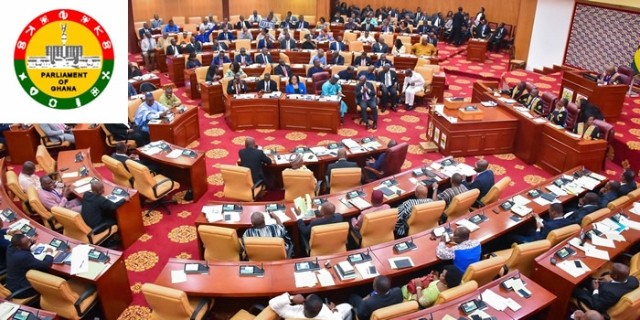
The passage of the much-anticipated 24-Hour Economy Authority Bill, 2025, is expected to dominate proceedings as the Second Session of the Ninth Parliament begins today, February 3, 2026.
The Bill, which seeks to give legal backing to the government’s flagship 24-hour economy policy, was a major campaign promise of President John Dramani Mahama and the National Democratic Congress (NDC) during the 2024 general elections.
Its passage is seen as a critical step towards the full implementation of the policy, which aims to boost productivity, expand employment opportunities and stimulate round-the-clock economic activity across key sectors of the economy.
When passed, the legislation will establish a 24-Hour Economy Authority as a central coordinating body to drive the policy’s implementation. The Authority is expected to provide a clear institutional framework for aligning public and private sector initiatives, mobilising investment, and ensuring that regulatory and infrastructural support systems are in place to sustain a 24-hour operational culture in selected industries.
The 24-Hour Economy Authority Bill was laid before Parliament in December 2025 by the Attorney General and Minister for Justice, Dr Dominic Akuritinga Ayine and subsequently referred to the Committee on Subsidiary Legislation for consideration.
The committee is expected to consider the bill through stakeholder engagements and present its report to plenary.
With Parliament now back in session after the Christmas and New Year festivities, sources indicate that the Bill will be prioritised on the Order Paper, reflecting the political significance attached to the policy by the government and its parliamentary majority.
Beyond the 24-hour economy Bill, the first meeting of the Second Session is also expected to consider and pass several other key pieces of legislation that were left pending at the close of the First Session. Among them is the Ghana Investment Promotion Authority Bill, 2025, which seeks to replace the existing Ghana Investment Promotion Centre Act and modernise the country’s investment regime.
The proposed law is intended to strengthen Ghana’s investment framework, improve investor confidence and streamline regulatory processes to attract both domestic and foreign direct investment in line with the government’s broader economic recovery and growth agenda.
Also on the legislative calendar is the Legal Education Reform Bill, 2025, which aims to overhaul the structure and governance of legal education in the country. The Bill is expected to address long-standing concerns about access, quality and regulation within the legal training system, particularly at the Ghana School of Law and other accredited institutions.
In addition, Parliament is scheduled to consider the Governance Advisory Council Bill, 2025, which proposes the establishment of a council to provide strategic advice to the President on governance, public sector reforms and policy coordination.
The House is further expected to ratify a number of pending international and commercial agreements, including the Master Gas Agreement between the Government of the Republic of Ghana represented by the Ministry of Finance and the Ministry of Energy and Green Transition and a consortium of contractor parties.
The contractor parties include the Ghana National Petroleum Corporation (GNPC), GNPC Exploration and Production Limited, Tullow Ghana Limited, Kosmos Energy Ghana HC, Kosmos Energy Ghana Investments and PetroSA Ghana Limited.
The Master Gas Agreement is considered crucial to Ghana’s energy security and industrialisation drive, as it provides the framework for the supply and utilisation of natural gas to support power generation and other industrial activities.
Parliament will also take into account the 2024 Annual National Progress Report of the National Development Planning Commission (NDPC) on the implementation of the Medium-Term National Development Plan under the policy framework, An Agenda for Jobs II: Creating Prosperity and Equal Opportunity for All (2022–2025).
In the regulatory sphere, several Legislative Instruments (LIs) laid before the House shortly before the December adjournment are awaiting maturity for consideration and approval. These include the Minerals and Mining Royalty Regulations, 2025, which introduce a sliding-scale royalty regime for mining companies.
The new royalty framework is aimed at ensuring that the state derives fair and equitable revenue from mineral resources, especially during periods of high commodity prices, while maintaining a competitive investment environment for mining firms.
Another key instrument is the Public Procurement (Thresholds for Approving Authorities and Procurement Methods) Regulations, 2025, which seek to revise procurement thresholds and approval limits for public institutions in order to enhance efficiency, accountability and value for money in government contracting.
The resumption of Parliament comes at a time when expectations are high among stakeholders for decisive legislative action to support economic recovery, governance reforms and job creation.
President Mahama is also expected to address Parliament during this Meeting with a message on the state of the nation in accordance with article 67 of the 1992 constitution.
By: Christian Kpesese