


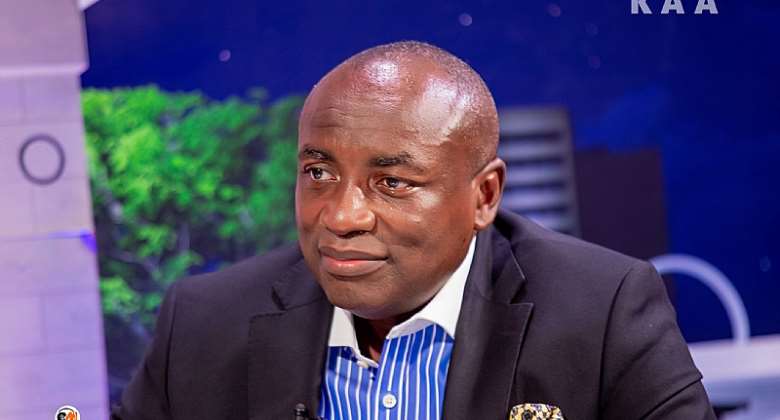
In every major political party, there emerges at least one candidate whose credentials, experience and reformist instincts make them formidable on paper, but whose candidacy ultimately collides with entrenched structures, internal politics and emotional loyalties.
For the New Patriotic Party (NPP), many insiders believe that figure is Ing. Kwabena Agyei Agyepong.
As the NPP heads into another fiercely contested flagbearer race on January 31, 2026, Ing. Agyepong stands out not as the loudest contender, nor the wealthiest, but arguably the most institutionally grounded and ideologically consistent. Yet, despite his stature, his path to the party’s top ticket appears narrow, raising the paradox: the most formidable flagbearer the NPP may never elect.
The Man: Technocrat, Party Builder, Political Reformer
Kwabena Agyepong is not a career populist. Trained as an engineer, he embodies a technocratic, systems-driven mindset that contrasts sharply with Ghana’s dominant personality-based politics. His rise within the NPP was not accidental. As General Secretary (2014–2015), he became one of the youngest to hold the position in the party’s history, overseeing internal reorganization at a time when the NPP was rebuilding after its 2012 defeat.
Those who worked with him describe a disciplined, results-oriented manager with a strong belief in rules, transparency and internal accountability. He is known for his tough-talking but principled approach, often insisting that party structures must work as designed, not as politically manipulated tools.
His public communication style direct, logical, and sometimes blunt has won him respect among technocrats and reform-minded delegates, while also earning him critics who see him as too rigid for Ghana’s emotional political terrain.
The Suspension That Redefined Him
A defining moment in Agyepong’s political life was his suspension as General Secretary in the lead-up to the 2016 general elections, following internal party disputes and accusations of misconduct allegations he has consistently denied and later challenged through due process.
Unlike many politicians who retreat into silence or retaliatory bitterness, Ing Agyepong adopted a restrained, institutional response. He avoided public mudslinging and chose to contest his case through party and legal mechanisms, projecting an image of a man who believes in systems over sentiments.
The Agyepong Six-Pillar Campaign Message
Party Institutional Reforms
Merit-Based Leadership
Economic Productivity
Youth Skills & Enterprise
Anti-Corruption Systems
National Unity & Political Decency.
Why He May Not Get the Nod.
Ing. Agyepong lacks the mass mobilization machinery, financial war chest, and emotive political branding that dominate modern internal party elections.
The Other Aspirants and Their Limitations
Dr. Mahamudu Bawumia
Burdened by the economic record of the immediate past administration, which many voters associate with hardship.
Kennedy Ohene Agyapong
His confrontational style and polarizing rhetoric raise concerns about national cohesion.
Dr. Bryan Acheampong
Despite executive experience and financial capacity, his image faces public trust challenges linked to the 2019 Ayawaso West Wuogon by-election disturbances and his reported near-acquisition of state-linked assets, including the Labadi Beach Hotel, which for some Ghanaians raises questions about state capture and conflict of interest.
Dr. Yaw Osei-Adutwum
Respected for education reforms, but limited by low national political visibility and modest campaign infrastructure.
Conclusion
Kwabena Agyepong represents institutional reform, but in a system driven by emotion, money and loyalty networks, he may remain the NPP’s most formidable but unelected—option.
By: Christian Kpesese