


Before Ghana gained independence, British colonial governors ruled the Gold Coast as representatives of the Queen of Britain. During official meetings, they sat on ceremonial chairs modeled after the Queen’s throne. These chairs had backrests and armrests similar to the Asipim seats used by traditional rulers in southern Ghana.
When Kwame Nkrumah became Ghana’s first Prime Minister and later President, he believed political freedom must be supported by cultural identity. He therefore ordered new state seats that combined the best ideas of the governor’s chair with the traditional seats of southern Ghanaian rulers.
From this vision came the Asɛsɛgua and the Asipim the traditional names of what we today call Ghana’s Presidential Seats.
These seats were designed by Ghanaian artist and designer Kofi Antubam, whose works focused on portraying Ghanaian community life and culture.
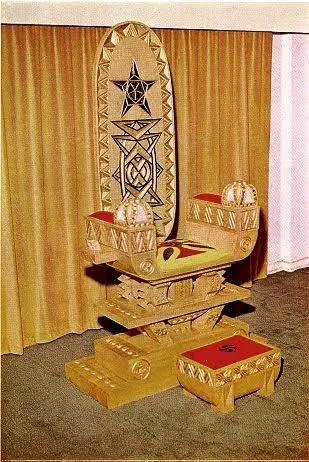
The most important of these seats is the Asɛsɛgua, also known as the Seat of State. It is carved from wood and overlaid with gold to symbolize the life and sovereignty of Ghana.
The Asɛsɛgua is decorated with many Adinkra symbols, including Osramfa, Okosuasu, Kontonkurowi, Kuntinkantan (Anantwurom), Aborobe, Dadebene (Ahokera wo), Abankuo, Ghana Soroma-Bire, Puruw, Owo-Koforo-Adobe, Akosane (Dame-Dame), Krapa (MusuYide), and Nkyinkyim.
Originally, the Asɛsɛgua had flat wooden wings on both sides of its armrests, but these were later removed. The seat is also made in three interlocking parts the backrest, the main seat with footrest, and the base to make movement easier.
The design of the Asɛsɛgua reflects both African and European influences. While it carries African pre-colonial symbols of power, the upper part and armrests topped with small golden crowns resemble a British monarch’s throne.
It is a powerful symbol of Ghana’s history, culture, and sovereignty.
The Real Traditional Name of Ghana’s Presidential Seat


RELATED ARTICLES
- Advertisment -