


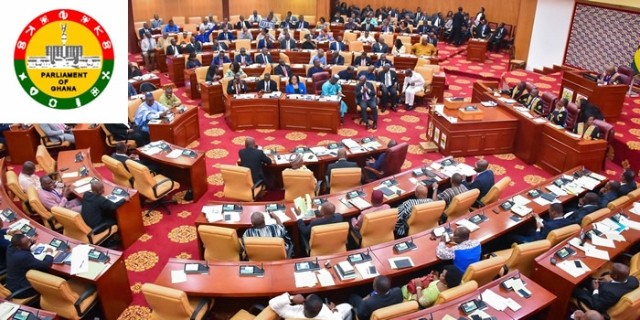
The Constitution Review Committee (CRC) has recommended a major change to Ghana’s governance architecture by proposing that no Member of Parliament (MP) should be appointed as a Minister of State, Deputy Minister or Regional Minister.
The recommendation is contained in the Committee’s final report, titled, “Transforming Ghana: From Electoral Democracy to Developmental Democracy,” which was presented to President John Dramani Mahama on December 22, 2025 in Accra.
Under the proposal, Article 78(1) of the 1992 Constitution, which currently allows the President to appoint a majority of ministers from Parliament, should be amended to completely separate membership of the Executive from the Legislature.
The Prof Kwesi Prempeh led Committee further recommends that an MP who resigns from Parliament should also be barred from ministerial appointment for the duration of the same parliamentary term.
According to the CRC, the long-standing practice of appointing MPs as ministers has weakened Parliament’s independence and undermined its ability to effectively check the Executive.
The Committee argues that MPs who serve simultaneously as ministers are often conflicted, making it difficult for Parliament to exercise robust oversight over government policies and expenditure.
The proposed reform, the Committee says, will strengthen the doctrine of separation of powers, enhance parliamentary scrutiny, and promote professionalism in both arms of government. By freeing MPs from executive responsibilities, Parliament is expected to focus more on law-making, representation and accountability, while ministers can be appointed based on competence rather than electoral considerations.
The recommendation forms part of a broader package of proposals aimed at reducing the size and cost of government, limiting political patronage, and improving the effectiveness of Ghana’s democratic institutions.
If adopted, it would mark one of the most significant constitutional changes to Ghana’s hybrid executive-legislative system since the beginning of the Fourth Republic.
Implementation of the proposal would require a constitutional amendment, subject to parliamentary approval and, where applicable, a national referendum.
By: Christian Kpesese