


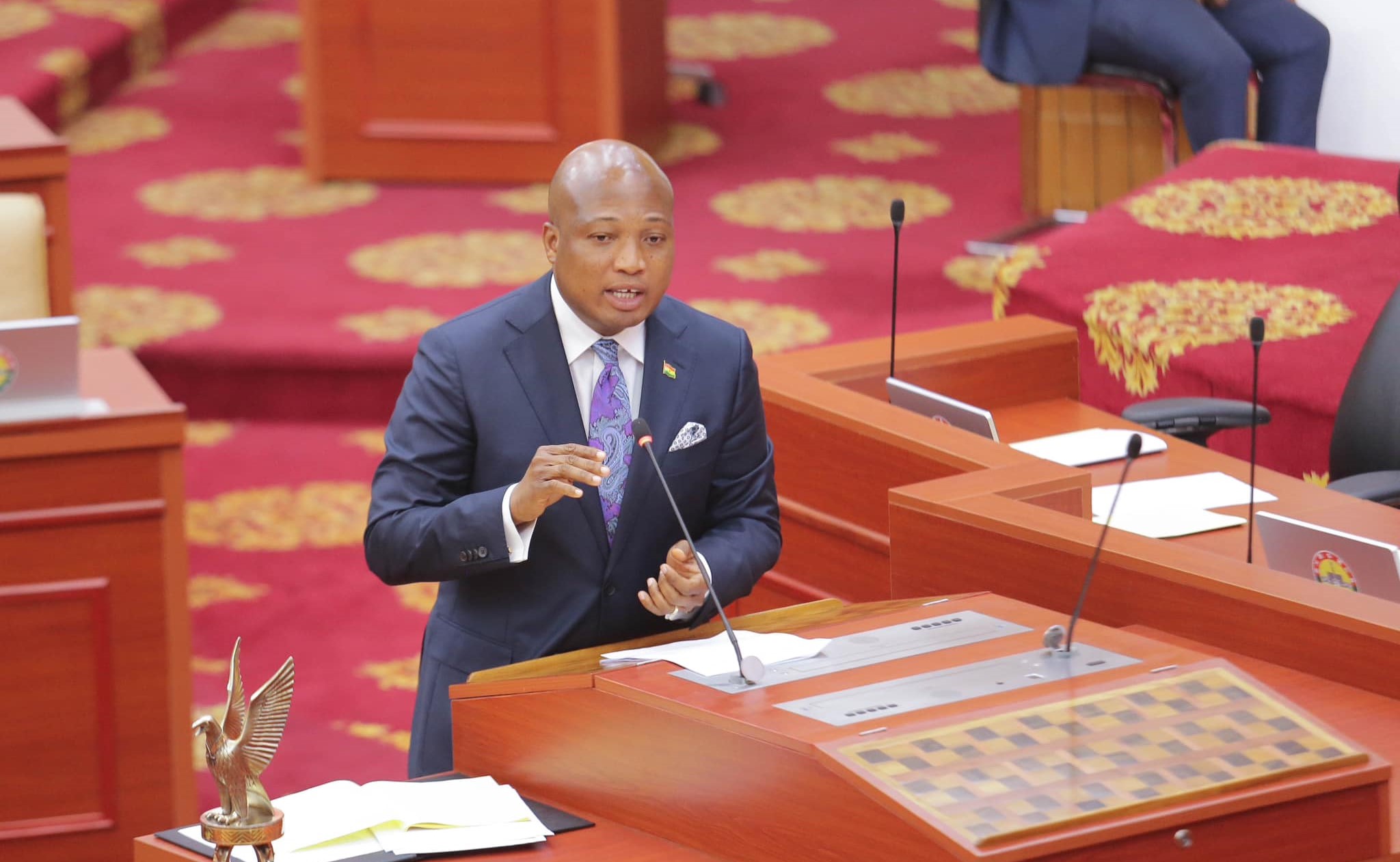
Ghana’s foreign policy will not be shaped by what the country can take from others but by what it can offer, the Minister for Foreign Affairs, Samuel Okudzeto Ablakwa, has told Parliament.
Mr. Ablakwa made the assertion on the floor of the House on Wednesday, December 3, 2025, in response to concerns that Ghana should first resolve its internal challenges before extending support beyond its borders.
The minister was briefing MPs on a GH¢10 million humanitarian support package extended to disaster- and conflict-affected communities in Jamaica, Cuba and Sudan due to an urgent request by minority leader, Osahen Alexander Kwamena Afenyo-Markin.
According to him, the donation, made on behalf of the people of Ghana, reflects the country’s enduring commitment to global solidarity, compassion and principled diplomacy, in line with the Pan-African and humanitarian ideals championed by Ghana’s first President, Osagyefo Dr Kwame Nkrumah.
According to the Minister, Ghana’s humanitarian assistance is aimed at supporting communities grappling with the effects of natural disasters and conflict, and complements ongoing international relief efforts. Of the total consignment, 50 per cent was allocated to Jamaica, 30 per cent to Cuba and 20 per cent to Sudan.
The relief items include 2,400 bags of locally produced rice, 540 bags of sugar, 100 cartons of fortified Gari Mix and 377 boxes of assorted medicines. In addition, Ghana supplied 500 mattresses, 500 pillows and 50,000 T-shirts to support displaced and vulnerable persons.
On water, sanitation and hygiene, Mr Ablakwa said the package also comprised 20 water storage tanks with a capacity of 500 litres each, 20 hand-washing stations and 10 portable emergency toilets to help curb the spread of disease in affected communities.
He noted that the intervention forms part of Ghana’s long-standing tradition of providing assistance to countries in distress, adding that the country’s foreign policy is guided by empathy, solidarity and compassion, while remaining attentive to global realities.
“Ghana’s humanitarian assistance strengthens bilateral relations, reinforces mutual trust and enhances our standing within multilateral forums,” the Minister told MPs, emphasizing that the country’s principled diplomacy has earned it recognition across Africa and beyond.
Mr Ablakwa assured Parliament of improved engagement and communication on foreign policy matters, pledging that the Ministry of Foreign Affairs would continue to strengthen Ghana’s capacity for timely humanitarian response and deepen partnerships with international and regional actors.
He indicated that solidarity will remain a defining feature of Ghana’s foreign policy, as the country remains resolute in acting where it can to make a meaningful difference in addressing humanitarian crises.
Commenting on the statement, the Ranking Member on the Foreign Affairs Committee and Member of Parliament for Damongo, Samuel Abdulai Jinapor, underscored the need for the Executive to carry Parliament along in foreign policy decisions.
Mr Jinapor emphasised that the government must seek parliamentary approval where necessary and regularly brief the legislature on major foreign policy actions, citing practices in countries such as the United States and the United Kingdom, where leaders update Congress and Parliament on critical international engagements.
He expressed disappointment that it took the intervention of the Minority Leader for the Foreign Affairs Minister to brief Parliament on the humanitarian donation, insisting that the legislature should be the first point of call on such significant decisions.
The Damongo MP, however, reaffirmed the importance of principled diplomacy, noting that Ghana’s foreign policy must consistently be anchored in values of empathy, solidarity and compassion.
By: Christian Kpesese