


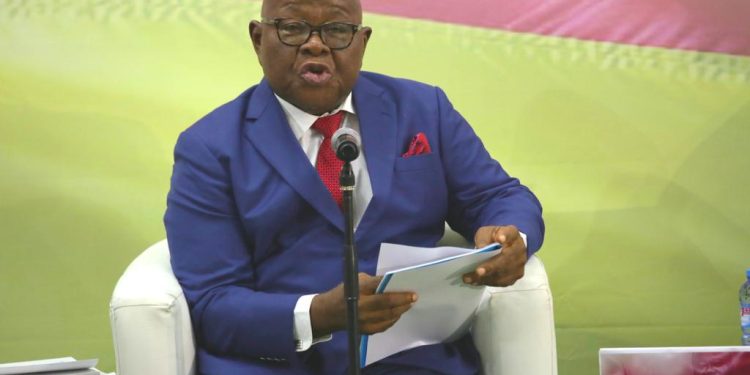
Former Speaker of Ghana’s Parliament, Prof. Aaron Michael Oquaye, has raised serious concerns over the government’s lithium mining agreement with Barari DV, a subsidiary of Atlantic Lithium, questioning the fairness of the royalty framework in the deal.
His remarks come after the government pulled back the revised agreement from Parliament on December 10, for further stakeholder engagements following public outcry.
The disagreement focused on the 10% royalty rate negotiated under the Akufo-Addo administration, which parliamentarians argue conflicts with the 5% royalty cap set by the Minerals and Mining (Amendment) Act, 2010.
Speaking in an interview on Channel One TV’s The Point of View on December 15, Prof. Oquaye called for a deeper examination of the royalty issue, beyond the current debate between 10% and 5%. He pointed out that Ghana’s royalty cap of 5% has long been a disadvantage, especially as the country continues to exploit valuable natural resources like lithium, gold, diamonds, and bauxite.
“It’s painful to imagine that we have valuable resources, yet we accept a royalty of no more than 5%,” Prof. Oquaye stated. “We should be negotiating for much higher royalties—20% at least—to better protect our national interests.”
The lithium deal, initially presented to Parliament by the Minister for Lands and Natural Resources, Emmanuel Armah-Kofi Buah, pertains to the extraction of lithium and other minerals in Mankessim, Central Region. The agreement was revised after Barari DV Ghana Limited requested changes to the lease terms due to a sharp fall in global lithium prices, which affected the project’s viability.
Prof. Oquaye’s comments highlight a larger conversation about how Ghana can better leverage its mineral wealth to secure fair returns for its people, rather than accepting low royalty rates that don’t reflect the high value of these resources.