


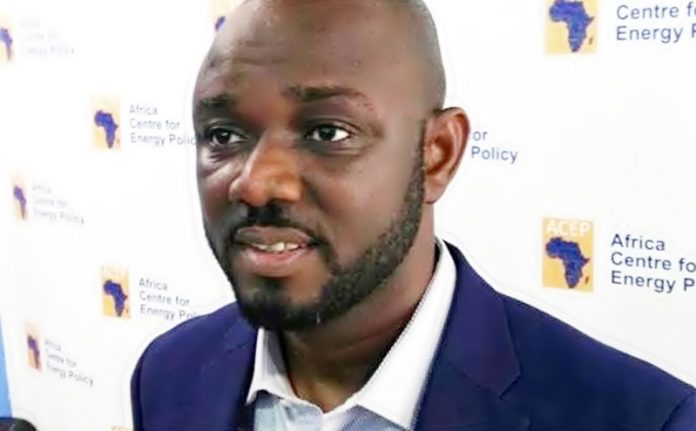
The Africa Centre for Energy Policy (ACEP) is today holding a capacity-building workshop for Parliamentary journalists aimed at deepening media understanding of Ghana’s industrial minerals sub-sector and its untapped investment potential.
The session, taking place in Accra, forms part of ACEP’s broader efforts to strengthen demand-side oversight of the mining industry, where public scrutiny has historically focused almost exclusively on gold.
This has contributed to limited visibility, inadequate data, and weak accountability in the industrial minerals space a sector with significant economic potential but low public awareness.
Executive Director of ACEP, Benjamin Boakye, is expected to deliver the welcome address at the opening ceremony.
The main presentation will be delivered by Mabel Acquaye, Senior Policy Analyst and Monitoring & Learning Manager at ACEP.
According to ACEP, minerals such as limestone, granite, clay, kaolin, salt, and silica offer “low-hanging” opportunities requiring less capital and technological intensity compared to precious minerals.
They also present strong prospects for value addition, domestic industrial linkages, and job creation. Despite this, government revenue from industrial minerals remains far below potential. A 2021 ACEP study revealed that quarry revenue alone in 2020 fell short of its potential by 94%, signaling deep inefficiencies and a lack of transparency.
According to a concept note on the training, ACEP observes that the sector continues to suffer from limited publicly available data on production levels, market trends, and revenue flows factors that undermine investor confidence and inhibit targeted industrialisation initiatives.
Today’s training is therefore designed to equip Parliamentary reporters with the analytical skills and contextual knowledge required to effectively interrogate policy, regulatory, and fiscal issues within the sub-sector.
The session will focus on:
- Increasing journalists’ understanding of the types, uses, and economic significance of industrial minerals;
- Enhancing the media’s ability to scrutinise revenue performance and regulatory frameworks; and
- Highlighting value-addition opportunities and the role of industrial minerals in Ghana’s broader industrialisation agenda.
ACEP believes a better-informed press corps will help shape national conversations around the country’s mineral resources, improve public accountability, and draw attention to investment opportunities that can support economic diversification.
The expected outcome, according to the organisation, is stronger demand-side oversight, improved transparency, and more data-driven reportage capable of stimulating responsible investment in the sector.
By: Christian Kpesese