


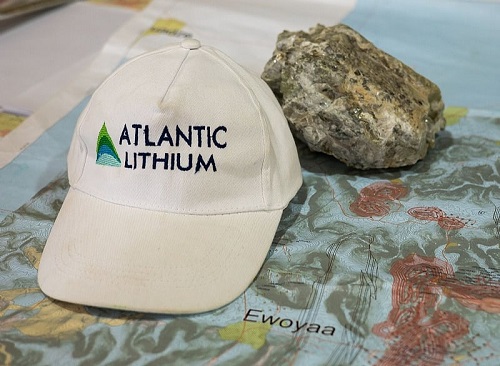
Ghana’s Parliament has ratified the long-awaited mining lease agreement between the Government and Barari DV Ghana Limited for the development of the Ewoyaa lithium project in the Mfantseman Municipality of the Central Region, bringing to a close nearly three years of political debate and negotiations over the terms of the deal.
The approval followed the presentation of a report by the Chairman of the Lands and Natural Resources Committee, Collins Dauda, who urged the House to adopt the Committee’s recommendations after an extensive review of the agreement laid before Parliament in December 2025 by the sector minister, Emmanuel Armah-Kofi Buah.
The agreement covers a 42.63 square kilometre concession at Mankessim within the Ewoyaa lithium belt and grants the company a 15-year renewable mining lease to extract lithium and associated minerals, subject to Ghana’s mining laws and parliamentary ratification requirements under Article 268 of the 1992 Constitution.
Background to the project
The Committee’s report traced the origins of the project to 2012 when Barari DV Ghana Limited, a subsidiary of Atlantic Lithium, obtained a reconnaissance licence to explore the Ewoyaa concession. The licence was converted into a prospecting licence in 2018, after which exploration activities confirmed commercially viable lithium deposits.
In October 2025, Cabinet approved a policy framework to guide the exploitation of lithium and other “green minerals,” which government believes will play a key role in the global transition to clean energy. Following the policy approval, the Ministry of Lands and Natural Resources renegotiated the terms of the mining lease to align with Ghana’s laws and international best practices before submitting the agreement to Parliament.
The Committee said it engaged officials from the Ministry, the Minerals Commission, the Environmental Protection Authority, and the Minerals Income Investment Fund, while also inviting memoranda from chiefs, community leaders, civil society organisations, think tanks and individuals connected to the project area.
Key provisions highlighted by the Committee
According to the Committee, the agreement contains provisions aimed at improving state participation and ensuring local benefits from the project.
Among the notable elements is Ghana’s 13 percent free carried interest in the project higher than the standard 10 percent interest typically held by the state in mining operations. The agreement also requires the company to pay royalties, taxes and statutory fees in accordance with Ghanaian law, without tax waivers.
The report further indicated that the company will allocate one percent of its annual revenue to a Community Development Fund to support infrastructure, education and health initiatives in affected communities.
Lawmakers were also informed that the project could generate about 1,000 direct mining jobs and several indirect employment opportunities, with training programmes planned for youth in the project area.
In addition, the agreement includes provisions encouraging value addition, including the potential establishment of a chemical processing plant in Ghana to refine lithium concentrate, as well as local sale of by-products such as feldspar and kaolin where demand exists.
Environmental and infrastructure considerations
The Committee noted that environmental safeguards had been incorporated into the agreement, including restrictions on mining activities near protected areas and requirements for land reclamation and environmental protection.
It also highlighted a commitment by the company to study the feasibility of constructing a jetty, barge or mini-port facility around Saltpond to support logistics and reduce pressure on road infrastructure in the region.
Addressing the House, Lands and Natural Resources Minister Emmanuel Armah-Kofi Buah thanked Members of Parliament for their contributions and support for the agreement.
He said the revised deal contained significant changes compared with earlier arrangements negotiated under the previous administration, noting that the new framework allows government greater flexibility to impose additional levies and charges where necessary.
The minister also pointed to the adoption of a sliding scale royalty structure currently estimated at about 12 percent at prevailing market prices along with provisions intended to deliver community benefits and support infrastructure development in the project area.
He urged lawmakers to support the agreement, describing the project as an important step in positioning Ghana within the global green minerals value chain.
Minority opposes ratification
However, the Minority New Patriotic Party (NPP) caucus opposed the ratification, arguing that several financial and governance concerns had not been adequately addressed.
Minority Leader Alexander Kwamina Afenyo-Markin called for further disclosures, including a consolidated analysis comparing projected revenues under previous and revised royalty arrangements, as well as details of the financial assumptions underpinning the agreement.
He also raised issues relating to benchmark pricing for mineral sales, safeguards against profit shifting, protections against dilution of the state’s equity, and the governance structure of the Community Development Fund.
According to him, Parliament should ensure comprehensive scrutiny of the agreement and consider independent assessments of the revised terms before approving a project involving what he described as a generational national resource.
Despite the Minority’s opposition, the motion was carried the motion, paving the way for the implementation of Ghana’s first large-scale lithium mining project at Ewoyaa.
By: Christian Kpesese