


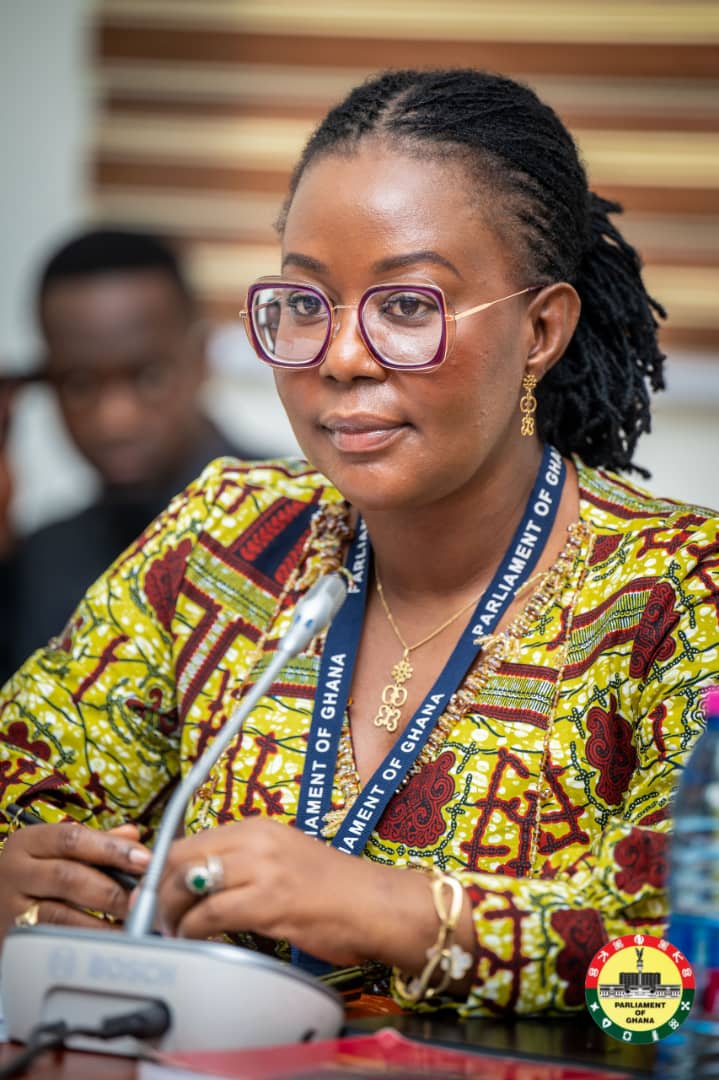
The Member of Parliament for Ablekuma North, Ewurabena Aubynn, has taken a firm stand in advocating for improved livelihoods and long-term sustainability for fisherfolks across the country.
Her intervention came through a public interest question directed at the Minister for Fisheries and Aquaculture Development, Emelia Arthur, when she appeared before the Government Assurances Committee of Parliament on Tuesday, March 17, 2026, to account for commitments made by the Ministry.
Raising concerns that resonate deeply with coastal and inland fishing communities, Madam Aubynn called on the Minister to outline concrete measures being implemented to secure the future of the fisheries sector while improving the incomes of those whose livelihoods depend on it.
“Honourable Minister, our fisherfolks across the country want you to share with them some of the Ministry’s current interventions in the fisheries sector for long-term sustainability while improving their income levels,” she queried.
The question, delivered with a strong sense of urgency, underscored the growing anxiety among fishing communities over declining yields, rising operational costs, and limited social protection systems.
In response, the sector Minister, Emelia Arthur who is also the MP for Shama provided a broad overview of government’s ongoing interventions, acknowledging structural challenges within the sector while outlining steps being taken to address them.
She explained that Ghana’s fisheries sector operates across three main sub-sectors marine, inland, and aquaculture, each requiring targeted policy attention.
A key focus, she noted, is the development of a hybrid pension and insurance scheme aimed at extending social protection to fisherfolks, fish processors, and fish farmers, many of whom operate within the informal economy and remain largely uncovered.
On production, the Minister painted a stark picture of the supply gap confronting the country. With an annual demand estimated at 1.2 million metric tonnes and domestic production hovering around 650,000 metric tonnes, Ghana faces a significant shortfall that continues to drive fish imports and exert pressure on foreign exchange.
To address this deficit, she outlined a multi-pronged strategy that includes the establishment of marine protected areas to allow fish stocks to regenerate, as well as increased investment in aquaculture, particularly targeting youth and women.
The Minister further highlighted government’s efforts to provide critical inputs such as outboard motors, fishing nets, and processing equipment, including improved fish-smoking ovens to replace older, health-compromising models still in use, especially within inland fishing communities.
She also pointed to regulatory measures, including the proposed extension of the inshore exclusion zone to 12 nautical miles, aimed at protecting artisanal fishers who contribute nearly 70 percent of the fish consumed locally.
While the Minister’s assurances outlined a roadmap for reform, Madam Aubynn’s intervention was widely seen as a strategic push to keep the spotlight on the lived realities of fisherfolks and ensure that policy commitments translate into tangible benefits on the ground.
Her advocacy reflects a growing parliamentary focus on not only sectoral productivity but also the welfare and resilience of communities at the heart of Ghana’s fisheries economy.
By: Christian Kpesese