


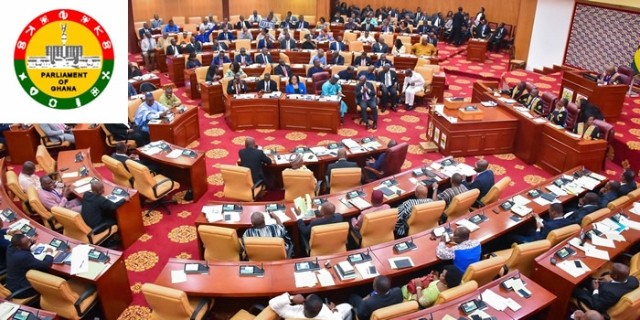
Ghana’s Parliament has approved an amendment to the Growth and Sustainability Levy that reduces the tax on gold mining companies from three percent to one percent of gross production, a move government says is necessary to balance industry competitiveness with the country’s evolving royalty framework.
The Growth and Sustainability Levy (Amendment) Bill, 2026 was passed on Friday, March 14, 2026, following the introduction of new royalty rules under the Minerals and Mining Royalty Regulations, 2025, which establish a sliding-scale mechanism tied to global gold prices.
The Legislative Instrument, which will take effect after the constitutionally required 21 sitting days in Parliament, allows the state to adjust royalty rates depending on fluctuations in international gold prices, enabling Ghana to capture higher revenues during periods of strong commodity prices.
Moving the motion for the second and third reading of the bill respectively, Deputy Minister for Finance, Thomas Nyarko Ampem, said the reduction in the levy was intended to cushion mining companies while ensuring that the country continues to benefit from windfall gains through the new royalty system.
According to him, the levy had originally been increased from one percent to three percent in 2025 because the country lacked a windfall tax mechanism to capture extraordinary profits from rising gold prices.
He explained that the newly introduced royalty regulations now address that gap through a structured pricing framework.
Under the sliding-scale system, the royalty rate increases as gold prices rise on the international market. For instance, when gold prices reach around $1,900 per ounce, the royalty rate is set at five percent. The rate increases to six percent when prices range between $1,900 and $2,000, and can rise as high as 12 percent when prices exceed $4,500.
Mr Ampem said the introduction of this mechanism makes it unnecessary to maintain the higher three percent Growth and Sustainability Levy imposed last year.
“We don’t make laws to suit individuals. We are bringing this change so that Ghana can take maximum advantage of its natural resources,” he told the House.
He added that the revised framework seeks to strike a balance between maintaining a fair fiscal regime for mining companies and ensuring that Ghanaians benefit adequately from the country’s mineral wealth.
“Over the years, we have not taken enough advantage of this resource. This arrangement will make it fair to mining companies and also fair to Ghanaians who are the owners of these natural resources,” he said.
However, the Minority Caucus has raised concerns about the potential impact of the new royalty regime on the mining sector.
Members of the Minority warned that the changes introduced under the Legislative Instrument could make Ghana’s mining environment less attractive to investors and potentially put up to one million jobs at risk if companies scale back operations.
Ghana is one of Africa’s leading gold producers, and the mining sector remains a critical pillar of the national economy, contributing significantly to export earnings, government revenue and employment.
By: Christian Kpesese