


Members of Parliament have mounted a strong bipartisan call for decisive legislative action to safeguard Ghana’s environment, with growing support for the criminalisation of ecocide as a way of protecting ecosystems for future generations.
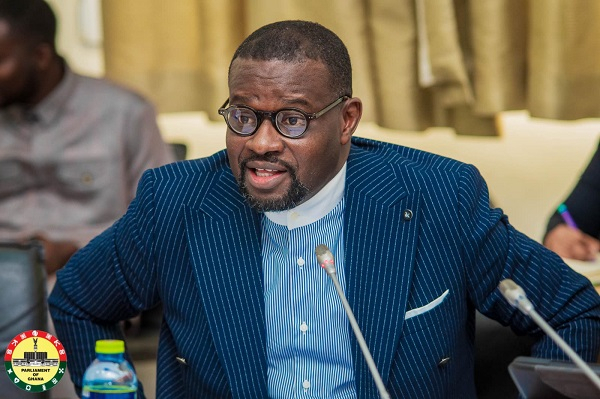
The call was led by the Minority Chief Whip and Member of Parliament for Nsawam-Adoagyiri, Frank Annoh-Dompreh, who delivered a statement on the floor urging the country to adopt laws that would make large-scale environmental destruction a punishable crime.
The lawmaker emphasized that the issue of environmental protection transcends political divisions and requires a united national response.
“Mr. Speaker, I rise today with a profound sense of urgency and responsibility to speak on a matter that transcends partisan politics, economic growth and short-term development agenda,” he stated.
He continued; “There is a need for legislative action against ecocide the mass destruction of ecosystems and for Ghana to align itself with a growing global movement to make environmental devastation a punishable crime.”
His intervention sparked passionate contributions from Members of Parliament across the political divide, many of whom echoed the urgency of the situation and called for swift action from government and relevant institutions.
Ecocide, as defined by experts, refers to unlawful or reckless acts carried out with the knowledge that they are likely to cause severe and widespread or long-term damage to the environment. Proponents argue that elevating such acts to the level of criminal offences would ensure stronger accountability for individuals, corporations and institutions whose actions cause large-scale environmental harm.
Mr. Annoh-Dompreh noted that while international law currently recognises crimes such as genocide, crimes against humanity, war crimes and aggression under the International Criminal Court, ecocide is yet to be recognised as a standalone international crime during peacetime.
He warned that the absence of such recognition has created a legal gap that allows extensive ecological damage to occur with limited criminal consequences.
“This is not just a theoretical concern,” he explained, pointing to examples of environmental devastation around the world. “The environmental damage caused by industrial pollution, oil spills and deforestation demonstrates the scale of destruction that ecosystems can suffer when there is insufficient accountability.”
The Minority Chief Whip cited the case of the Niger Delta, where thousands of oil spills over several decades have severely damaged water bodies, farmland and the health of local communities.
He, however, pointed out that a growing number of countries have begun incorporating ecocide into their domestic legal frameworks as part of efforts to strengthen environmental protection.
Countries such as France, Belgium, Ecuador and Chile have already taken legislative steps toward criminalising severe environmental destruction, with Belgium becoming the first European Union country to formally incorporate ecocide into its penal code.
Across the African continent, momentum is also building. The Democratic Republic of the Congo has publicly supported the recognition of ecocide as an international crime, joining calls from several other nations advocating stronger environmental accountability.
According to Mr. Annoh-Dompreh, Ghana has compelling reasons to act swiftly.
He warned that the country’s ecosystems are under increasing pressure due to deforestation, pollution and illegal mining activities widely known as galamsey.
“Recent reports indicate that up to 60 per cent of Ghana’s water bodies have suffered pollution due to illegal mining,” he noted, adding that such environmental degradation threatens agriculture, public health and the country’s long-term economic sustainability.
The legislator argued that criminalising ecocide would embed a moral and legal framework that affirms society’s commitment to protecting nature and ensuring sustainable development.
Environmental destruction, he said, has far-reaching consequences that extend beyond the present generation.
“Environmental stability is foundational to food security, human health and sustained economic development. The consequences of ecological damage are intergenerational — they affect our children, their livelihoods and their right to a healthy environment,” he stated.
To address the problem, Mr. Annoh-Dompreh proposed a series of legislative measures, including the passage of a standalone domestic law defining and criminalising ecocide with clear legal thresholds for severity and environmental impact.
He also urged Ghana to advocate at the international level for the inclusion of ecocide as the fifth international crime under the Rome Statute of the International Criminal Court.
Other proposals included strengthening enforcement mechanisms by equipping environmental protection agencies and the judiciary with the authority and resources needed to investigate and prosecute environmental crimes.
The proposed legislation, he said, should also include strong deterrent measures such as custodial sentences, substantial financial penalties for corporations and mandatory environmental restoration orders.
By: Christian Kpesese