


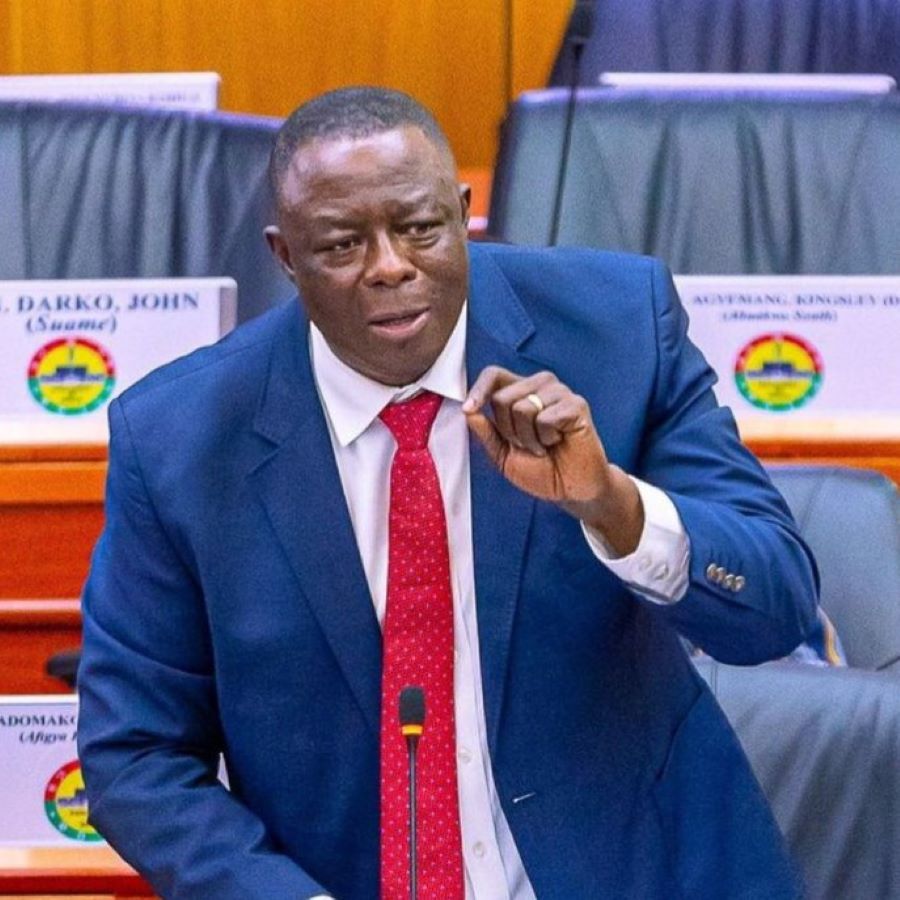
The Member of Parliament for Hemang Lower Denkyira, Lawrence Agyinsam, has called for stronger collaboration and deliberate policy interventions to connect entrepreneurs across Ghana’s Micro, Small and Medium-sized Enterprises (MSMEs) sector, describing it as essential to unlocking the country’s economic growth.
Making a statement on the floor of Parliament on Monday March 9, 2026, the MP said although MSMEs dominate Ghana’s economic landscape and drive a significant portion of economic activity, their full potential remains largely untapped due to persistent structural challenges.
According to him, Ghana currently has about 1.9 million business establishments, with 1.7 million classified as micro-sized enterprises, many of which operate with just one to five employees. The Ashanti Region alone accounts for about 27.3 percent of these businesses while the Greater Accra Region holds approximately 22.3 percent, with the remaining regions collectively accounting for over half of the country’s MSME operations.
Despite their scale, Mr. Agyinsam noted that the sector still faces major hurdles including limited innovation, weak networks among entrepreneurs, and inadequate access to financing.
He emphasized that MSMEs remain the backbone of Ghana’s economy, contributing nearly 70 percent of the country’s Gross Domestic Product (GDP) and representing over 90 percent of all businesses across sectors such as agriculture, manufacturing, trade and services.
The sector also plays a crucial role in employment generation, accounting for about 80 percent of Ghana’s labour force, including roughly 85 percent of employment within the manufacturing sector.
“These figures clearly demonstrate that MSMEs are central to Ghana’s economic development, yet the entrepreneurs behind them continue to face significant barriers that limit their growth and expansion,” he told the House.
A key challenge, he said, is the difficulty many small businesses face in accessing affordable financing. A large number of entrepreneurs are unable to secure loans from formal financial institutions, forcing them to depend largely on personal savings or informal support from family and friends to sustain their operations.
The MP noted that women entrepreneurs face even greater challenges in accessing capital, a situation he said requires urgent policy attention.
To address this gap, Mr. Agyinsam urged government to accelerate efforts toward establishing the Women’s Development Bank, which he said could play a critical role in expanding access to financing for women-led businesses and empowering female entrepreneurs across the country.
He further encouraged government to support the formalisation of savings groups and cooperatives so that small-scale entrepreneurs, particularly those in rural communities, can gain better access to financial services.
Highlighting the economic potential of his constituency, the MP invited investors and entrepreneurs to explore opportunities in Hemang Lower Denkyira, pointing to sectors such as palm oil cultivation and processing, rubber production, as well as tourism centred around the renowned Kakum National Park.
Mr. Agyinsam also proposed the introduction of national MSME academies and entrepreneurial boot camps to equip small business owners with practical skills, improve business management practices and enhance innovation within the sector.
He suggested that such initiatives could be driven through institutions such as the Ghana Enterprises Agency and the National Entrepreneurship and Innovation Programme.
According to him, expanding financing options beyond traditional bank loans, leveraging digital technologies, and encouraging public-private partnerships would also help de-risk investments in small businesses and expand funding opportunities for entrepreneurs.
Mr. Agyinsam further stressed the importance of digital transformation in strengthening the MSME sector, noting that e-commerce platforms and digital technologies can help small businesses reduce operational costs, connect with buyers more easily, and access markets beyond Ghana.
However, he said this will require increased investment in broadband infrastructure, reduced internet costs, and improved access to digital tools and data systems.
He also called for stronger investment in Science, Technology, Engineering and Mathematics (STEM) education to help bridge the digital skills gap and prepare the next generation of entrepreneurs for a rapidly evolving digital economy.
Mr. Agyinsam concluded that Ghana has the potential to become a major entrepreneurial hub in Africa if the right systems are put in place to connect businesses, expand financing opportunities and foster innovation.
“Ghanaian entrepreneurs must be brought together on a common platform where innovation, productivity and healthy competition can thrive,” he said.
He added that strengthening the MSME ecosystem would significantly accelerate national economic development.
By: Christian Kpesese