


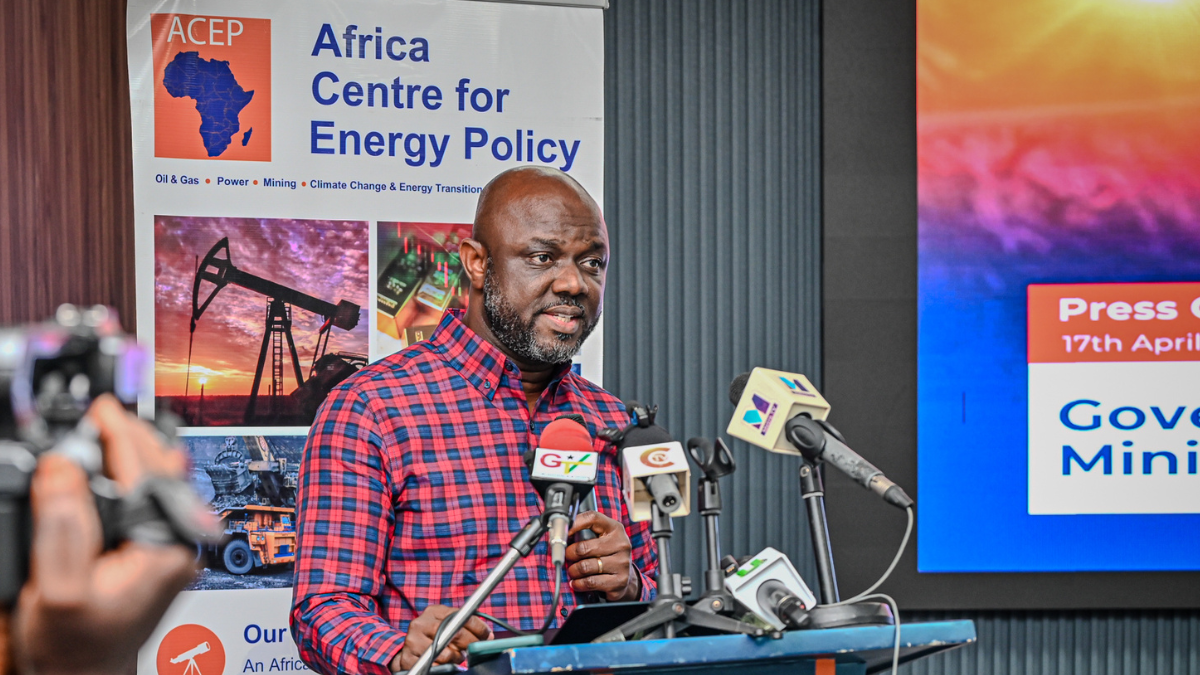
Executive Director of the Africa Centre for Energy Policy (ACEP), Benjamin Boakye, has warned that Ghana’s energy sector remains structurally fragile and overly dependent on public financing, even as short-term stability returns, according to insights drawn from ACEP’s ongoing monitoring work.
In an interview with Ghana Television (GTV), Mr Boakye said recent improvements in the sector are being sustained largely through sustained fiscal interventions rather than lasting reforms.
ACEP’s monitoring, based on a series of reports and sector tracking, shows the current relative calm masks deeper structural weaknesses in revenue collection and operational efficiency. The think tank has raised alarms that without consistent government cash injections, the sector would quickly return to its previous turbulence marked by power outages and liquidity challenges.
Fiscal Intervention Masks Underlying Weaknesses
Mr Boakye noted that the current stability is largely due to “the commitment and determination” of ministers enforcing the cash waterfall mechanism, a system designed to prioritise and distribute revenue through the power value chain. He said that the government currently channels more than $17 million monthly into the energy sector to keep critical payments flowing and avoid wider disruption. Without these injections, longstanding issues such as unpaid bills to gas suppliers and delays in meeting letters of credit obligations would resurface.
“Ghana’s energy sector is structurally weak and reliant on public finance,” Mr Boakye said. “The improvements we are seeing are not because the underlying faults have been repaired — they are because ministers are pushing cash waterfall payments every month.”
Analyses from ACEP show that the Cash Waterfall Mechanism, while designed to improve liquidity, has struggled to deliver as intended, with periodic shortfalls in revenue distribution and efficiency — a weakness first highlighted in ACEP’s own sector monitoring reports.
Revenue Collection: The Core Challenge
A key concern raised in the monitoring findings is the low efficiency of revenue collection within the sector. While billed revenue figures may appear strong on paper, a significant portion remains uncollected due to poor enforcement and systemic losses, particularly within the distribution arm of the system. In related monitoring of the Electricity Company of Ghana (ECG), ACEP noted revenue recovery rates hovering below optimal levels, with reports highlighting cumulative monthly revenue losses in the tens of millions of dollars due to weak collection practices.
“Fixing the energy sector is not about increasing tariffs,” Mr Boakye emphasised. “It’s about ensuring we collect what is already due effectively and plugging the gaps where revenue is slipping through.”
Longstanding Structural Failures
ACEP’s broader research and commentary over the past year further underline the think tank’s concerns about systemic inefficiencies. In an opinion piece addressed to national leadership last year, Mr Boakye warned that the sector had faced “systematic decimation” due to mismanagement and bloated institutional structures that drain public resources, even as they deliver inconsistent outcomes. That commentary highlighted annual waste in excess of billions of Ghanaian cedis, which far outstrips the nation’s oil revenues.
Experts point to challenges across the energy value chain, including overstaffed agencies, inconsistent policy enforcement, and unresolved legacy debts owed to independent power producers, which have at times constrained generation capacity and investor confidence.
No Tariff Increase, But Better Efficiency Needed
Mr Boakye reiterated that there is no immediate need for a broad tariff increase, provided revenue collection improves and inefficiencies are addressed. He stressed that targeted enforcement, reducing technical and commercial losses, and accountability across stakeholders would go further in strengthening the sector’s finances than raising consumer prices.
“Our focus must be on systemic efficiency, continuing to rely on public finance and tariff hikes without fixing the core structural bottlenecks will not yield sustainable results.”
His remarks come amid ongoing national discussions about how best to navigate Ghana’s energy transition while ensuring financial stability and reliability of supply. As the country pursues macroeconomic reforms, ACEP’s monitoring data suggests that lasting stability in the energy sector will depend on deeper reforms rather than temporary fiscal support.
Bt: Christian Kpesese/ www.naturalresourcesnews.com