


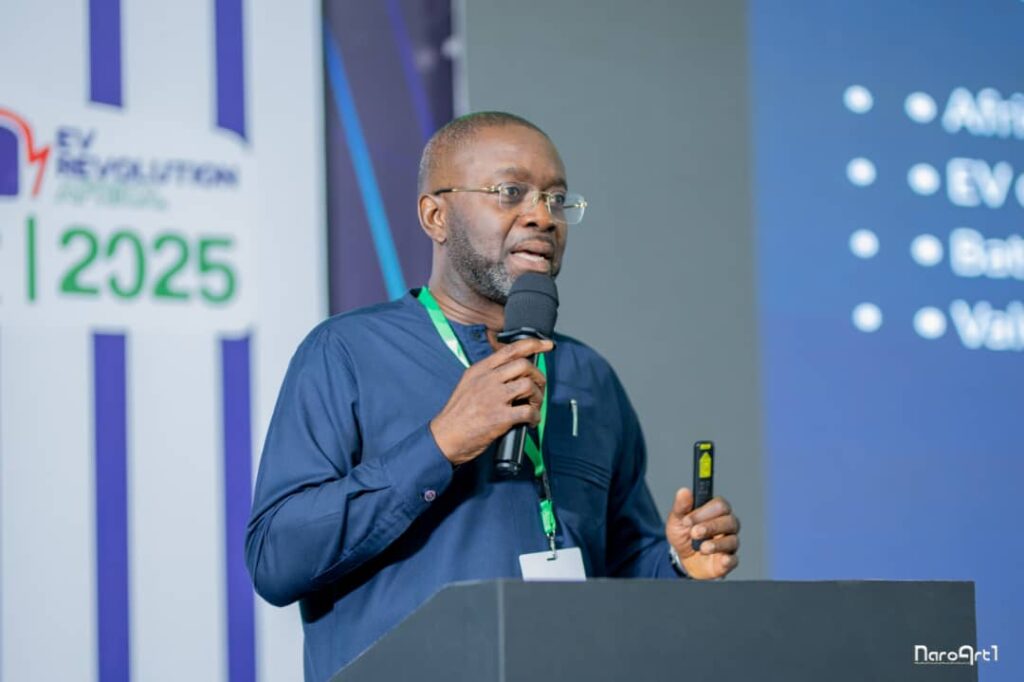
A mining and investment consultant and former Chief Executive Officer of the Minerals Income Investment Fund (MIIF), Edward Nana Yaw Koranteng, has called for the urgent establishment of a unified and consolidated national electric vehicle (EV) policy to fast-track Ghana’s shift toward sustainable transportation.
Delivering the keynote address at the ERA E-Mobility Conference in Accra, Mr. Koranteng noted that fragmentation among key institutions—including GRIDCo, ECG, the Ministry of Transport and various investment agencies—has slowed EV adoption and weakened the impact of existing initiatives.
“Ghana needs a harmonised electricity pricing framework, clear charging infrastructure standards, a coherent transport electrification roadmap, and aligned industrial incentives,” he said. “Without coordination, efforts remain fragmented and the full demand-side effect of policy interventions is lost.”
Citing Norway’s globally acclaimed EV transition, he stressed that a deliberate, consolidated policy would bring clarity to investors, boost domestic EV demand and accelerate the growth of a fully integrated EV ecosystem.
Mr. Koranteng also recommended reducing EV import tariffs from 52% to 15% to spur early adoption, along with fiscal incentives such as duty exemptions on battery components and preferential procurement for electric buses and public transport fleets.
He added that harmonisation would allow Ghana to leverage existing projects—such as the automotive development policy and plans for specialised EV industrial zones—positioning the country to benefit economically and technologically from the global shift to electrified mobility.
Participants at the conference broadly endorsed his stance, emphasising that a unified national EV policy is essential for converting Ghana’s mineral wealth and industrial potential into sustainable economic growth, job creation and regional leadership in Africa’s clean-mobility future.