


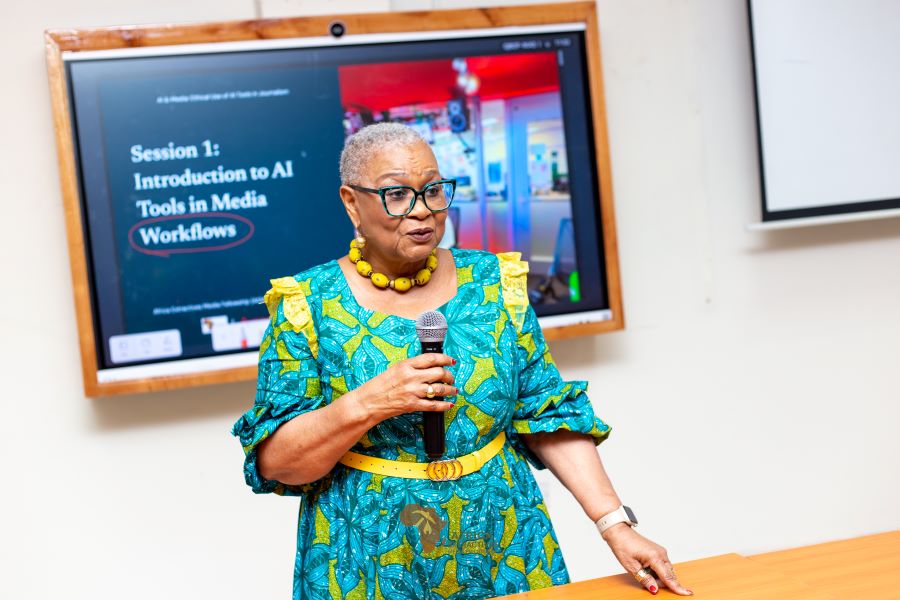
Rev. Dr Joyce Aryee, former Chief Executive of the Ghana Chamber of Mines, has called for a fundamental reset of Ghana’s mining philosophy, arguing that the country must first answer a critical national question: Why do we want to mine?
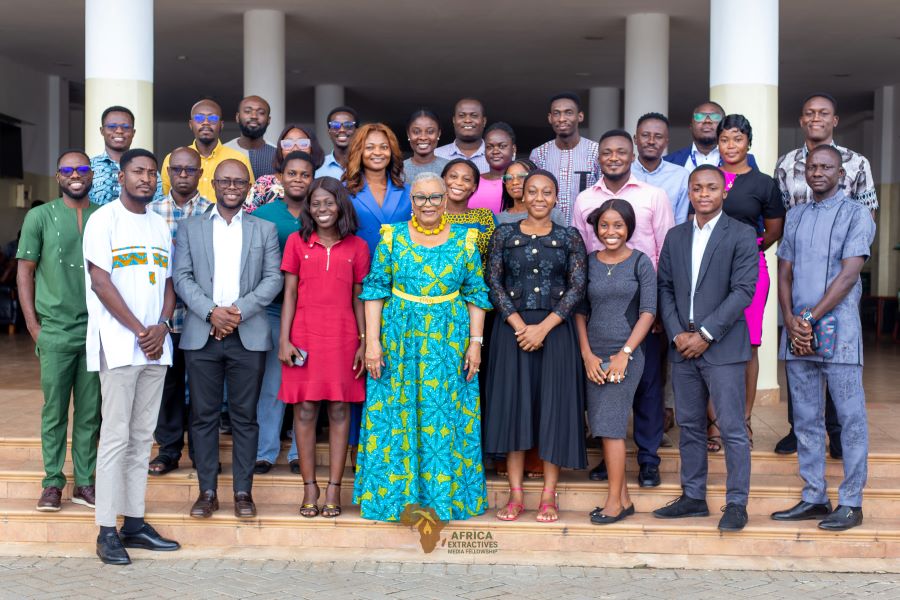
Addressing fellows during the second session of the first cohort of Africa Extractive Media Fellowship in Accra on Wednesday, 26 November, Dr Aryee warned that without clarity of purpose and courageous long-term leadership, Ghana risks undermining its own future.
According to her, the country’s extractive drive has too often been reduced to revenue mobilisation, sidelining environmental protection, community welfare, and generational development. “If it is only about the money, then we have already lost the plot,” she cautioned.
She painted a stark picture of ecological decline, lamenting the destruction of rivers, forests, and farmlands. The disappearance of once-abundant snails and mushrooms, she noted, symbolises a broader ecosystem collapse linked to poor mining practices. “When we think of mining, we must think of agriculture,” she stressed, urging stronger cross-sector collaboration to prevent long-term food insecurity.
Dr Aryee criticised what she described as indiscriminate allocation of vast tracts of land to investors without regard for future technological shifts or the land’s long-term strategic value. Investment, she said, is inherently profit-driven and must be structured to ensure mutual benefit. “No one comes to invest because he is a philanthropist,” she remarked, adding that agreements must reflect equitable value-sharing between companies and the state.
On illegal mining, she attributed the persistence of the menace to entrenched criminal networks shielded by political and security interests. Without confronting these structural protections, she suggested, efforts to curb environmental degradation will remain ineffective.
Beyond environmental concerns, Dr Aryee broadened the conversation to governance and planning. She described Ghana’s development framework as “very deficient,” lacking a coherent 20- to 40-year blueprint to guide the evolution of the mining sector. Compliance with existing laws, she said, is not enough to guarantee sustainable development. What is required is national courage anchored in a clearly articulated long-term vision.
Her critique extended to the education system, which she said produces thousands of graduates, particularly in fields like law without alignment to national development priorities. The result, she warned, is growing frustration among young professionals in an economy that lacks strategic direction.
Dr Aryee also highlighted entrenched gender disparities in the extractive sector. Women, she observed, represent a small fraction of the mining workforce and are often concentrated in low-paying roles. Citing global mining firm Gold Fields as an example, she noted that only two out of 20 board members are women.
She advocated the introduction of SMART gender provisions within extractive sector policies and called for deliberate quotas to expand women’s participation at all levels of decision-making.
On corporate-community relations, Dr Aryee urged mining companies to embed corporate social responsibility into their core business strategies rather than treat it as a peripheral obligation. Compensation payments alone, she argued, do not constitute meaningful development. True CSR must prioritise long-term livelihoods, environmental restoration, and shared economic value.
Turning to the media, she challenged journalists to elevate the national conversation beyond partisan politics. The media, she said, has a duty to influence policy, promote accountability, and foster national cohesion. “If your work does not influence policy, of what value is it?” she asked.
She encouraged reporters to focus on environmental stewardship, document the real impacts of mining on host communities, and champion sustainable practices, including reforestation initiatives.
Dr Aryee’s remarks amount to more than a critique of the mining sector; they represent a call for Ghana to redefine its development path—placing purpose, planning, and posterity at the centre of its extractive agenda.
By: Christian Kpesese/NR NEWS